“I sat on the bank beyond Bernadotte
and threw breadcrumbs into the water,
to watch the little fish fight it out,
until the strongest claimed the prey.”
E.L. Masters, Spoon River Anthology
Table of Contents
- Introduction
- Itinerary in pills
- Day 1: Transfer Dhigurah – Omahdoo and bikini beach
- Day 2: Remote sandbank vs. Rain
- Day 3: Excursion to deserted island
- Conclusions
Introduction
The second fishermen’s island we visited in the Maldives, after leaving Dhigurah behind, was Omahdoo. We were still in South Ari Atoll, but once we set foot on the island, it felt as though we were in a completely different place from our first stop. Indeed, whilst Dhigurah is a long island with plenty of facilities, Omahdoo is a very small island that seems to have retained an air of authenticity. This impression we had – which, in fact, we’d expected to have before arriving based on information I’d gathered from other blogs – was one of the main reasons we decided to include a few days on this island in our itinerary. However, this aspect was not the only one we took into account in our choice.
The main reason that prompted us to visit Omahdoo is, in fact, linked to the coral reef visible even in the vicinity of Bikini Beach, which, according to my sources, we would find well-preserved and teeming with marine life – unlike on other islands, where the so-called ‘house reef’ is usually rather lifeless. Dhigurah’s house reef, for example, fits this description quite well, as I explained in my dedicated article. Speaking of Bikini Beach, it is linked to the second reason for our choice, in order of importance. My sources had in fact told me about a stunning beach, with incredible colours and a decent stretch of sand, yet uncrowded.
Later in the article, you’ll find out to what extent our expectations were met, along with a few key additions that are not to be missed.
Itinerary in pills
We spent three days at Omahdoo – two full days and the third (which is actually the first 😊) almost a full day, as we had to spend the early part of the morning on the transfer from Dhigurah. Our original plan was to go on an excursion on each of the two full days we had available, but we had to cancel one of them due to the weather (the only day of our trip that was almost entirely rainy).
Having had our fill of marine life in Dhigurah, and having decided to focus mainly on snorkeling at the house reef, the excursions we’d planned were aimed at visiting a remote sandbank and a deserted island. As the weather forced us to choose just one, we followed our guest house’s advice and opted for the deserted island. On the morning of the fourth day, we set off for our final destination in the Maldives: the Baa Atoll. Below is a breakdown of our three days there.
| Day | Planned itinerary | Actual itinerary |
|---|---|---|
| 1 | Transfer Dhigurah-Omahdoo and bikini beach | Transfer Dhigurah-Omahdoo and bikini beach |
| 2 | Excursion to remote sandbank | Rain ☹ |
| 3 | Excursion to deserted island | Excursion to deserted island |
| 4 | Transfer to Malè – Baa atoll | Transfer to Malè – Baa atoll |
Day 1: Transfer Dhigurah – Omahdoo and bikini beach
Our day began with the transfer to Omahdoo from Dhigurah, which we had arranged privately with our guest house in Omahdoo, the Kirulhiya Maldives, at a total cost of 150 USD. The price quoted by the guest house for the private transfer was the main reason why we chose it in the first place as our accommodation. This is because, when we checked with other establishments, in most cases we were quoted 250 USD for the same transfer. This was the case, for example, with Dhiguveli Maldives (our guest house in Dhigurah) and Hitha Maldives in Omahdoo, a property we had seriously considered as an alternative. In contrast, Tides Dhigurah had quoted us 210 USD, Akiri Dhigurah 220 USD and Seaside Dhigurah 180 USD (though the latter was outside our accommodation budget). It’s worth noting that Akiri would have allowed us to arrange the transfer through them, even if we weren’t staying at their guest house.
As for Kirulhiya, I referred to it as the guest house we chose ‘at first’ because our stay there was short-lived. As soon as we arrived in Omahdoo, the welcome wasn’t exactly warm. The guest house was undergoing renovation work, so, without warning, we were diverted to a different property located on the opposite side of Bikini Beach, pretty much in the middle of nowhere, and with no way of speaking to the staff, who were completely absent for several hours. We managed, with great difficulty, to find someone to speak to, who showed us where meals were served – on the beach. However, the beach was quite a distance from our accommodation – a detail that couldn’t be ignored, given that the sky was starting to cloud over. As the place would have cost us 370 USD for three nights and we still had the option to cancel the booking via Booking.com, we decided to change accommodation, opting for the Turtle Maldives – a much better-located place, with its own restaurant and, ultimately, much cheaper to stay in (the three-night stay cost a total of 150 USD).
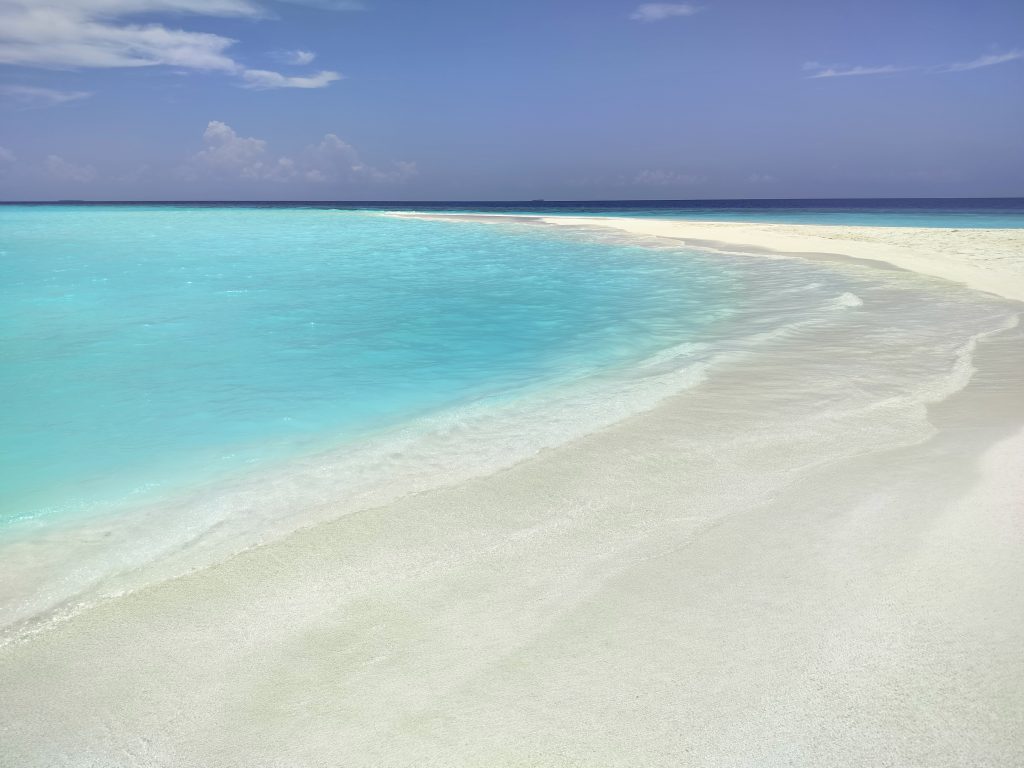
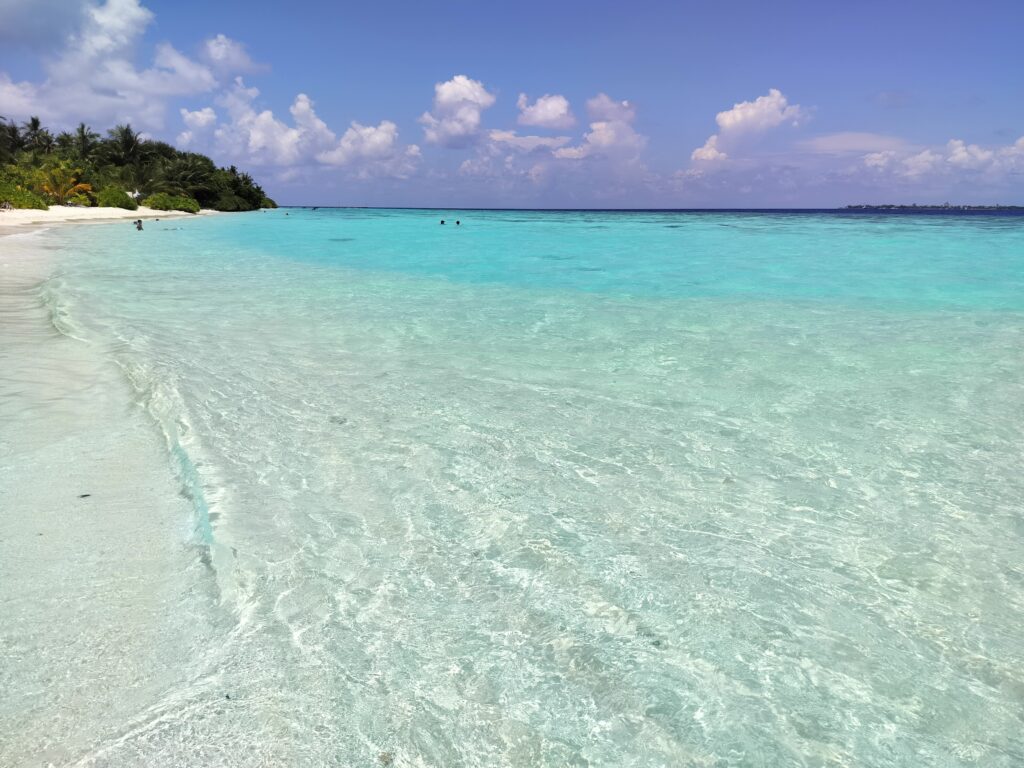
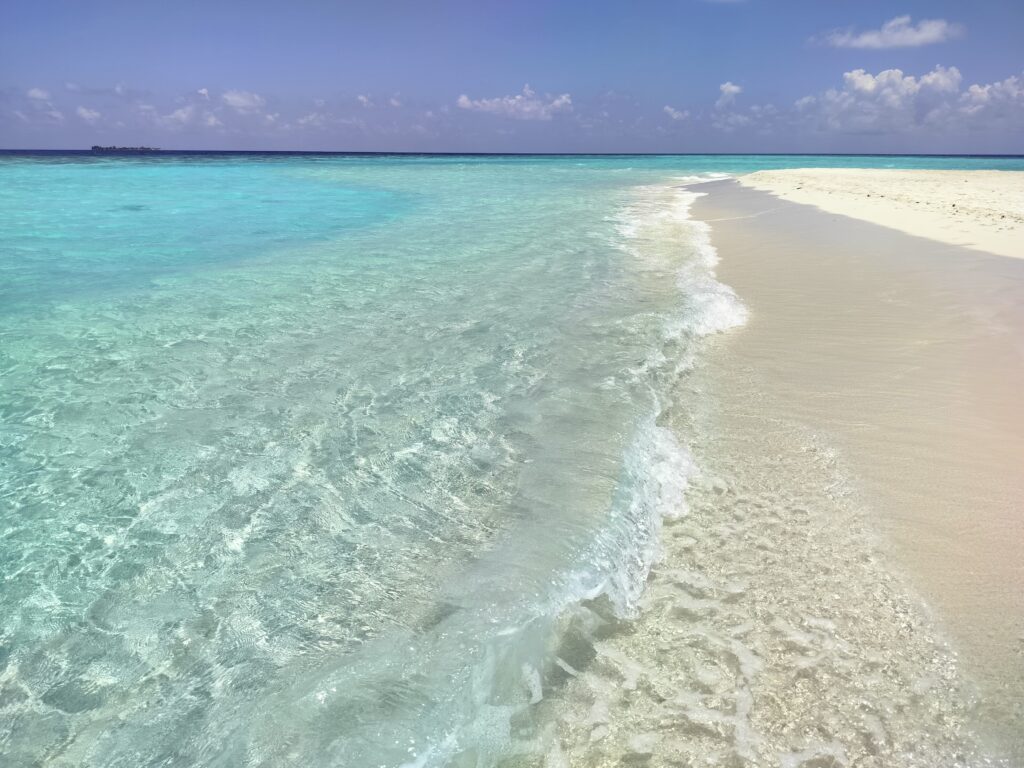
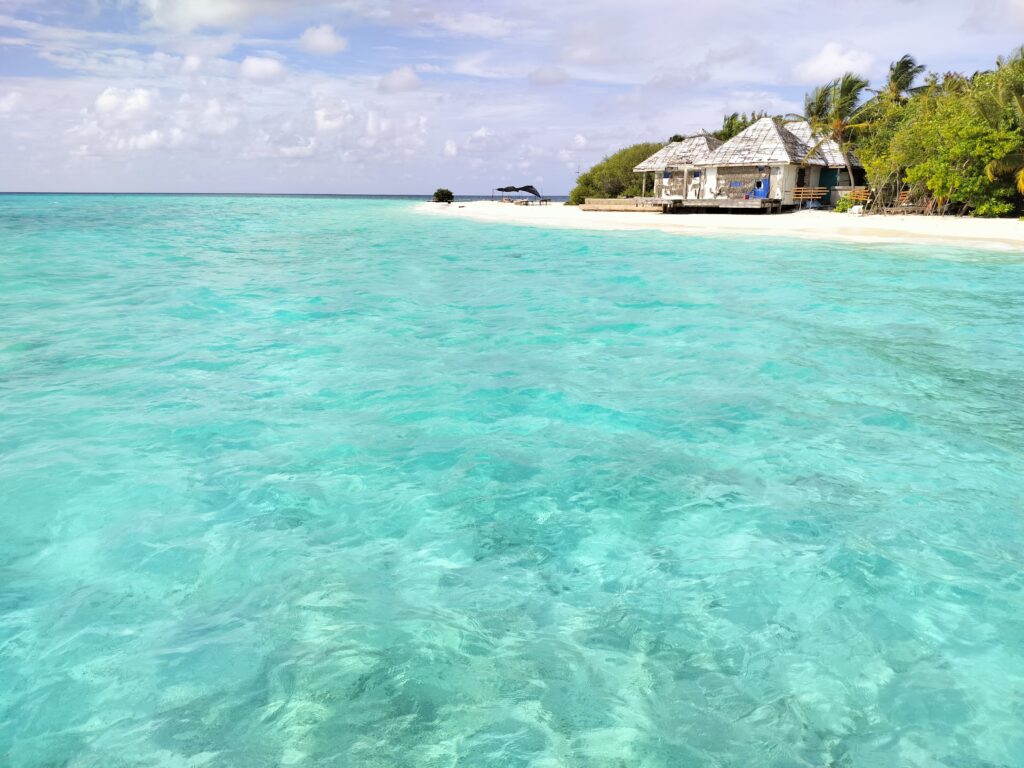
The transfer from Dhigurah and the change of guest house take up the whole morning, so we spend the afternoon visiting Bikini Beach. The beach, which is within easy walking distance of our new guest house, is rather small, but there are few people there – almost all of them Italian or Russian – so we manage to enjoy it quite well. Just as in Dhigurah, there are sun loungers and parasols here too, available for free to whoever gets there first. The colours of the sea are incredible; of all the bikini beaches we’ve visited, this one takes the gold medal for its colours, with a thousand shades of blue.
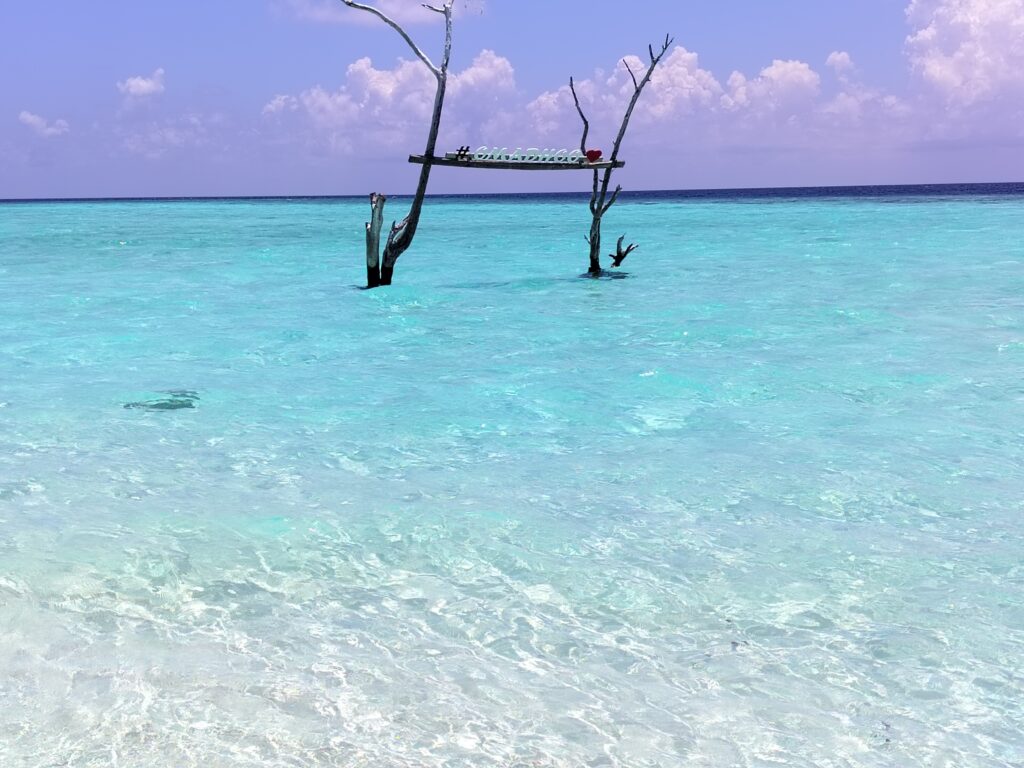
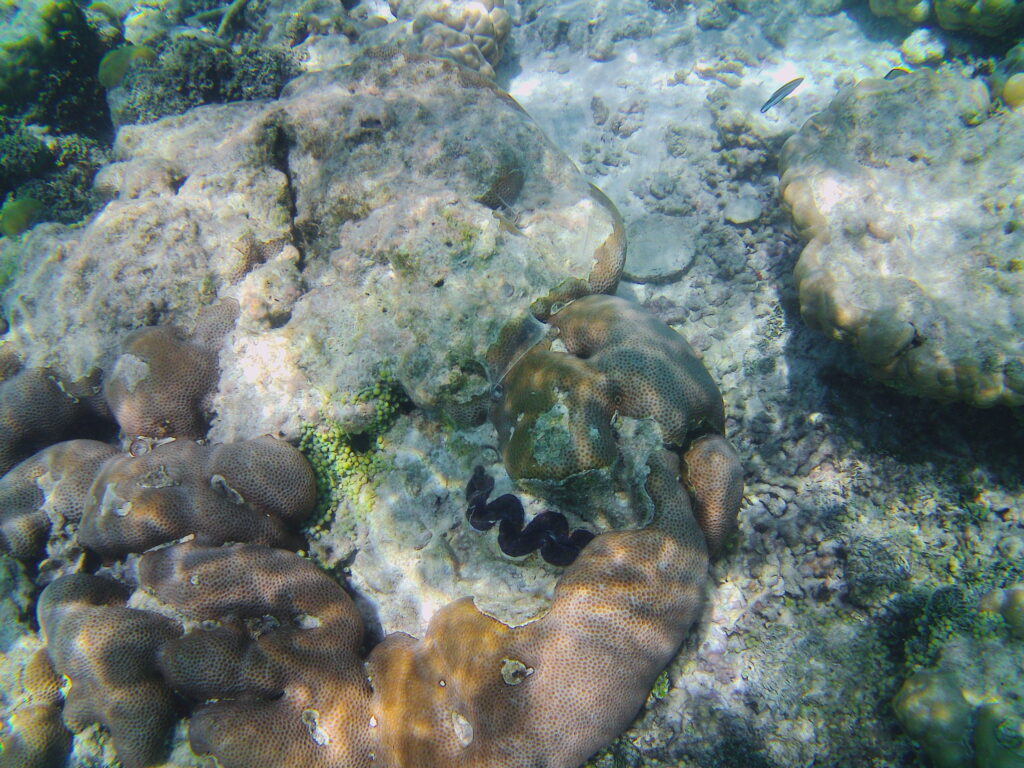
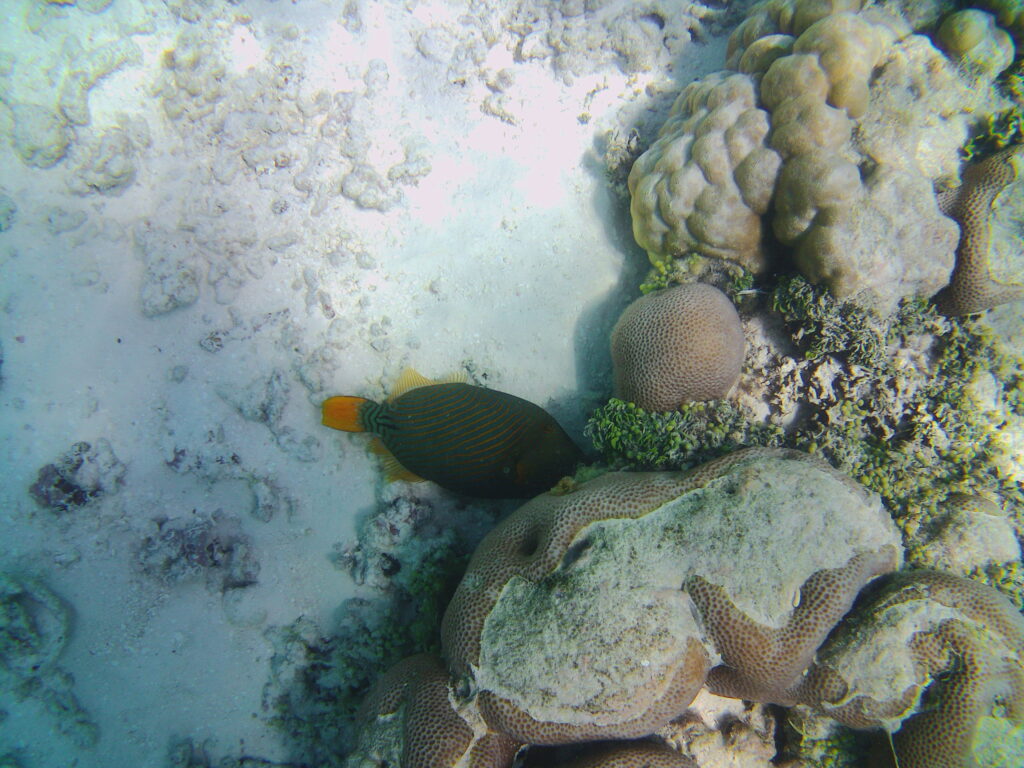
Furthermore, just as we’d expected from our sources, snorkeling at the house reef is truly worthwhile. The coral reef is well-preserved, and there are three different spots around the island where you can swim – all without having to go on any organised excursions. In the part of the reef near the ‘Omhadoo’ sign, you can spot blacktip reef sharks quite frequently. Despite its beauty, Omahdoo has to settle for the silver medal for the house reef; the gold medal goes to Kamahdoo, in the Baa Atoll.
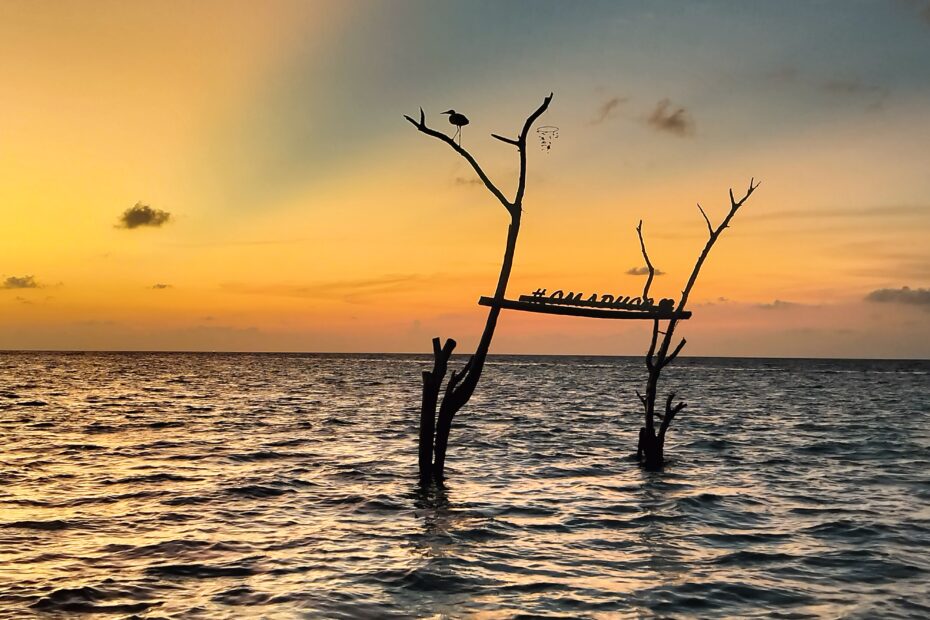
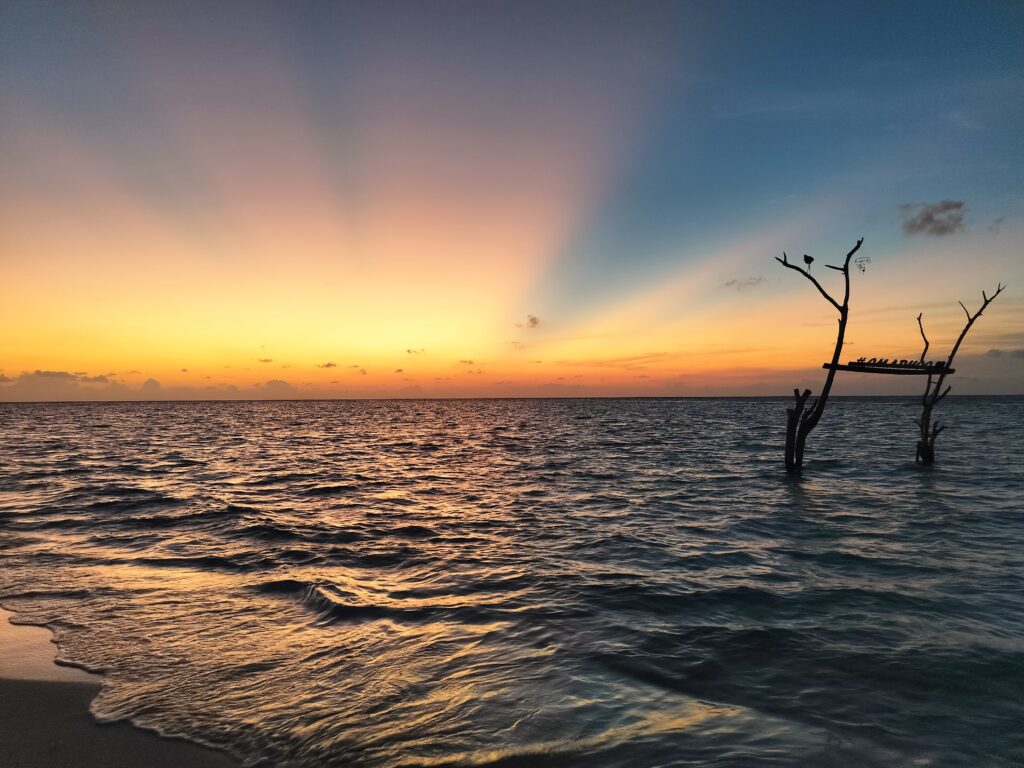
The most spectacular thing, however, is the sunset, for which Omahdoo takes second gold medal amongst the islands we’ve visited. So far, I’ve only seen more breathtaking sunsets in Tanzania and at El Nido in the Philippines.
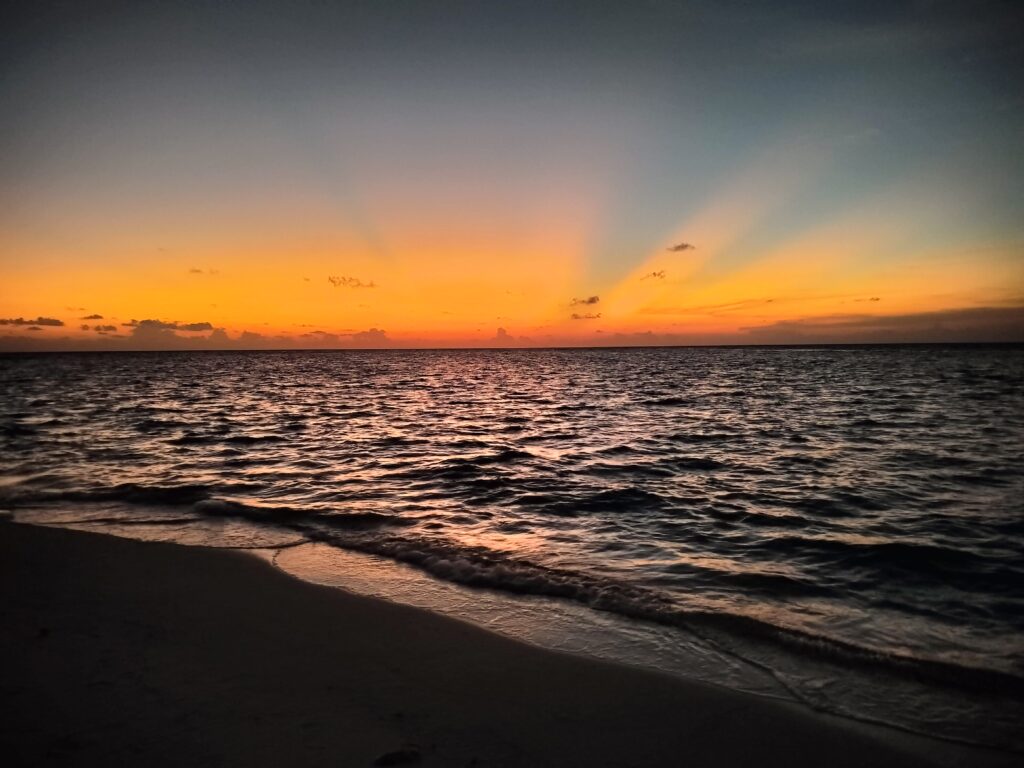
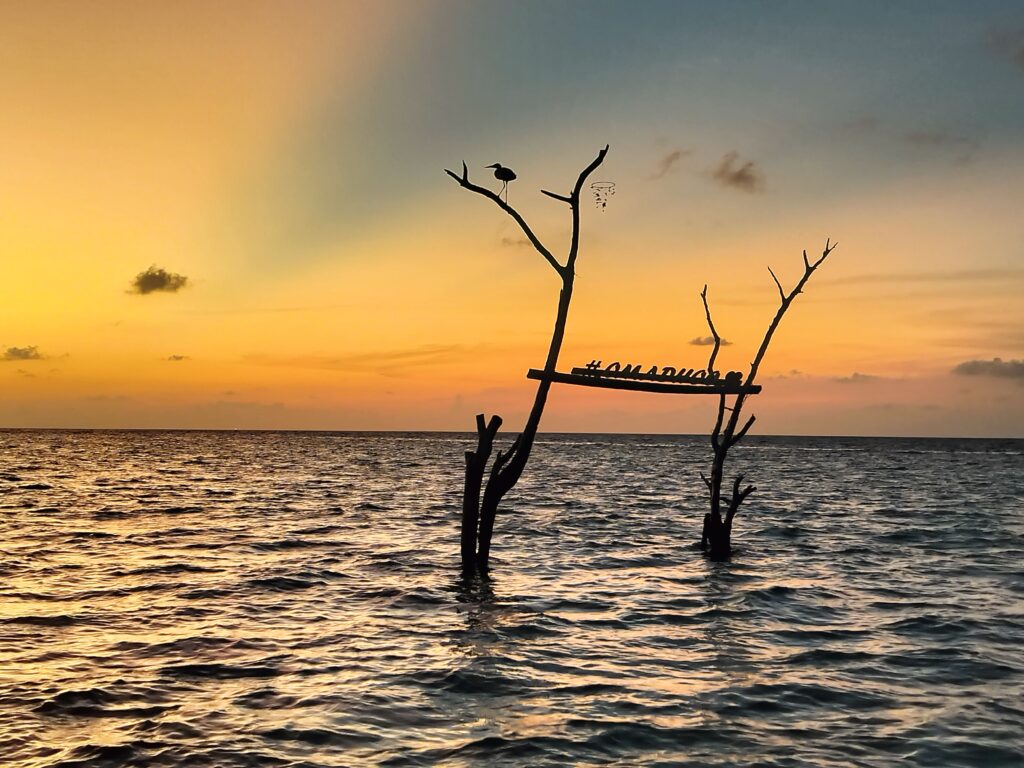
Our first day ends with dinner at our guest house’s restaurant, which is what we’ll be doing on the following days as well. The food is quite good, but the service is very slow; however, we’ve learnt from the Maldivians that you can’t expect too much.
Day 2: Remote sandbank vs. Rain
The original plan was to take part in an excursion that would have allowed us to visit a remote sandbank; however, as already mentioned, we had to give it up because of the rain, which lasted from the morning until mid-afternoon.
I take this opportunity to mention the excursions organised by Omahdoo. Generally speaking, the excursions are very similar to those available from Dhigurah, but the costs are usually higher when it comes to wildlife spotting. Our guest house was particularly expensive; for example, the whale shark excursion was priced at 200 USD per person, compared to the 70 USD we paid when setting off from Dhigurah. Among the establishments organising excellent excursions at much more affordable prices, I’d recommend Bird Beak Beach, which some locals we met said they were very satisfied with. I’m not familiar with their price list, but I know they charge 120 USD per person for whale shark watching. I’ve also included the price list for excursions at Kirulhiya, the guest house where we originally stayed. As you can see, the prices here are also quite different from those in Dhigurah.
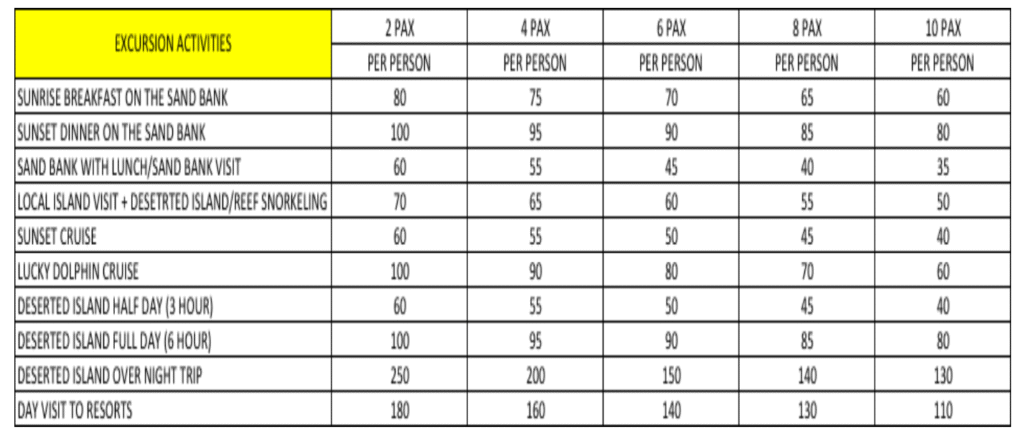
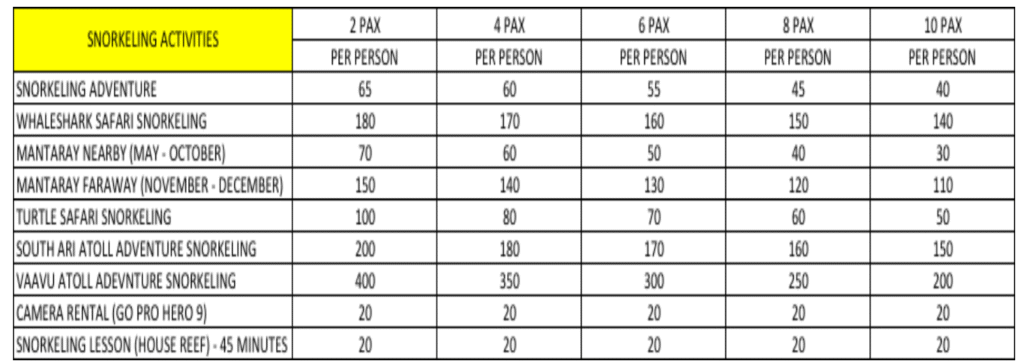
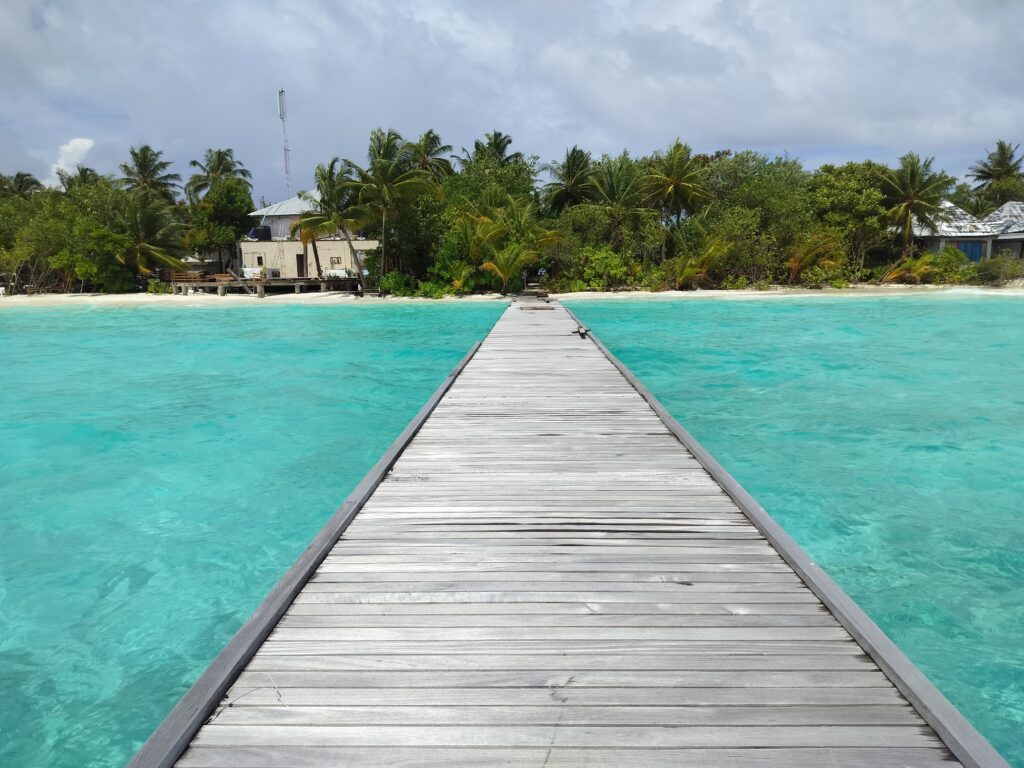
Anyway, we spent the afternoon’s sunny spells snorkeling at Bikini Beach, followed by a stroll along the island’s wooden jetty, first in the sunlight and then in the evening. The jetty offers a close-up view of the coral reef from the outside; the colours are truly spectacular and the marine life is clearly visible.
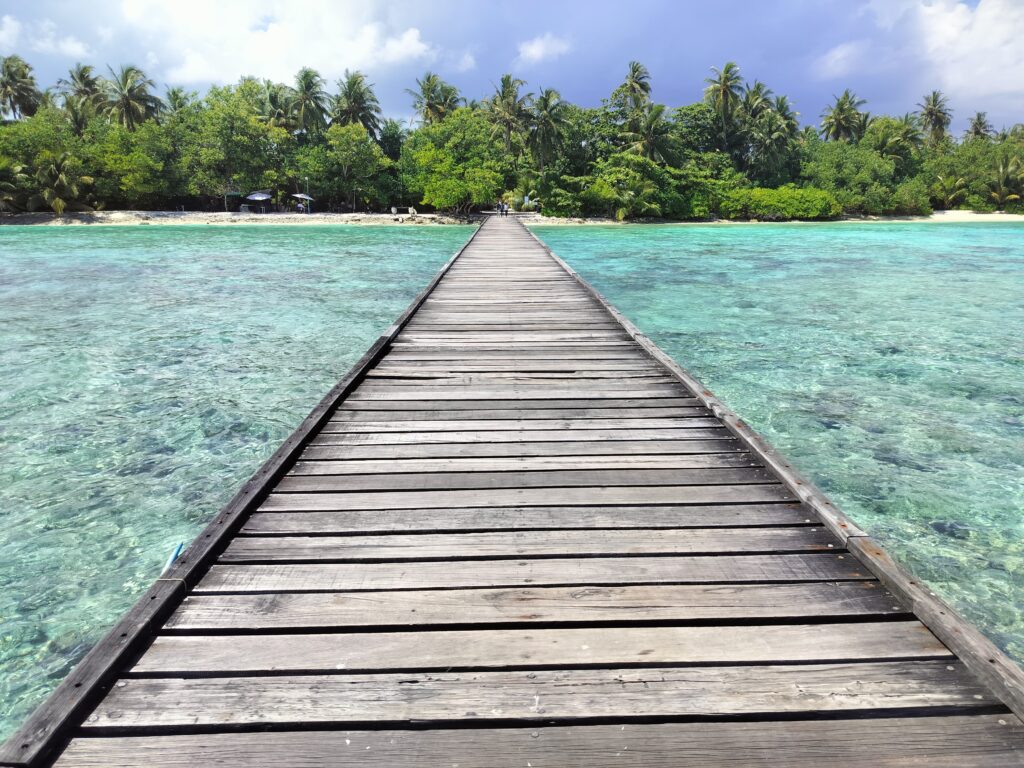
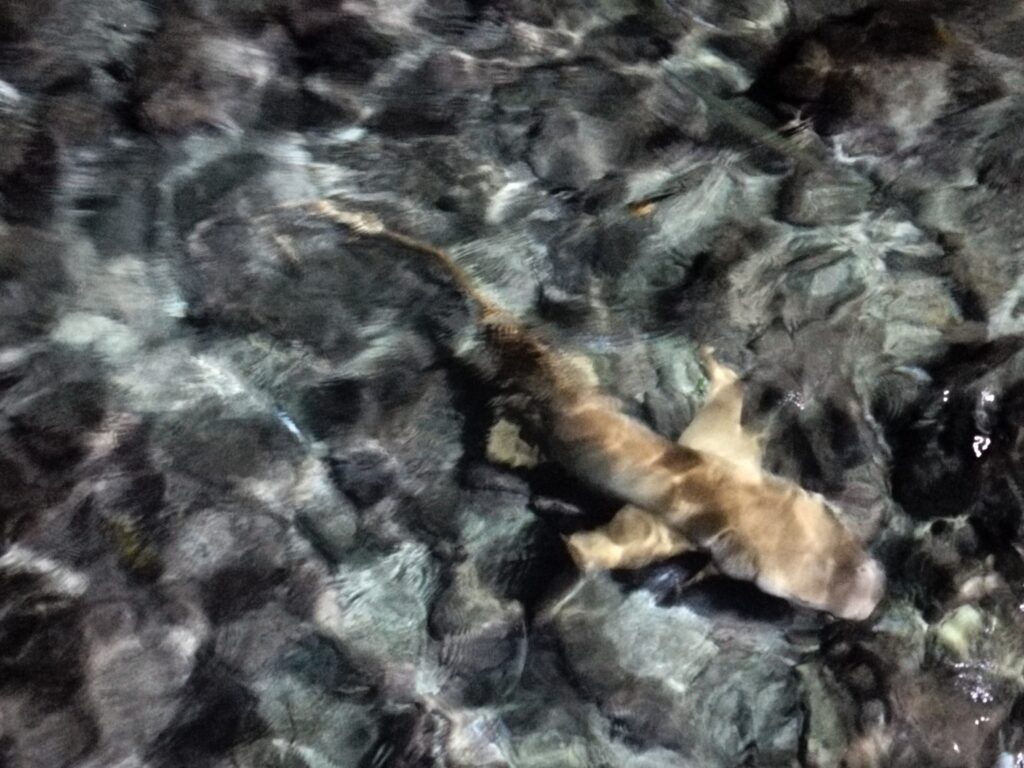
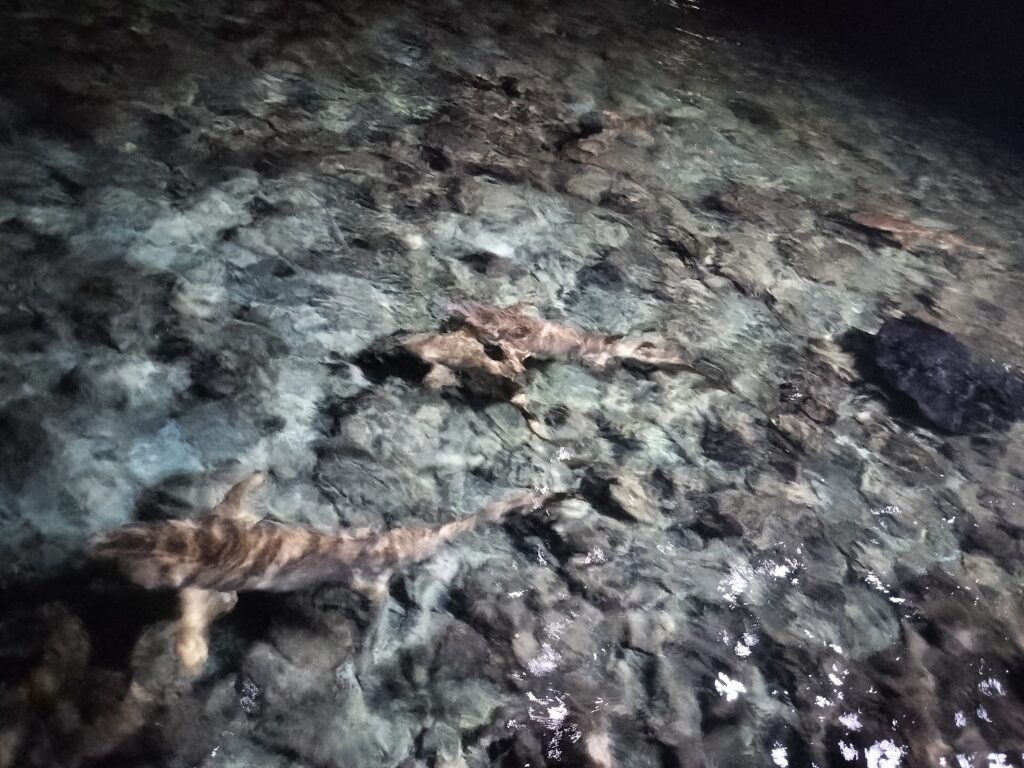
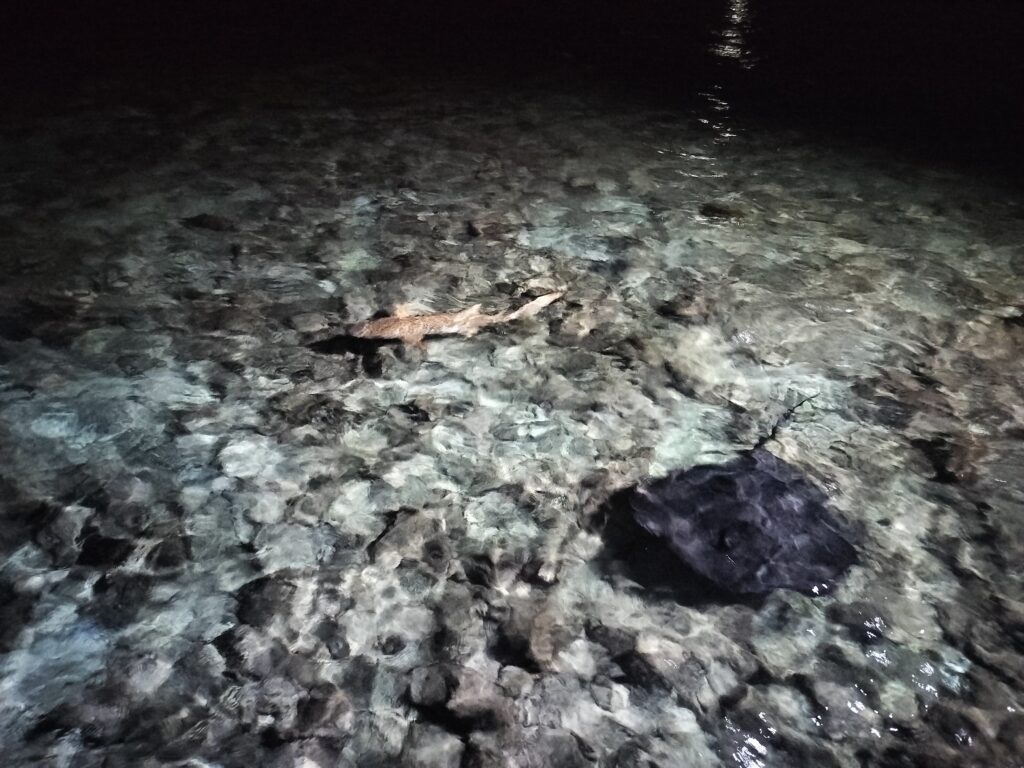
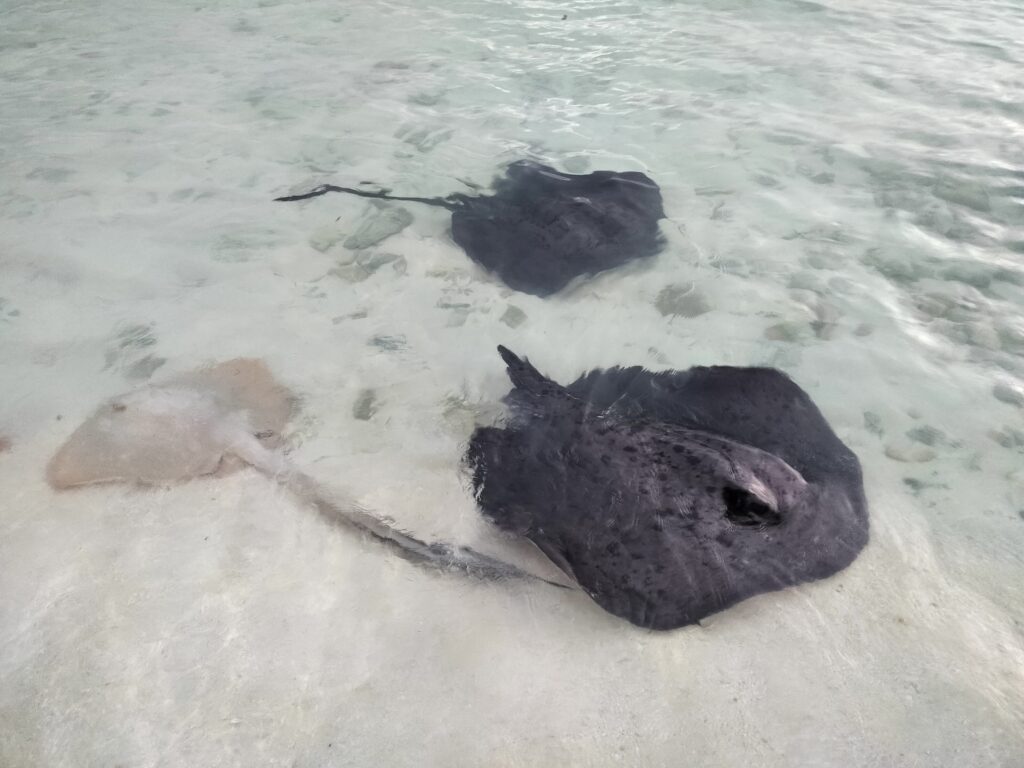
It is also possible to go snorkeling, but it is not particularly advisable because, unfortunately, the locals tip organic waste into the water directly from the jetty. This practice also has another effect, which is to attract nurse sharks and stingrays in the evening (that is, shortly after the waste is dumped into the sea).
Day 3: Excursion to deserted island
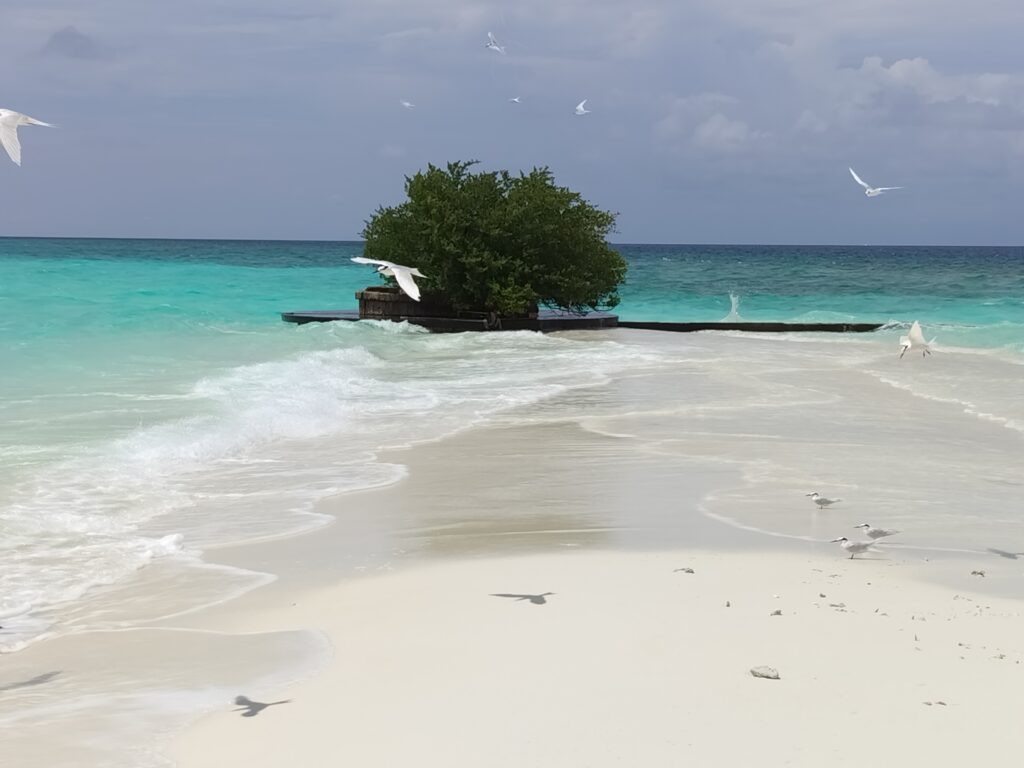
Fortunately, the clouds seem to have cleared, so we decide to book an excursion through our guest house to visit a deserted island off the coast of Omahdoo. The cost of the excursion is 80 USD per person. We set off in sunny weather; the sea is a bit choppy, making the boat journey a bit rough, but nothing too serious. Once we arrive at our destination, we’re hit by a sudden downpour, but fortunately it’s only a brief shower.
The island isn’t actually deserted; in fact, it would be more accurate to call it a private island. Three people live there, and they’d like to build a resort, though work hasn’t started yet. The island isn’t kept in the best condition, with overgrown undergrowth and dirty crockery left lying about, but all in all, nothing too serious. We make the most of the rain to have a quick snack, then set off to explore the island a few minutes later when the sun comes out a bit. The island is quite small, the colours of the sea are beautiful and the sand is snow-white. We stay there for a good couple of hours, during which we manage to go for a swim, though we don’t go snorkeling as the waves are quite strong.
We then head back towards Omahdoo, with plenty of time to say goodbye to Bikini Beach one last time. Before sunset, we make a quick stop at Stingray Beach, so called because of the stingrays that appear there every day just before sunset. Unfortunately, here too, the reason is that the locals feed them. Many people approach the stingrays, feeding them and touching them – in other words, doing the exact opposite of what is recommended – with the locals’ tacit approval. Several small reef sharks can also be seen swimming in the water.
We round off the day and our adventure in Omahdoo with a final dinner at the guest house restaurant, setting off the following morning for Malé, before our transfer to the Baa Atoll. The cost of the speedboat from Omahdoo to Malé is 45 USD and, as always, can be booked through your guest house.
Conclusions
Overall, we really liked Omahdoo, and I think we were right to include it in our itinerary, not least because it’s so easy to get to from Dhigurah. Indeed, we got the impression that the island still retains some of its authentic character, even though there are many building sites. Although we were only on the island for a few days, we were able to get a good look at what it has to offer, partly because we’d already done the main wildlife excursions whilst staying in Dhigurah.
If I had to pick the best bits, I’d say:
- The sunset from Bikini Beach – one of the most beautiful I’ve ever seen.
- Bikini Beach – the clear winner among those we’ve seen.
- The deserted island, with its stunning colours and dazzling white sand.
One of the less pleasant aspects is undoubtedly the locals’ habit of feeding the animals, which we once again found to be widespread.
Otherwise, the island isn’t very lively and doesn’t have a great many amenities. It’s no surprise, then, that the restaurant at our guest house was frequented by guests from other accommodation options, which are often not properly equipped to serve lunch and dinner. Finally, there is nothing further to add regarding costs beyond what has already been mentioned.
Related articles: