“All’ombra dell’ultimo sole
Si era assopito un pescatore
E aveva un solco lungo il viso
Come una specie di sorriso.”
F. De Andrè, Il pescatore
Table of Contents
- Introduction
- Itinerary in pills
- Day 1: arrival in Dhigurah and long sandbank
- Day 2: Excursion to Vaavu atoll
- Day 3: Excursion with whale sharks, attempt 1
- Day 4: Excursion with manta rays + sandbank
- Day 5: Excursion with whale sharks, attempt 2
- Conclusions
Introduction
The Maldives is a country whose territory consists of 26 atolls, totaling over 1,000 islands, of which about 200 are inhabited (the latter are called the Fishermen’s Islands). You will understand, therefore, that it is not easy to choose which islands to visit, especially since, in the common perception, they are all beautiful and each offers the possibility of doing different activities. I will explain in detail in other articles the aspects to consider when making your selection. In this article, I will focus on the first of the fishing islands we visited, Dhigurah, in the South Ari Atoll.
Dhigurah is a slightly different island from those generally found in the Maldives. Its name literally means “long island,” and it is indeed characterized by an elongated shape, stretching for about 4 km in length and about 500 meters at its widest point.
There are essentially three main reasons why Dhigurah was one of the islands selected for our trip:
- This island is sufficiently distant from the capital, which is one of the most important factors to consider, as the closer you get to the capital, the more built-up and touristy the islands become, as well as being less well preserved (on the other hand, the cost is generally lower if you stay in the Malé area).
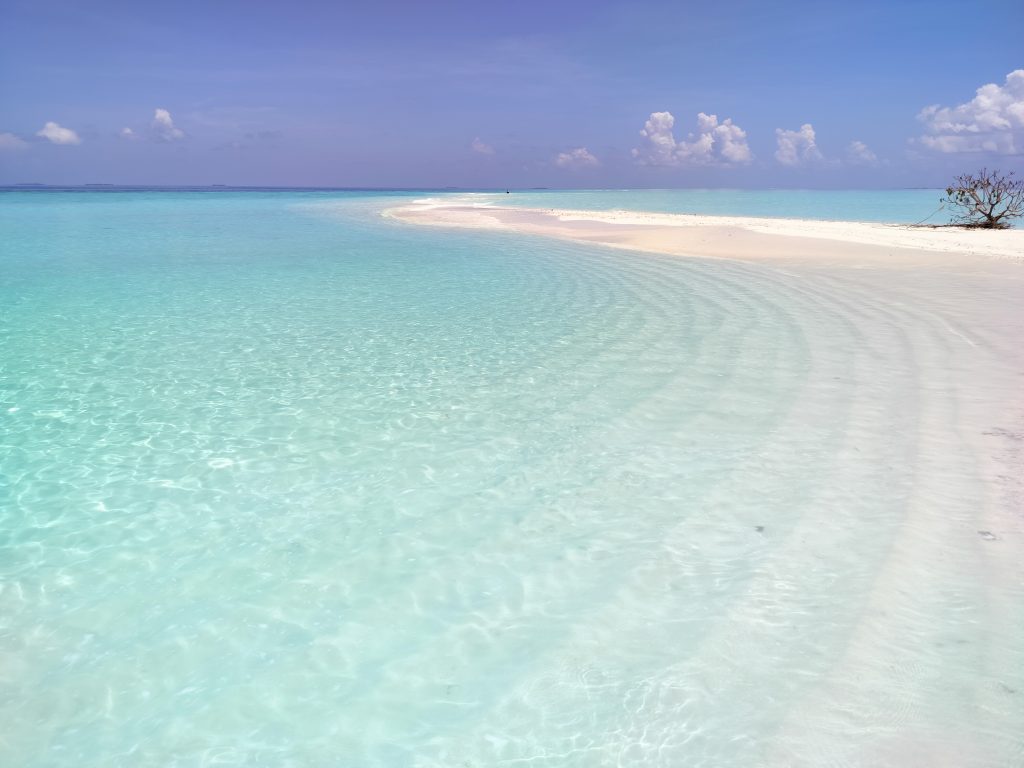
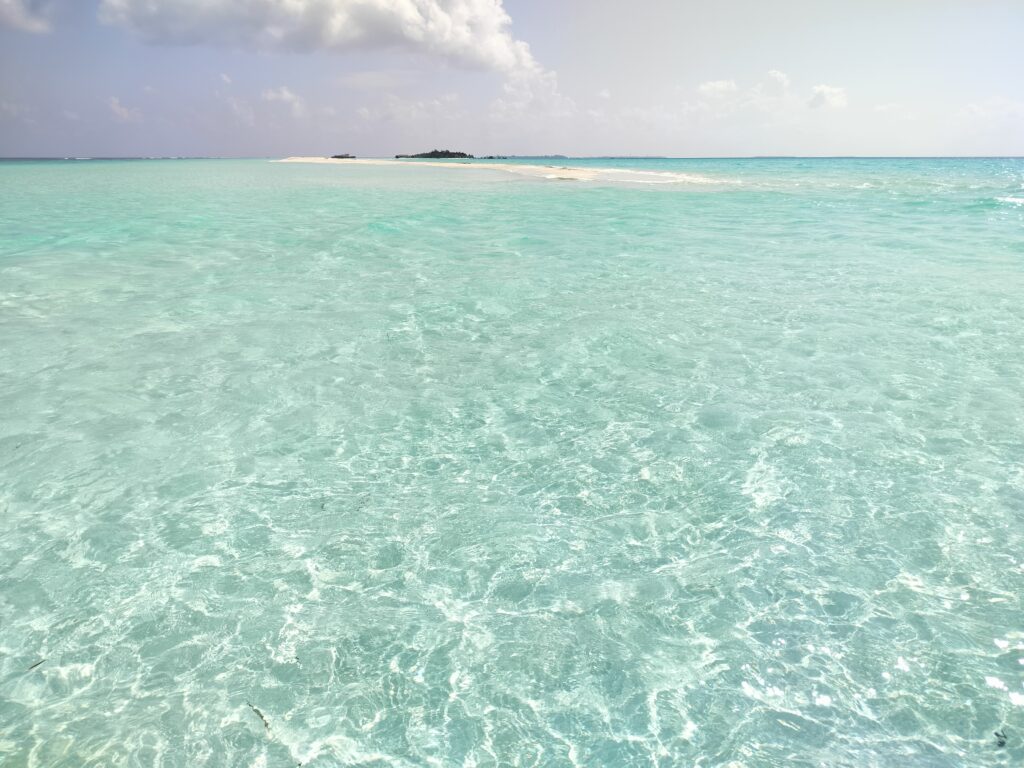
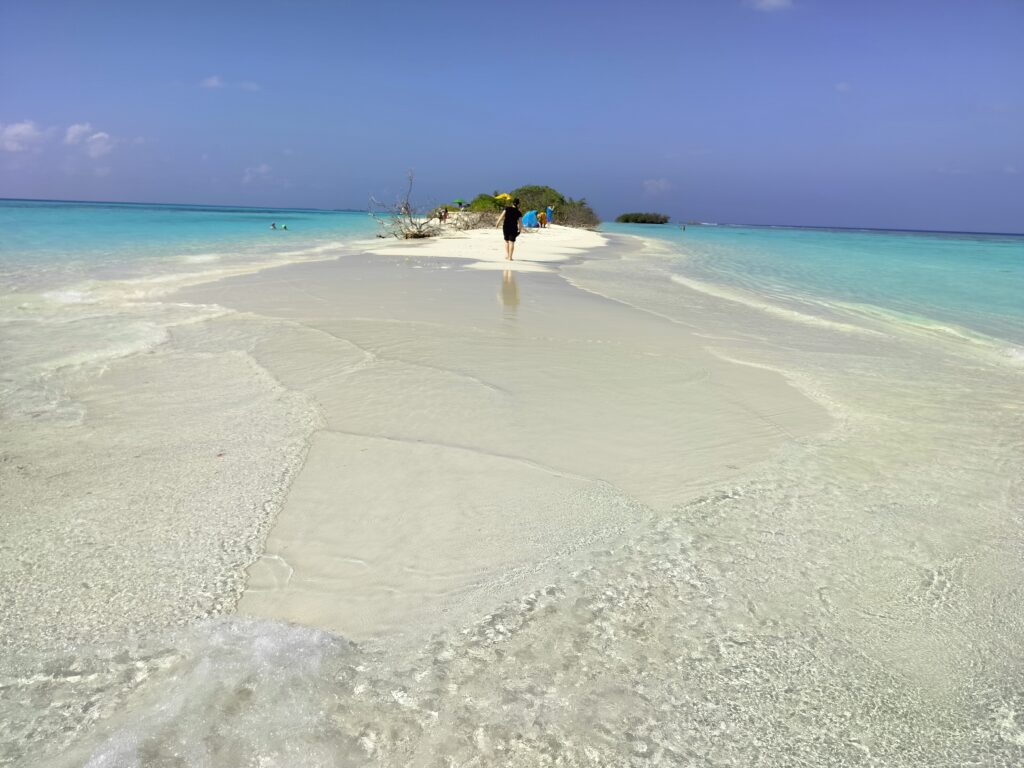
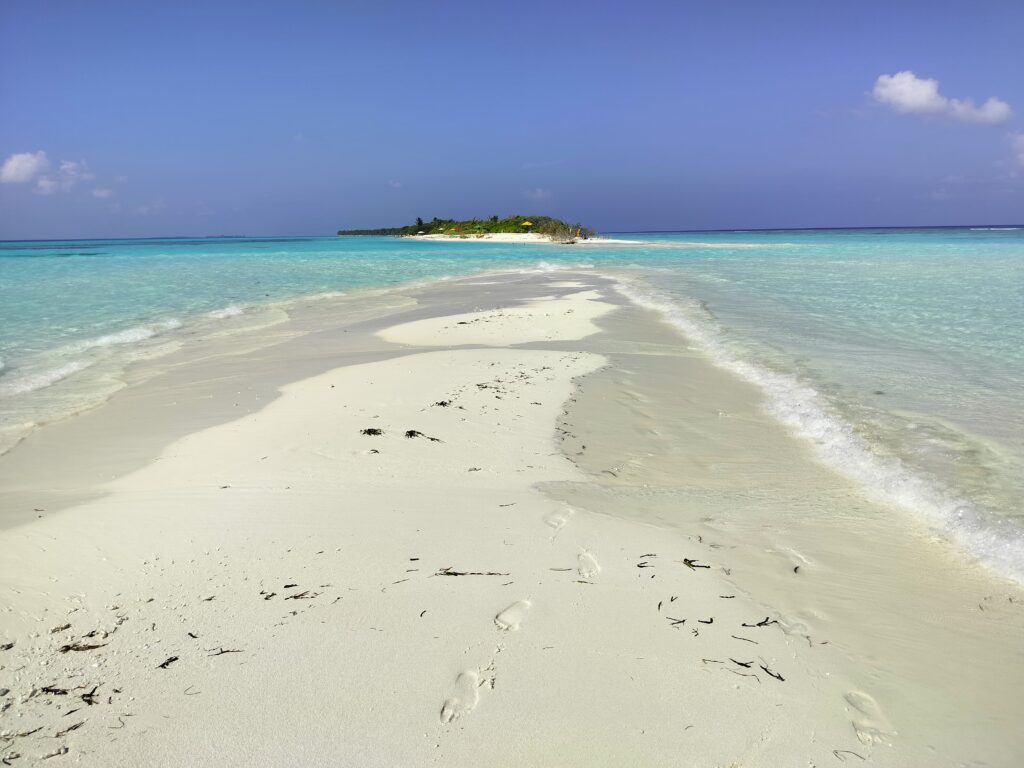
- Its very long sandbank: this is a strip of sand at the end of the island, which can be easily reached on foot. Due to its shape and the colors of the water around the strip of sand, the beach connected to the sandbank is considered one of the most beautiful in the Maldives.
- The high probability of seeing whale sharks. Even if you are on other islands in the Ari Atoll (north or south) and in some cases even on other atolls, the excursions organized for sightings always include transfer to Dhigurah, with the price of the excursion increasing with the distance from this island (there are also other factors that can affect the price, but I’ll keep it simple). Since shark sightings are not guaranteed, we thought it would be more convenient to be directly on site to increase the chances of seeing them, while keeping costs down, especially if it was necessary to repeat the excursion. As I will explain, taking this into account was a winning choice.
The island also has a long bikini beach where you can swim, in addition to the aforementioned sandbank beach. Speaking of the bikini beach, I would like to remind you that on the fishing islands, you cannot swim everywhere out of respect for the Maldivian religious culture, which is linked to Islam, but there are some areas where tourists can stay in their swimsuits.
Itinerary in pills
Like almost all fishing islands, Dhigurah offers a wide range of excursions, which can generally be easily arranged through your guest house. For each island, guest houses organize roughly the same excursions, with prices that generally vary little. However, not all guesthouses are able to organize excursions to more or less distant atolls, and since we were interested, among other things, in the possibility of visiting the Vaavu Atoll on a day trip, we did a thorough search for the accommodation that best suited our needs.
We found two guest houses that suited us. The first is Dhiguveli Maldives, chosen for its accommodation, which is affiliated with the GoDivers diving center. The second, which is the one we organized all our excursions with, is Akiri Dhigurah, which we chose because it offered excursions that we felt were better organized, as well as at lower prices. As already mentioned in my article on the excursion to the Vaavu Atoll, I remember that, as a rule, each diving center only serves guests from certain guest houses. GoDivers, for example, does not accept guests from guest houses other than Dhiguveli Maldives or Dhiguveli Breeze for its excursions. As for Akiri, I managed to get them to accept us thanks to the fact that, at the time of my request for information (prior to departure), the establishment was fully booked.
Among the other guest houses that organize excursions in the Vaavu Atoll, I would also mention Seaside Dhigurah, which we did not choose because it was outside our budget. Finally, among the other guest houses we consulted were Tides Dhigurah and Bliss Dhigurah, whose price list I am including here along with those of GoDivers and Akiri.
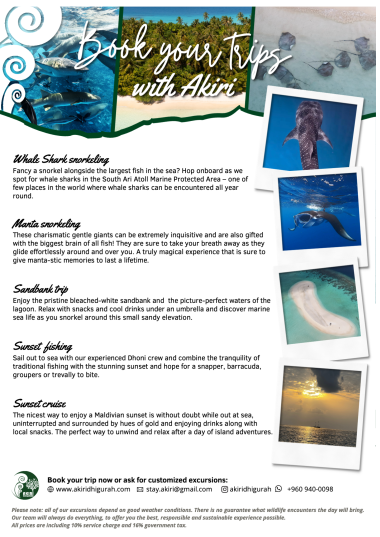
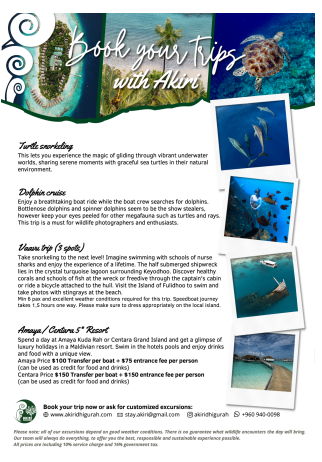
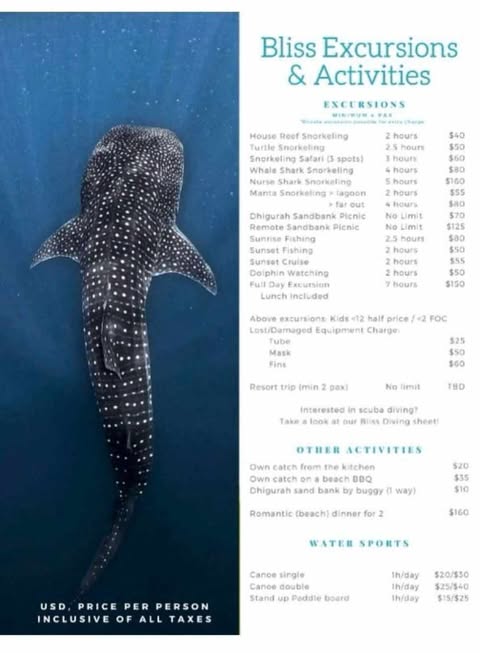
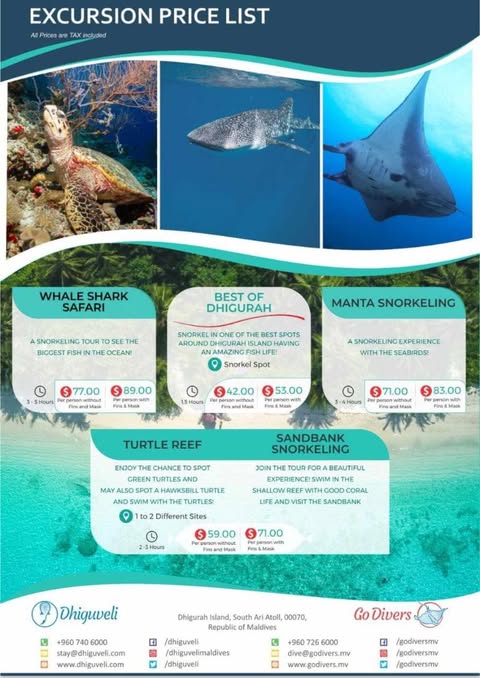
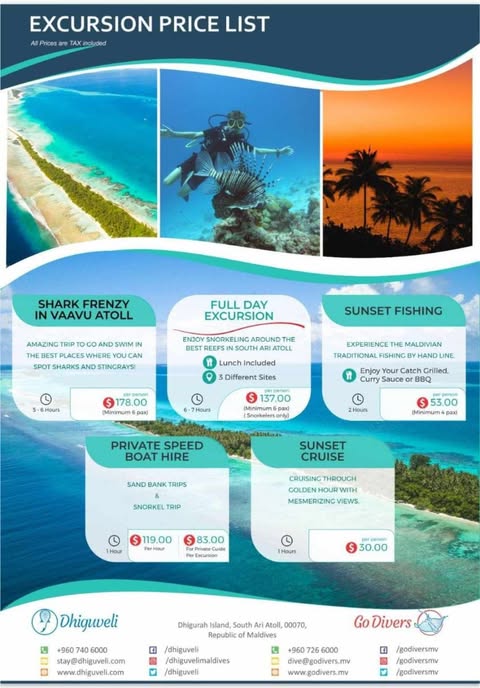
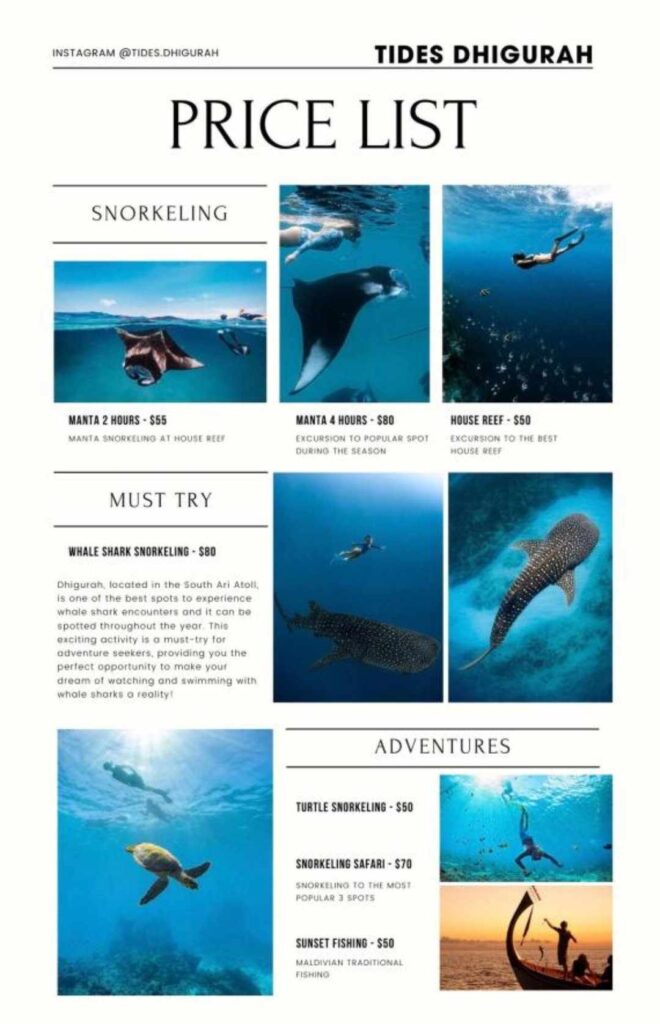
The excursions we were most interested in were those related to wildlife sightings (especially whale sharks and nurse sharks) and the chance to visit some sandbanks. Our stay in Dhigurah lasted a total of 5 days, 4 of which were full days. We took part in an excursion on each of the 4 full days available, thanks to the favorable weather. Below is a recap of our activities.
| Day | Activity |
|---|---|
| 1 | Arrival and visit to the long sandbank |
| 2 | Excursion to Vaavu atoll |
| 3 | Excursion wahel shark – attempt 1 |
| 4 | Excursion mantas + remote sandbank |
| 5 | Excursion whale shark – attempt 2 |
Day 1: arrival in Dhigurah and long sandbank
Our flight landed on time at Malé airport at around 10 a.m. Our accommodation had arranged for us the picked up at the airport by one of their representatives, who took us to the port (within walking distance) to catch the speedboat, which took us to Dhigurah in about an hour and a half. The speedboat to Dhigurah costs $60 per person. Alternatively, you can get there at a ridiculously low cost (a few dollars) by local boat (called dhoni), but it takes an eternity. You can check the transfer times and all the routes on Atoll Transfer.
We check into our room and have a quick lunch in our hotel restaurant so that we can get to the island’s sandbank in the early afternoon. To save time, we use a tuk-tuk provided by our hotel for a few dollars. The tuk-tuk drops us off near the sandbank, which we reach after a short walk on the sand. The sandbank is truly beautiful, and there are also umbrellas and chairs that can be used on a first-come, first-served basis. We take our time to take a few photos before going for a refreshing swim. It is possible to swim near the sandbank on both the east and west sides, but snorkeling is not a must.
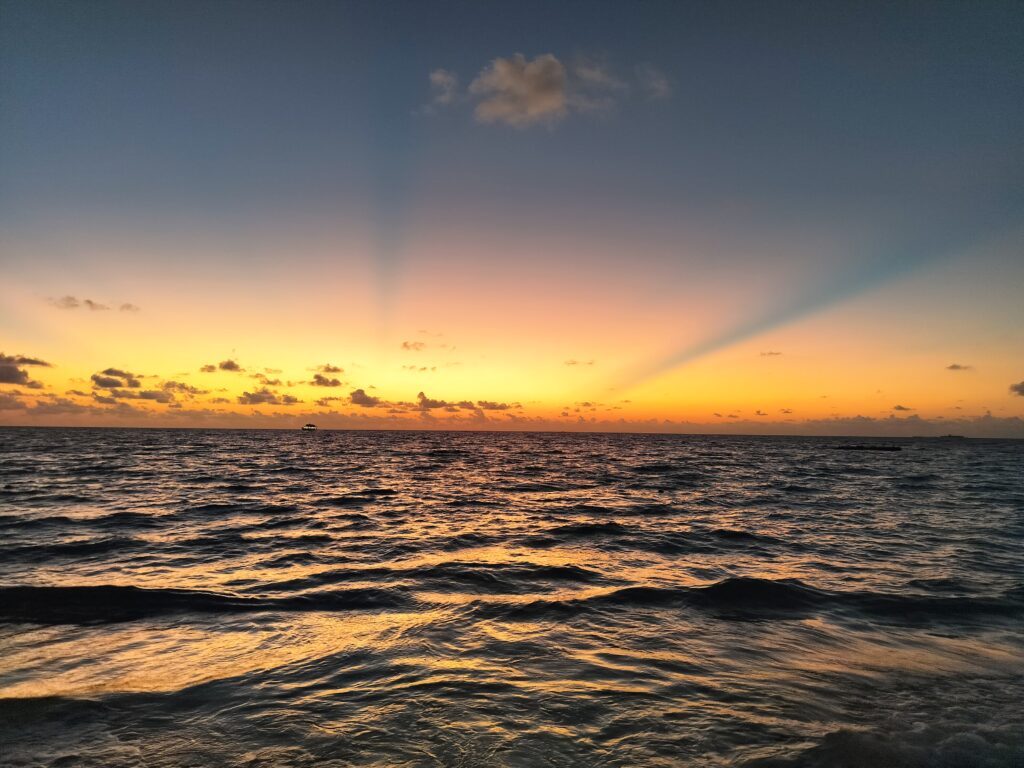
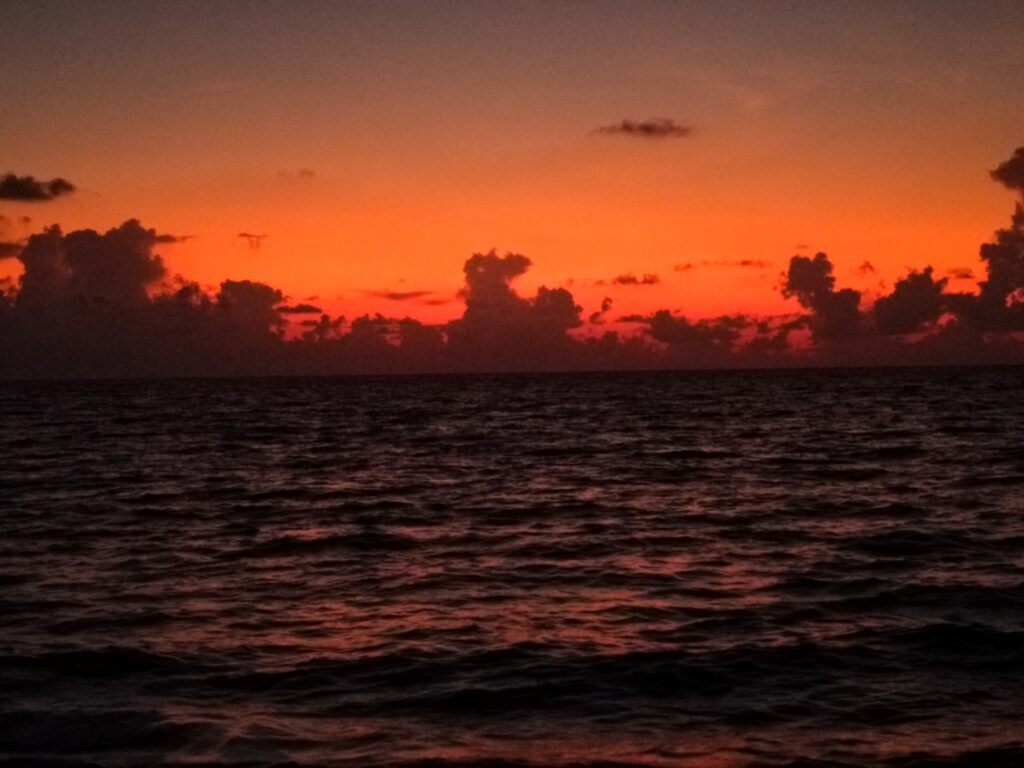
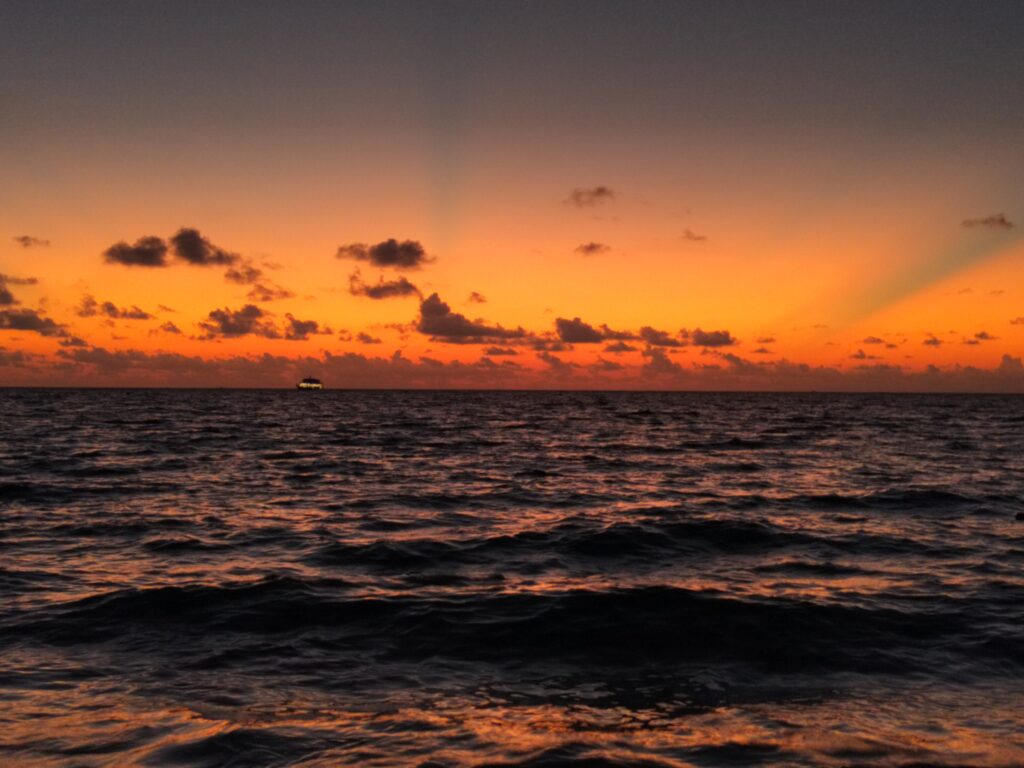
A few hours later, we walk back to our hotel along the island’s internal path and enjoy the sunset from bikini beach. We have dinner, as we will on other evenings, at the restaurant of our guest house.
Day 2: Excursion to Vaavu atoll
We get up quite early because the pick-up at our guest house, organized by Akiri, is scheduled for around 8 a.m. The excursion includes several spots:
- Leopard shark sighting (not usually guaranteed, but we were lucky)
- Dolphin sighting
- Snorkeling with nurse sharks
- Visit to an atoll sandbank
- Snorkeling near a shipwreck
The reason we opted for Akiri rather than the diving center affiliated with our guest house is that the latter only offers excursions to spots 3 and 5, and at a higher overall cost. With Akiri, the excursion costs $140, which drops to $100 if you decide not to dive with nurse sharks. You can find details in my article about the excursion to the Vaavu Atoll, about which there is much to say.


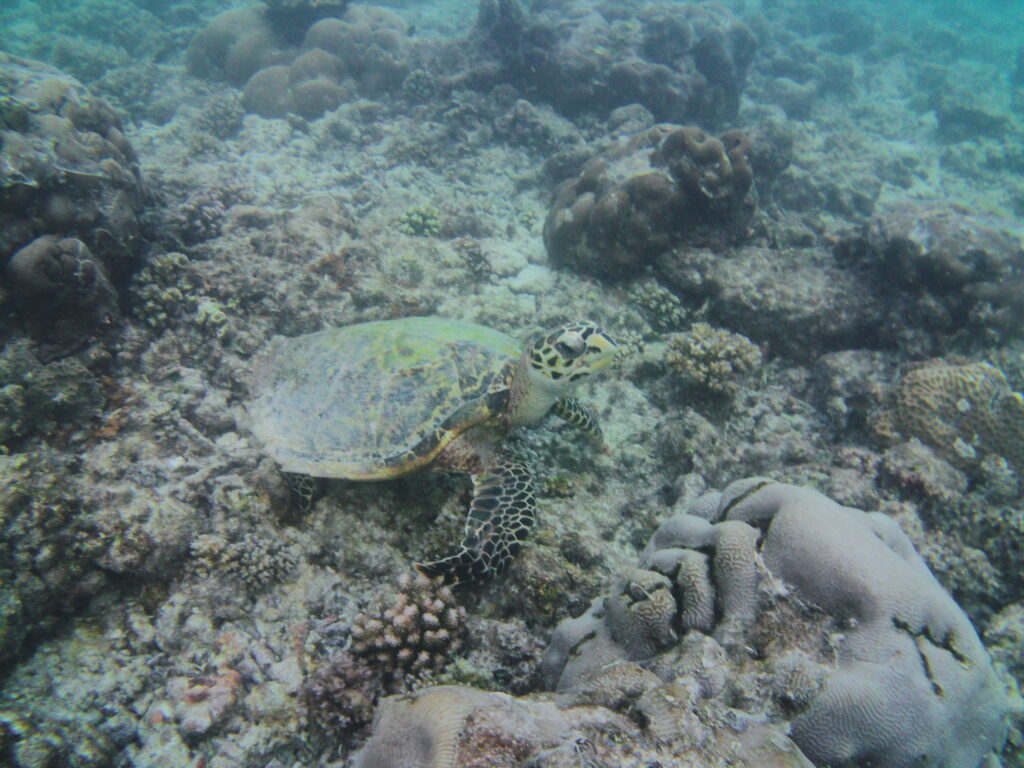
We return from our excursion around 4 p.m., just in time for a swim at bikini beach. Here, the snorkeling is definitely better than around the island’s sandbank, although still not as good as what we will see in the following days, despite a beautiful turtle that I manage to see up close.
Day 3: Excursion with whale sharks, attempt 1
Pick-up is scheduled for around 9:30 a.m. We find ourselves in a rather large group of people, mostly Italian. The cost of the excursion is $90, including equipment, and also includes a stop at a snorkeling spot in a remote area of the reef. Once on board, the skippers explain a little about how the excursion works. Basically, we approach the area where sharks are frequently found and, once there, the crews of the various boats search for them using drones, much like they did with the leopard shark during the excursion to the Vaavu Atoll. The first crew to spot the sharks sends a signal to a sort of control center and to all the other boats, which then move towards the animals. However, shark sightings are not guaranteed, as the sharks are not fed, which is only right.
Unsurprisingly, our first attempt is unsuccessful. After a few hours of searching, our skippers inform us that we have to retreat, as there is no sign of whale sharks on this particular day, unlike on previous days. We therefore divert to the snorkeling spot, where we will stay long enough to try to make up for the disappointment. Since there have been no sightings, Akiri charges us $70 instead of $90.
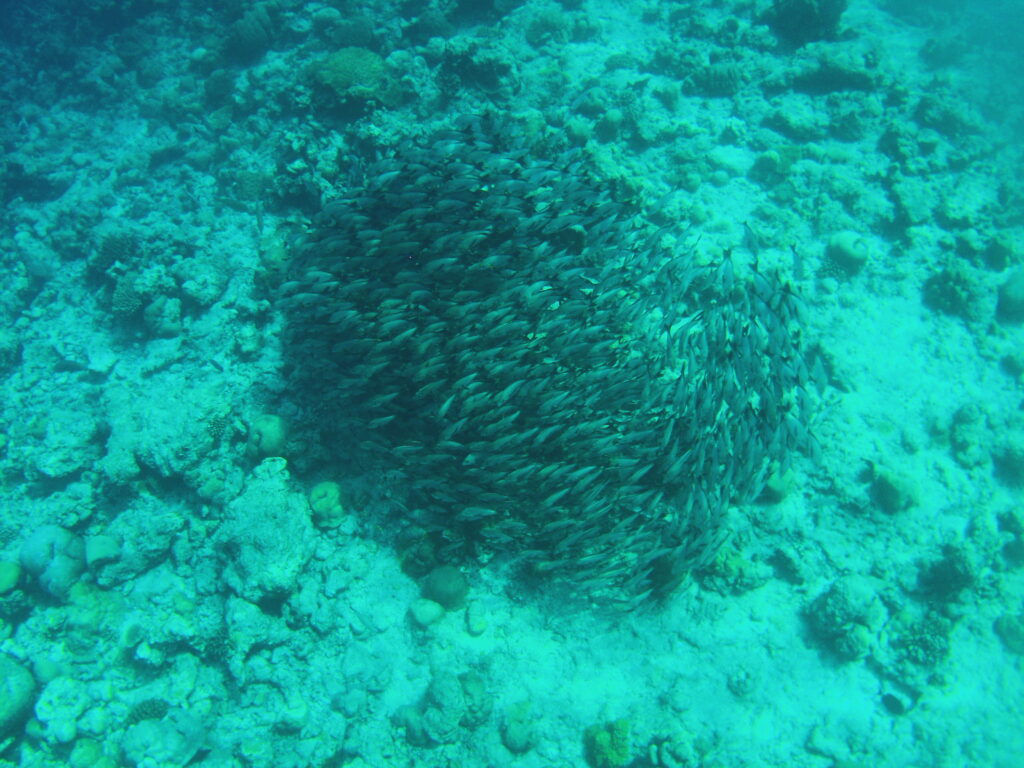
The snorkeling, however, is quite impressive. Among other things, we spot a couple of reef sharks (blacktip) and a beautiful eagle ray.
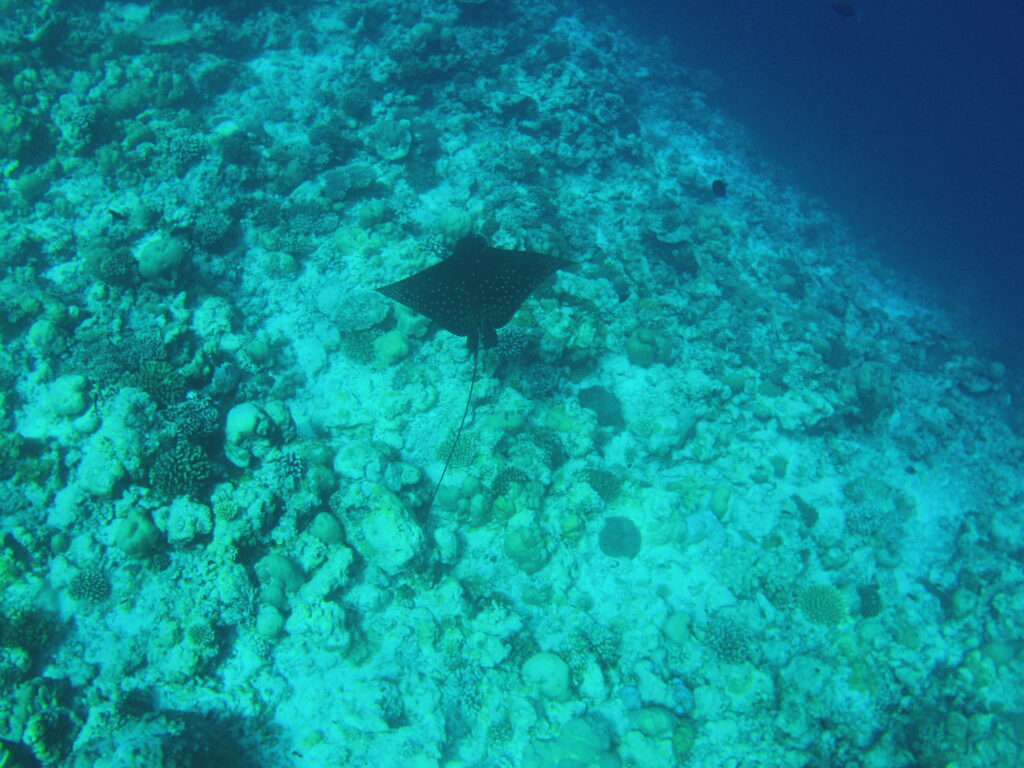
Finally, we return to Dhigurah. Since we still have the whole afternoon ahead of us, we go back to the sandbank, this time renting a bicycle.
Day 4: Excursion with manta rays + sandbank
Since we had already seen plenty of sea eagles and stingrays on other trips, we weren’t too interested in going on an excursion specifically to see manta rays (also because we have other trips planned where we’ll probably see them). Our main goal for the day is the remote sandbank. However, since the cost of the excursion organized by Akiri, which includes manta rays + sandbank, is the same as the excursion organized by GoDivers, which only includes the sandbank, we opt for the combination offered by Akiri. The final cost is $70 per person, including snorkeling equipment.
We head straight for the spot where manta rays are usually spotted. The crew manages to spot a couple with the usual drone, so we rush towards the animals. The sighting works a bit like whale sharks, so when we get close to the manta rays, we find ourselves in the middle of a dense crowd. Fortunately, the manta rays swim quite deep and are not too bothered by people, although I doubt they enjoy the commotion very much. There is little to say about manta rays, the elegance of their movements is indescribable.
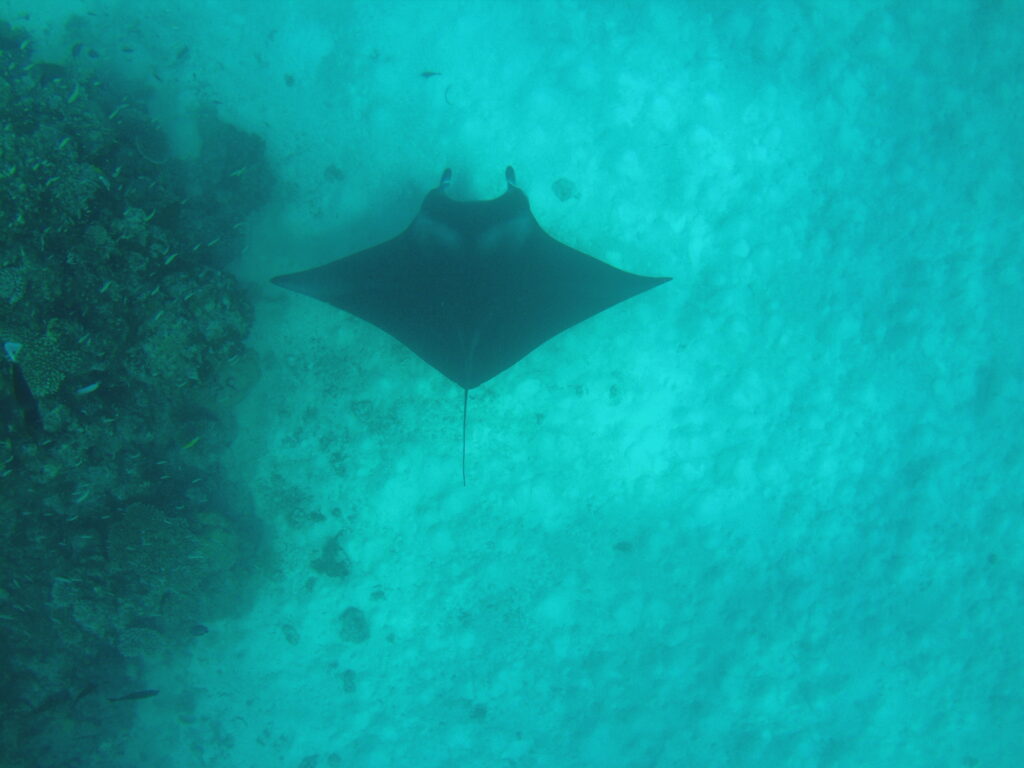
After swimming with the manta rays, we reach the sandbank, the main attraction of the excursion for us. It is another beautiful sunny day, which makes us appreciate even more the stunning colors of the sea surrounding the strip of sand. There is also a small saltwater lake on the sandbank, which creates beautiful effects with the light.
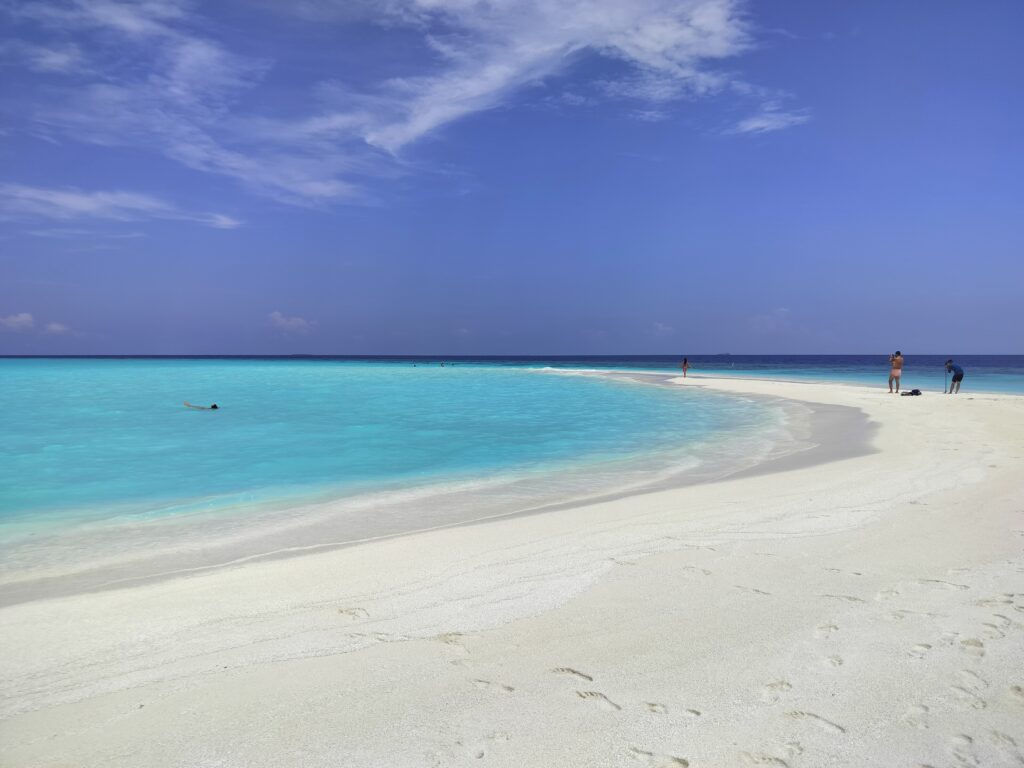
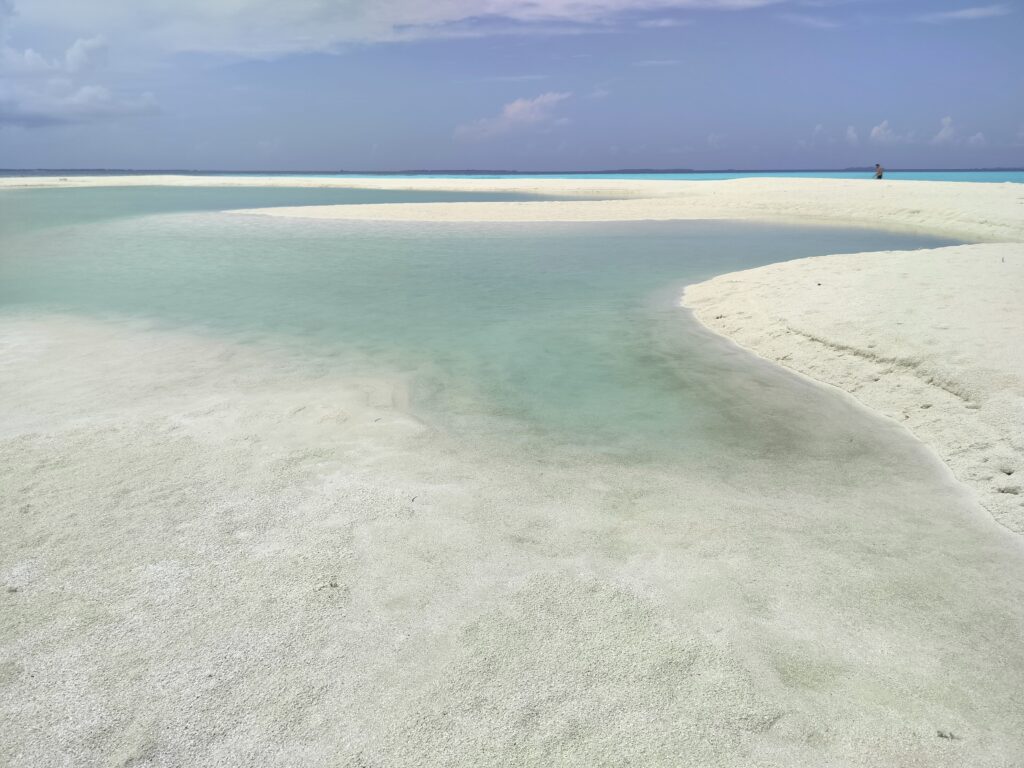
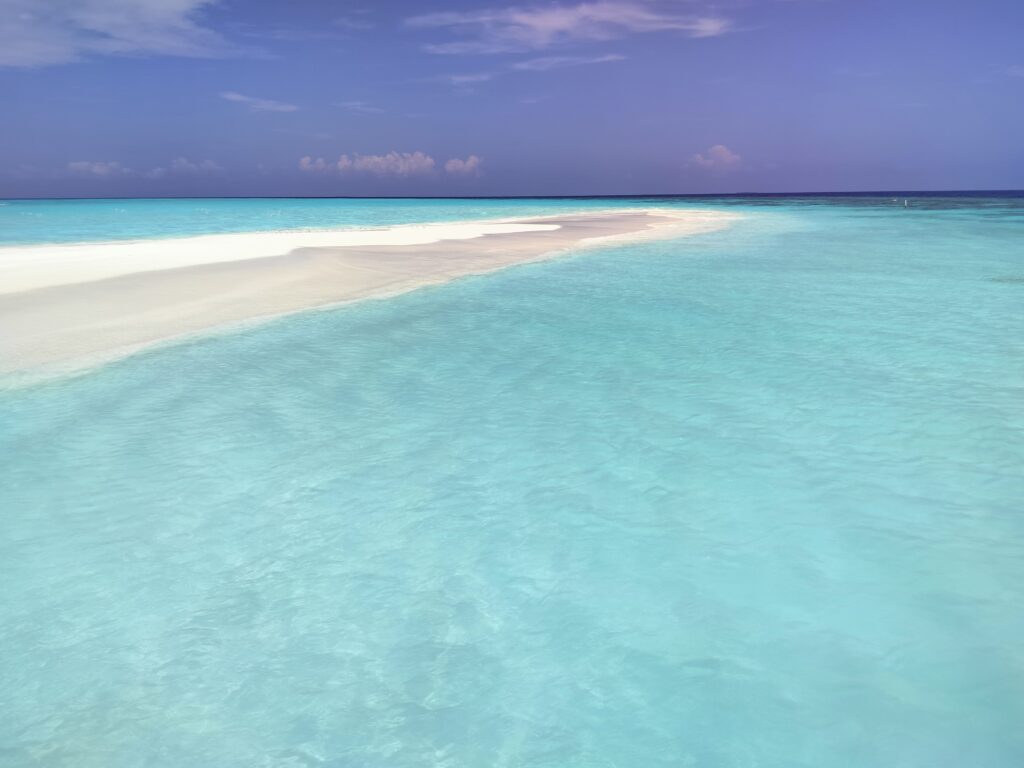
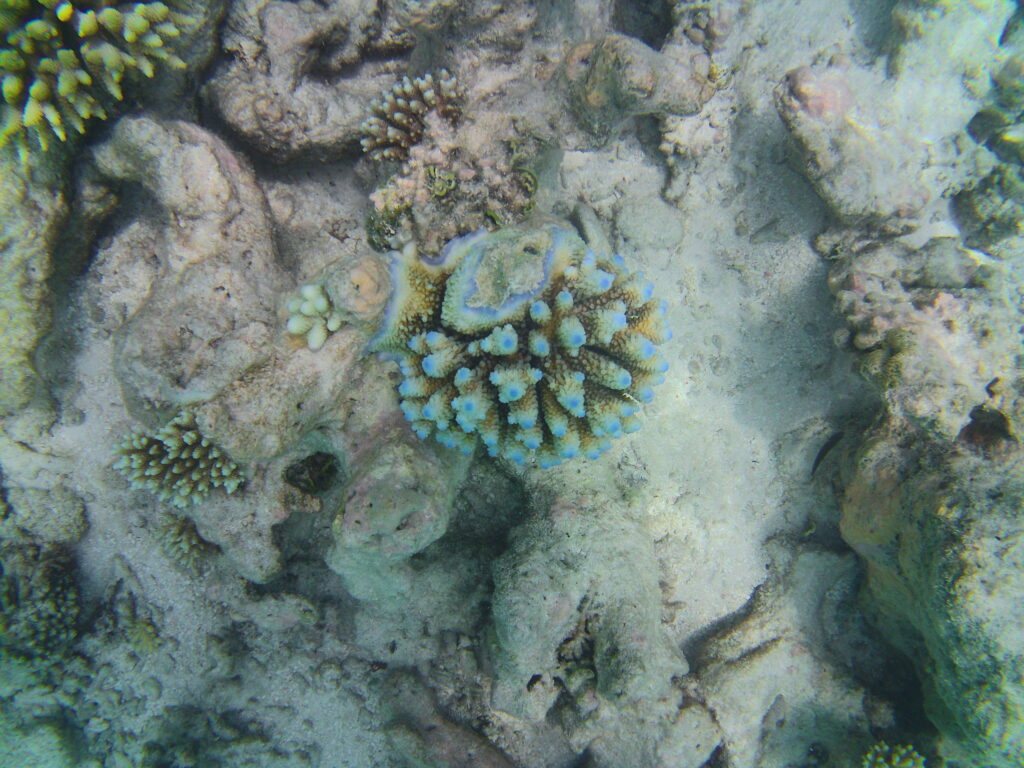
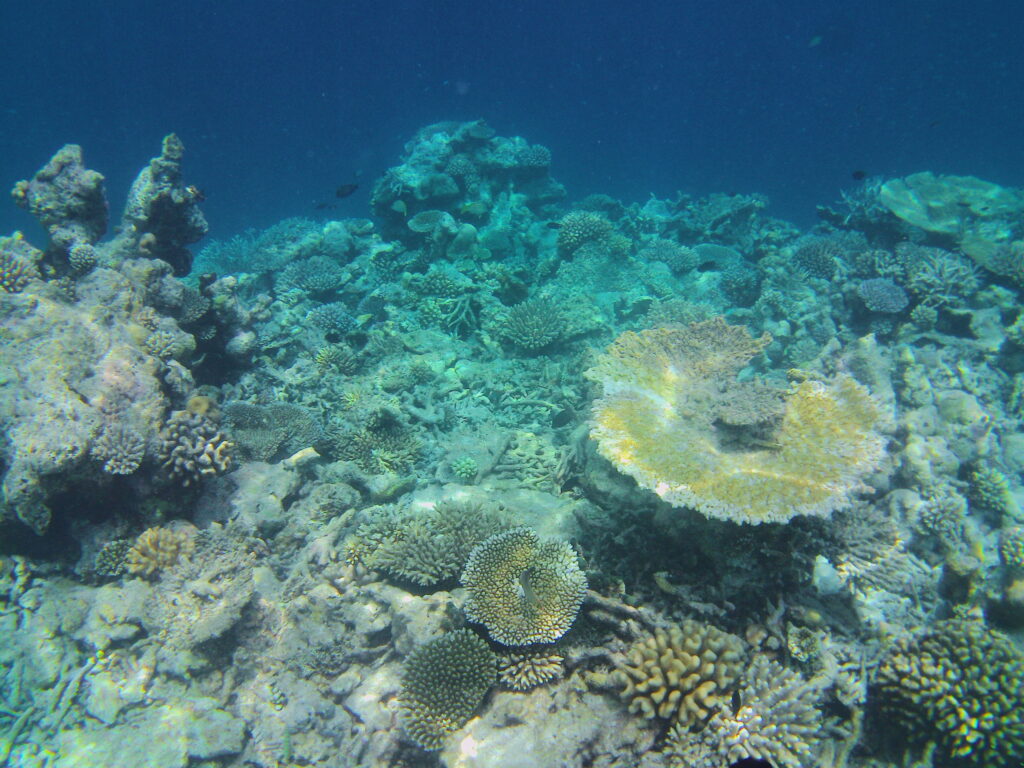
Snorkeling near the sandbar is also very enjoyable, and here too we manage to see a few reef sharks. We finally return to Dhigurah in the early afternoon, ending the day once again at Bikini Beach.
Day 5: Excursion with whale sharks, attempt 2
After our first unsuccessful attempt, we decide to try again to spot the whale shark, repeating the excursion we did two days earlier. Once again, Akiri offers us a small discount, allowing us to pay $70 each, including the guide. This time, there are only six of us on a small motorboat, as many people prefer not to try again for fear of losing more money. We share this fear, but it is also our last day, and we don’t know if we will have another chance in the future.
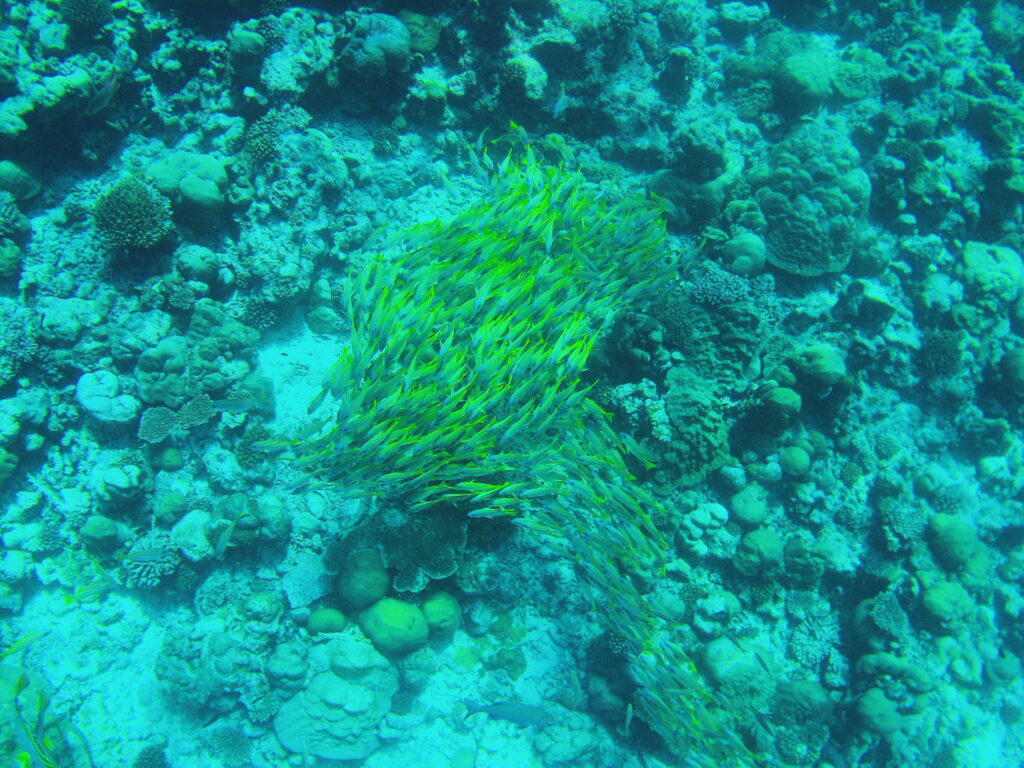
The day starts off rather badly. After more than two hours of waiting, there is still no sign of life. We fall back on a snorkeling spot, different from the one on the first excursion, taking some time to wait for someone to show up. The snorkeling has some exciting moments, with a few beautiful schools of colorful fish and a couple of turtles to brighten up the moment.
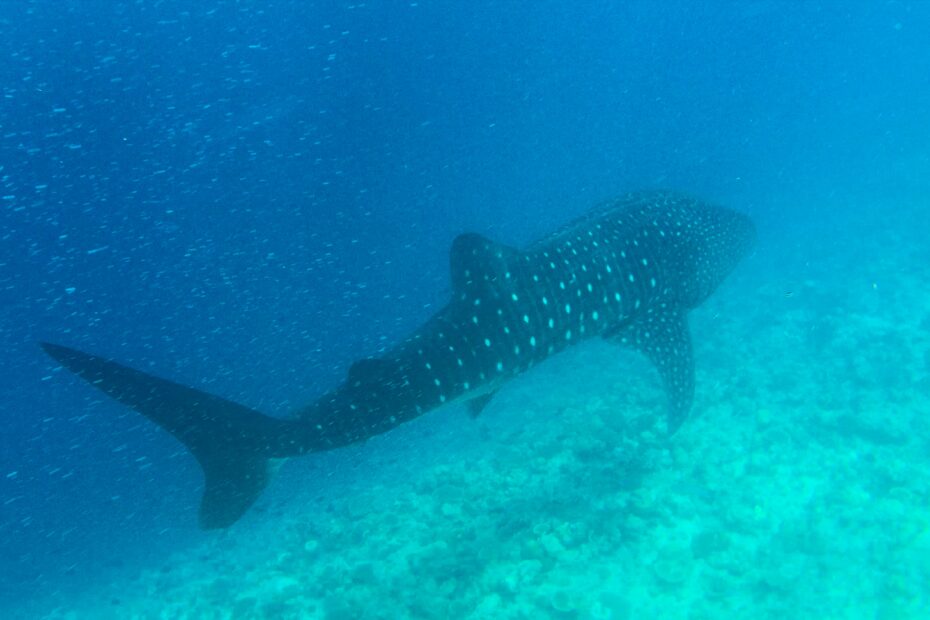
We climb back onto the boat, still nothing. In the meantime, one of our group starts vomiting due to seasickness, and I begin to think that once again we will return home empty-handed. Suddenly, however, a message arrives for the skippers. “Get ready, they’ve spotted it.” The motorboat braves the rough sea to get there as quickly as possible, and we stop as soon as we see a crowd of people gathered together. We dive in for the first time in the hope of seeing something, but the crowd is too dense and we can’t get close. The guide suggests we get back on the motorboat and head to a spot where the shark seems to be passing, which we reach in a few seconds. We dive in, and at that moment, we are the only ones there. After about ten seconds, I see a black spot in the water that is getting bigger and bigger: it’s him, we’re finally here. I am mesmerized by his size and his slow, calm movement, and I manage to film him quite well. It’s a rather exciting moment, but it doesn’t last long. In a matter of moments, we are joined by a crowd of rowdy and annoying tourists, who force their way through in an attempt to reach the shark and take a cool selfie with it. Despite the recommendations of the Maldivian crew, who urge us to stay at least 3 meters away from the shark, many people approach it and even try to touch it.
At that point, I am forced to leave, as I can no longer enjoy the moment in peace. While the thrill was intense, the management of the tourist groups leaves much to be desired. We get back on the motorboat, annoyed by the disruptive tourists but delighted with the experience.
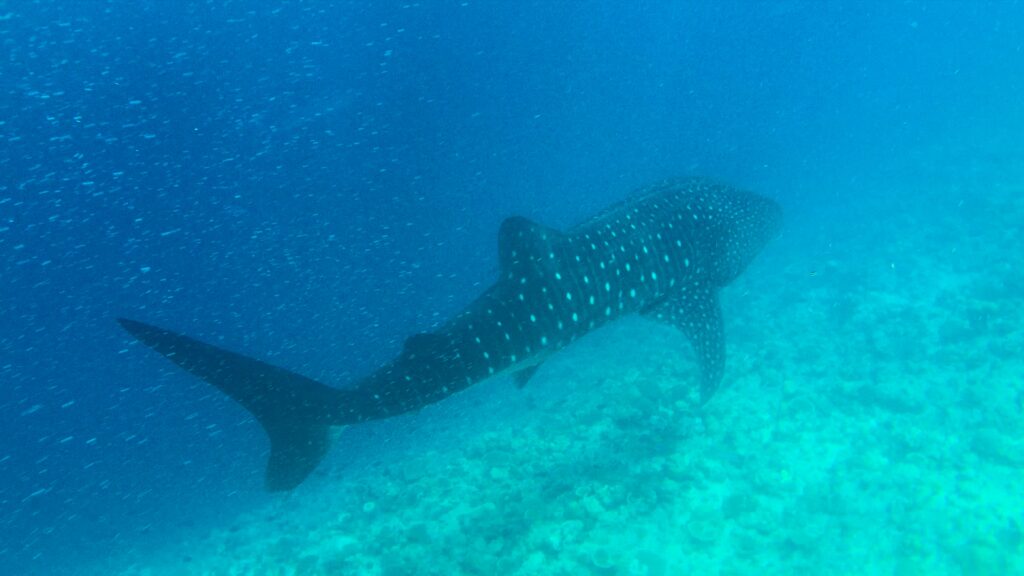
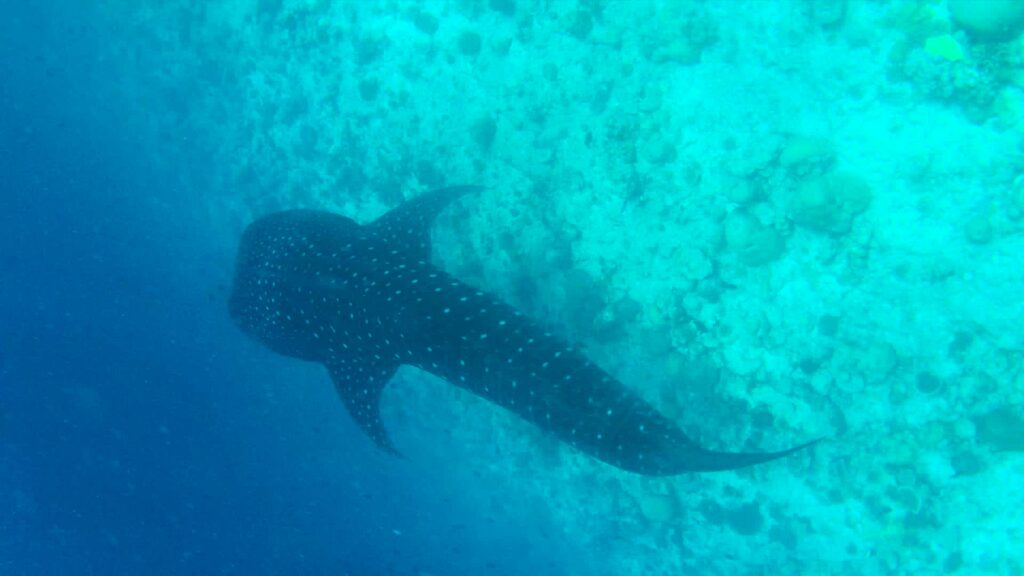
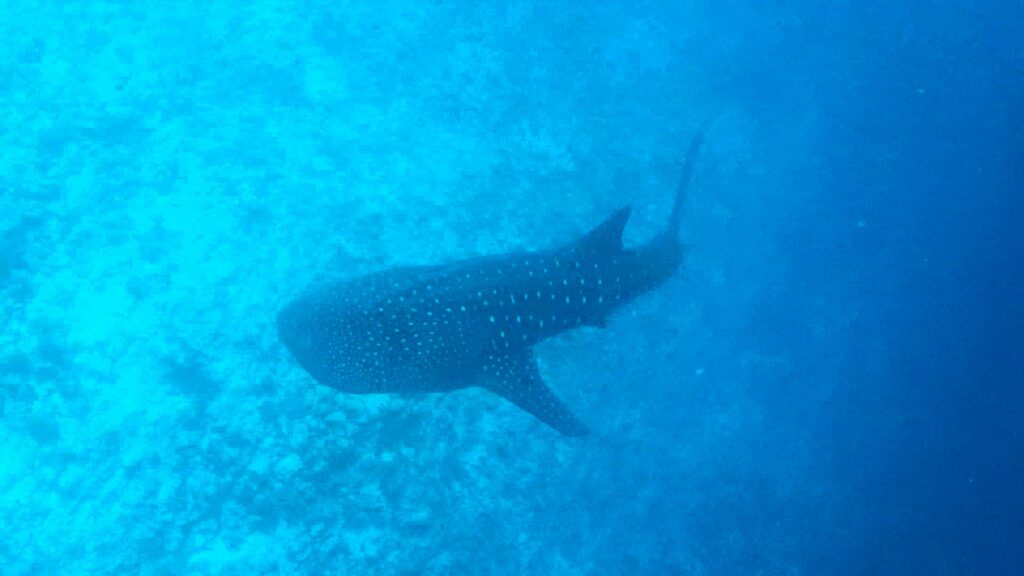
We return to Dhigurah for one last swim at bikini beach, ending the day with another wonderful sunset. The next day, we head to the second fishing island we have chosen to visit, Omahdoo, also in the South Ari Atoll. To get to Omahdoo, we had arranged a private speedboat with the accommodation we were staying at, which cost a total of $150. But that’s another story.
Conclusions
Our five days in Dhigurah were very intense. We managed to do everything we had planned, thanks in part to favorable weather conditions, so we can only say that we were completely satisfied with the experience. In my opinion, choosing this island was the right decision, both for the excursions we were able to organize and for its relative liveliness. I say relatively lively because we were never bored and had the opportunity to socialize a little with some travelers we met on the excursions, but you certainly shouldn’t expect the Rio Carnival. This was not the case on other islands.
The choice of accommodation was also excellent. Our room was quite spacious and well managed, with daily cleaning and towel changes. The restaurant was good, although I wasn’t particularly impressed with Maldivian cuisine in general. What’s more, it is one of the guest houses closest to the bikini beach, so much so that you could even get Wi-Fi on the beach! Looking back, I would choose it again, also for its good value for money.
We were also very satisfied with the excursions, apart from a few unpleasant aspects related to the management of ecosystems, which is quite common throughout the Maldives, in our experience.
It’s not easy to list the best moments, but I’ll give it a try:
- The first 10 seconds with the whale shark, an emotion as unique as it was fleeting, ruined by the extremely questionable overall management.
- The sandbank in the Vaavu Atoll, with its splendid colors spread over a rather large area, despite the small size of the strip of sand.
- The remote sandbank near Dhigurah, with the heavenly colors I expected from the Maldives.
Note costs, apart from those already mentioned: for 5 nights at Dhiguveli Maldives, we spent $540 for two people. Food costs an average of around $10 per person for a full meal, and half that for a snack (such as an omelet or sandwich).
Related articles: