“Birth is never as certain as death. That is why simply being born is not enough. We are born in order to be reborn.”
P. Neruda
Table of Contents
- Introduction
- Itinerary in pills
- Day 1: Arrival in San Pedro de Atacama
- Day 2: Lagunas Escondidas de Baltinache and Valle de la Luna
- Day 3: Ruta de los Salares
- Day 4: Geyser del Tatio
- Day 5: Piedras Rojas and Lagunas Altiplancas
- Conclusions
Introduction
Memories from a lifetime ago take me back to my grandfather, who, whilst telling me stories from his younger days, would speak of a great Chilean poet with whom he had shared a prison cell in Argentina. That poet was Pablo Neruda, and of course the events my grandfather told me about never actually happened. It was in this way, however, that I first began to hear about Chile, a country that many, inexplicably, underestimate.
Among the most unique travel destinations in this extraordinary country, the Atacama Desert deserves a special mention, as it is considered the driest non-polar place on Earth. Reflecting on the opening words of my grandfather’s imaginary friend, after spending five days in the Atacama Desert I began to realise that, in reality, even in the heart of aridity, the earth is never still. In the Atacama Desert, this is evidenced by the presence of dozens of volcanoes, which serve as a reminder that, beneath the desert’s seemingly dormant surface, fire continues to move and shape the land.
Due to its proximity to the Bolivian border, a trip to the Atacama Desert is often combined with a tour of the Salar de Uyuni, which is exactly what I did too. San Pedro de Atacama, in fact, as well as being the base for exploring the main attractions of the Chilean desert, is also one of the most common starting (or finishing) points for visiting the famous Bolivian salt flats.
Itinerary in pills
⭐ Fun scale: 9.5/10
🏛️ Not to miss: Piedras Rojas, Ruta de los Salares, Geyser del Tatio.
⏱️ Duration: 5 days
👣 Mood: nature and adventure 100%
💰 Valle de la Luna: 29000 CLP; Lagunas de Baltinache: 39000 CLP; Ruta de los Salares: 46000 CLP; Piedras Rojas: 79000 CLP; Geyser del Tatio: 35000 CLP. 1000 CLP = 1€.
💡 Keep in mind: Most of the hikes take place at altitudes of over 4,000 metres, so it is necessary to acclimatise.
🎟️ Tip: Once you’ve acclimatised, start with Piedras Rojas – it’s the hike that gets cancelled most often.
Local agency or self-drive?
Unlike the Salar de Uyuni, exploring the Atacama Desert independently is perfectly feasible with a hire car. The roads leading to the main attractions are generally tarmacked and suitable even for those who aren’t rally drivers. On the other hand, group tours organised by the many local agencies aren’t particularly expensive, so travelling in your own car is a suggestion I would only give to those travelling in a group. In this case, however, remember to download offline maps, as there is no mobile signal at all in many parts of the desert.
As I was travelling alone, I was one of those who turned to local agencies. Looking back, I’d do the same again, not least because all the agencies I dealt with proved to be reliable and professional. Among them, my (now) friends at Descubre Atacama deserve a special mention.
When to go
Generally speaking, the Atacama Desert can be visited all year round; after all, there’s a reason why it’s one of the driest places in the world. The little rainfall that occurs throughout the year is mainly concentrated in the months from December to February (Summer in those parts), which can sometimes lead to excursions being cancelled. The months between June and August, on the other hand, are usually characterised by clearer skies, which also improves visibility of the stars (the Atacama Desert is one of the best places in the world from which to observe the Milky Way); however, temperatures drop considerably. The shoulder seasons – namely the months between March and May (Autumn) and between September and November (Spring) – offer a more pleasant climate.
My trip took place in June, which allows me to confirm, at least in part, what I have just said. During the day, a sweatshirt was enough to keep you comfortable; in the evening, a jacket was necessary; whilst at higher altitudes, it could get quite chilly at certain times of the day. I’m unlikely to forget the -10 degrees at dawn at the Tatio Geyser!
Summary of the itinerary
The Atacama Desert is extremely vast, but most of its main attractions can be visited whilst based in the small town of San Pedro de Atacama, via day trips. This is true whether you’re travelling in your own car or using a local tour operator. The main airport for travelling to San Pedro is Calama (CJC), situated about 100 km away.
For those who decide to use local agencies, there’s plenty of choice along the main streets of San Pedro. All agencies offer more or less the same tours, which are generally available every day, subject to weather conditions. You can book tours directly on the spot without any problems a day in advance; however, if you’re the anxious type, you can use Nomades website.
There is an endless variety of excursions to choose from, ranging from classic tours covering the main attractions to more adventurous ones, such as volcano climbs. However, this second type of excursion is only recommended for fit and experienced travellers, as they take place at high altitudes and, in some cases, reach peaks of around 6,000 metres! Even some of the classic excursions take place at high altitude (over 4,000 metres), so it’s still necessary to acclimatise before undertaking them. San Pedro de Atacama is situated at around 2,400 metres, an altitude that doesn’t usually cause problems (but if you have any specific medical conditions, it’s always best to speak to your GP).
My trip to the Chilean desert lasted four full days, plus half a day’s transfer from Santiago de Chile. Due to my ‘confetti-thrower’ physique, I limited myself to some of the more common hikes. Below is a summary of my itinerary.
| Day | Itinerary |
|---|---|
| 1 | Flight SCL-CJC at 2 pm and transfer to San Pedro |
| 2 | Morning: Lagunas Escondidas de Baltinache; afternoon: Valle de la Luna |
| 3 | Ruta de los Salares |
| 4 | Geyser del Tatio |
| 5 | Piedras Rojas y Lagunas Altiplanicas |
| 6 | Morning departure to Salar de Uyuni |
For the sake of completeness, I’ll also mention the other classic day trips that can be organised from San Pedro – which I didn’t take part in – along with their respective costs (from Nomades):
- Astronomical tour (25000 CLP, i.e. 25€)
- Laguna Cejar, Ojos de Salar y Laguna Tebinquinche (47000 CLP, i.e. 47€)
- Valle del Arcoiris (29000 CLP, i.e. 29€)
- Termas de Puritama (25000 CLP, i.e. 25€)
Day 1: Arrival in San Pedro de Atacama
The domestic flight from Santiago de Chile Airport (SCL) departs on time at 2 pm. I land two hours later in Calama (CJC), where I find the driver of the van I’d booked through Nomades waiting for me; for the modest sum of 17,000 CLP (around €17), he takes me to my B&B in San Pedro. In this case, booking through Nomades seemed like a great choice to me; in fact, the cost of the transfer is calculated on the assumption that you’ll be sharing the journey with other people, although that didn’t happen in my case. This means I only spent the equivalent of €17 on a taxi journey lasting about an hour and a half. I saw people hailing a taxi directly at the airport and spending much more – even when sharing the transfer – so I’d definitely recommend you do as I did.
At around 4 pm, I arrived at my B&B, located just a few minutes’ walk from the centre of San Pedro. I took the opportunity to have a look around, although there’s essentially nothing to see in the town.
Day 2: Lagunas Escondidas de Baltinache and Valle de la Luna
As this is my first full day and it’s important to acclimatise, my first two hikes – which took place just a few hours apart – were in the immediate vicinity of San Pedro, at an altitude of around 2,400 metres.
Lagunas Escondidas de Batinache
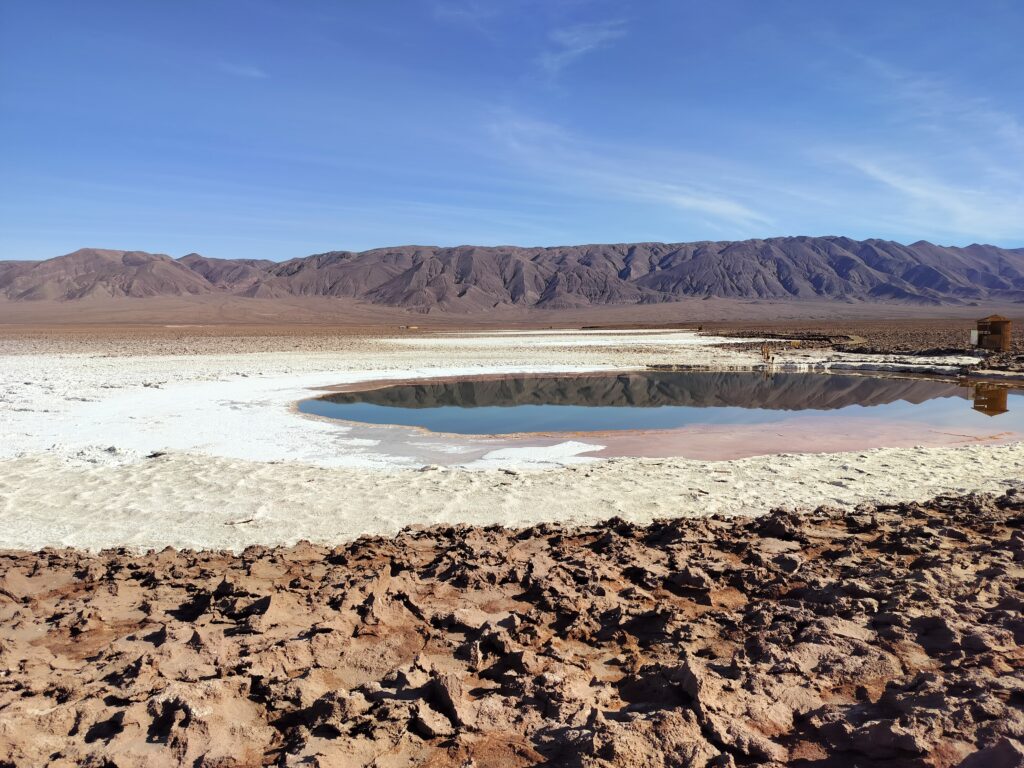
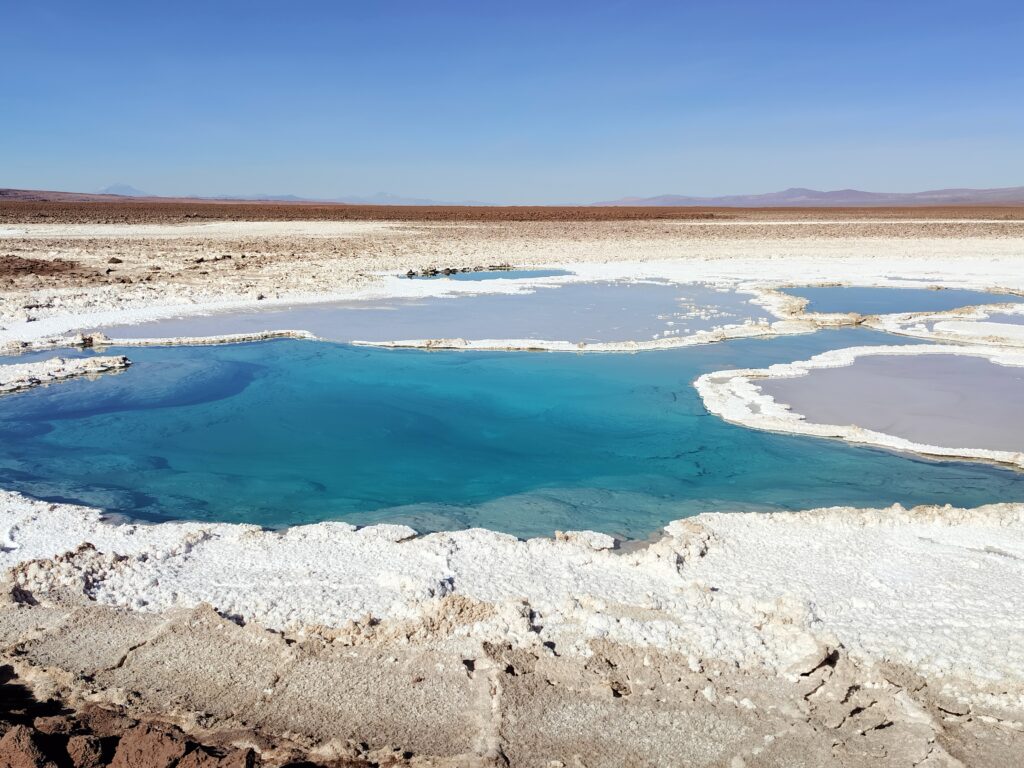
The first of these is the route that takes you to the hidden lagoons of Baltinache – seven salt lagoons linked by a short, flat path. The lagoons are surrounded by salt encrustations that create a marvellous contrast with their intense colours. In one of them, you’re even allowed to go for a swim, giving you the chance to experience Archimedes’ principle for yourself, much like at the Siwa Oasis in Egypt or Lake Assale in Ethiopia. The use of sun cream is prohibited, and you must not stray from the marked path. Despite the rather pleasant outside temperature, I decided against it because the water is absolutely freezing and I’m no longer young enough for that sort of thing.

Valle de la Luna
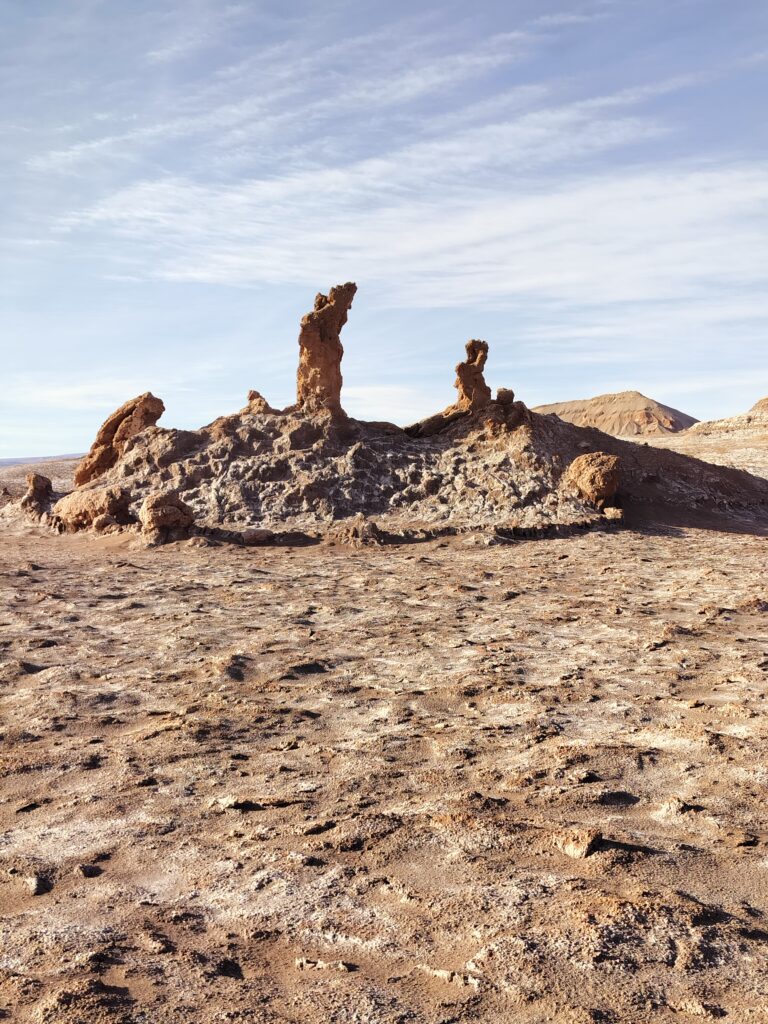
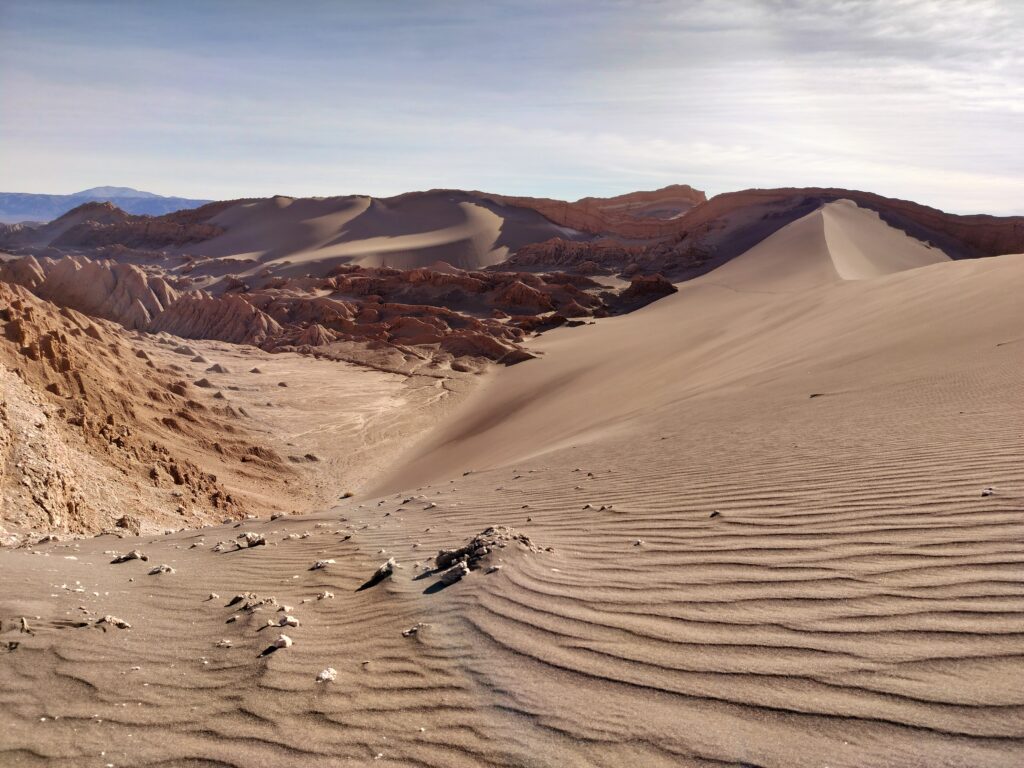
The lagoon tour ends before lunch. The afternoon is spent exploring the Valley of the Moon, one of the most iconic attractions in the Atacama Desert. It consists of a series of rock formations shaped by erosion, rock salt deposits and sand dunes. The excursion includes several stops:
- Climb up the Duna Mayor, a sand dune approximately 50–60 metres high. The difficulty of the climb is nowhere near that of the Big Daddy, though the altitude does make it a bit of a challenge. The view from the crest is truly spectacular. Note: you cannot walk on the dune itself, only alongside it.
- Visit to the valley’s most important rock formations: Las Tres Marías, the Cañón and the Amphitheatre.
- Sunset from the Likan-Antay viewpoint, which offers a beautiful spectacle as the rocks constantly change colour, rather like in Australia’s Red Centre.



Day 3: Ruta de los Salares
Here we are on our first high-altitude excursion, right in the heart of the Andes. All the destinations on the Ruta de los Salares are above 4,000 metres (reaching up to 4,800 metres), but you don’t really feel the altitude that much as most of the time is spent in the minibus, which takes you directly to the places of interest. There is therefore no physical exertion involved, but it is still important to be acclimatised before taking part in the excursion.
The tour includes several stops:
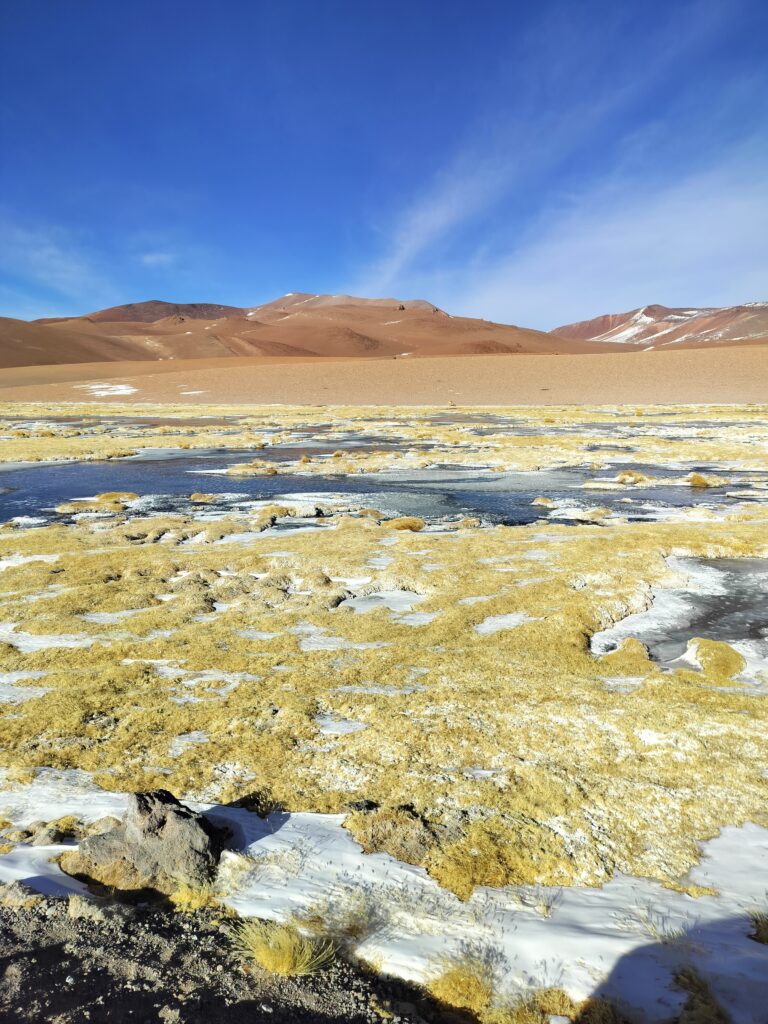
- Vega Quepiaco, a stunning oasis at an altitude of around 4,500 metres, reached after an hour’s drive from San Pedro.
- Laguna Diamante, situated at around 4,600 metres, which freezes over during the winter months (including June) due to the extreme temperatures.
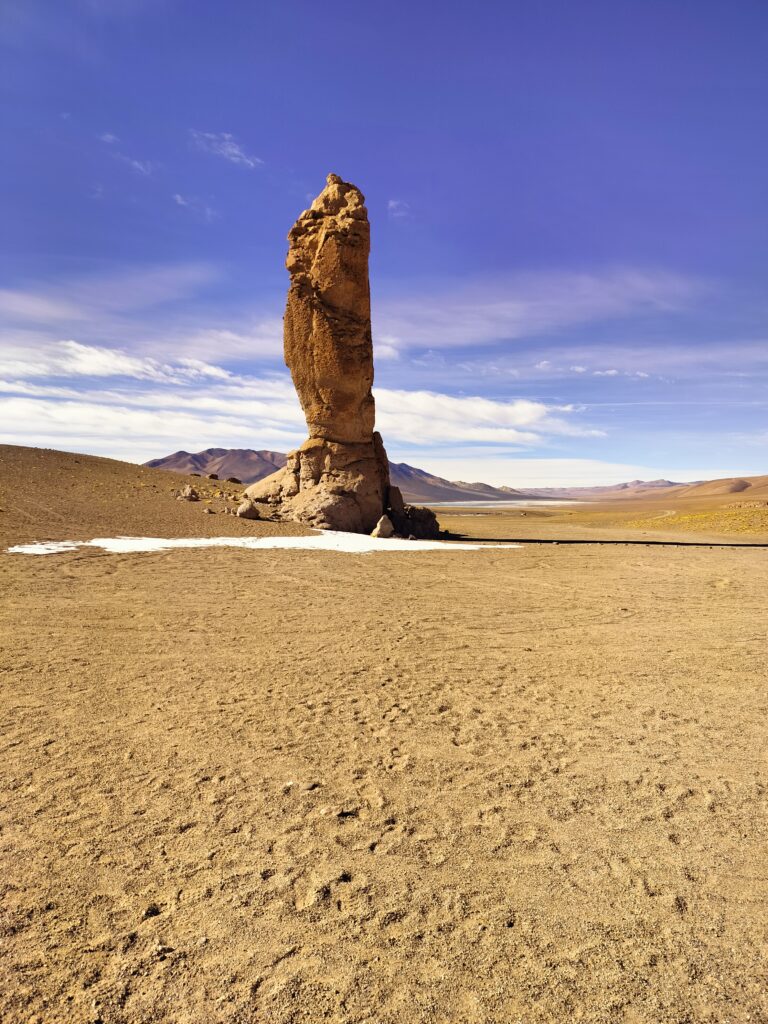
- Monjes de la Pacana, imposing monoliths at an altitude of 4,200 metres, so named for their shape – sculpted by erosion – which resembles the profiles of monks. The site is located in the deconsecrated caldera of La Pacana.
- Laguna Negra, a lagoon at 4,200 metres, so named because of the colour of its water, caused by the presence of particular microorganisms, which also attract flamingos and migratory birds.
- Salar de Quisquiro, a vibrantly coloured salt flat situated at an altitude of around 4,700 metres, which marks the highest point reached on classic tours of the Atacama Desert.
- Viewpoint of the Licancabur volcano, against the backdrop of which a meal is prepared.


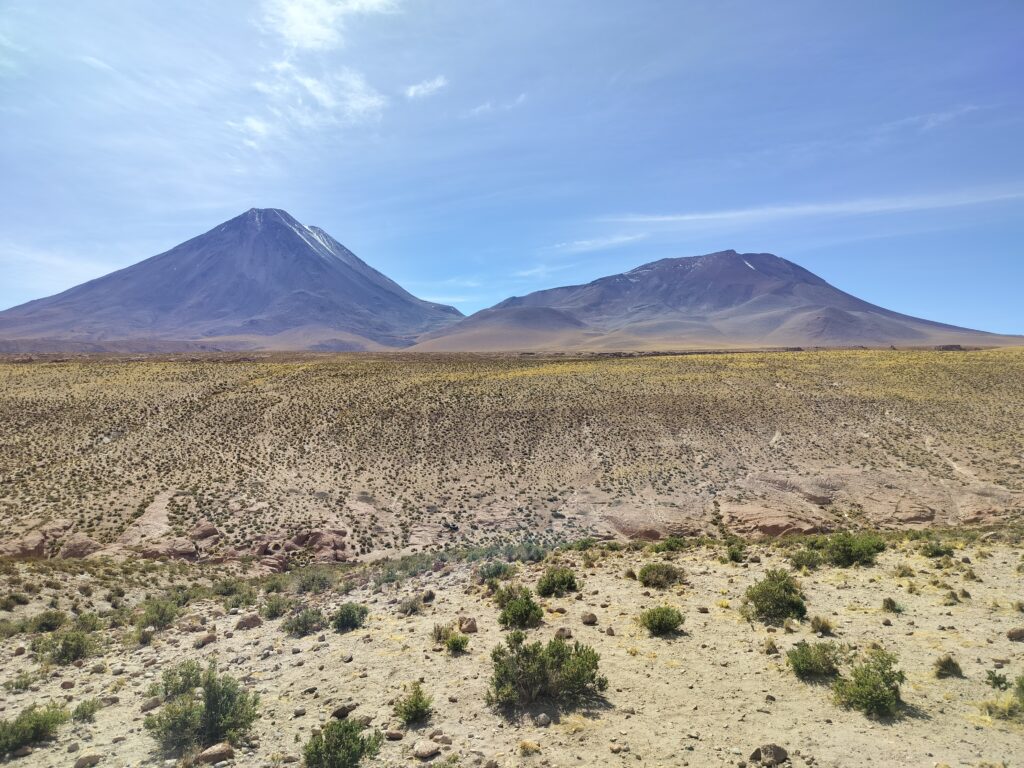
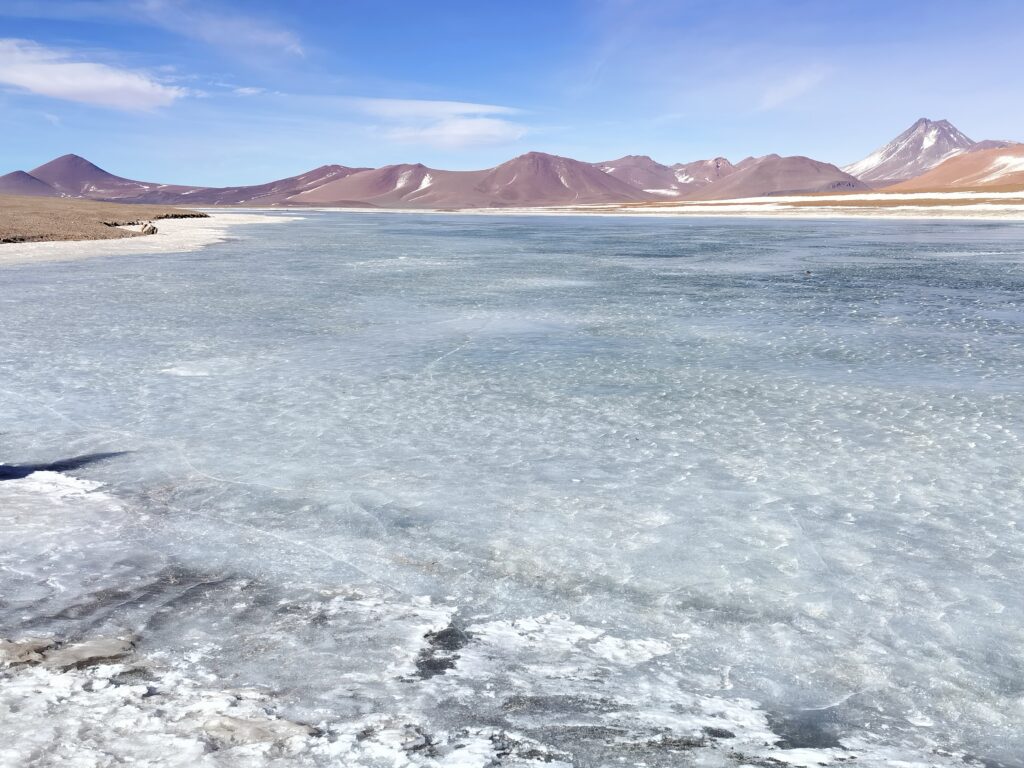
As well as the various stopping points, the road itself offers stunning views, set against a truly impressive Andean backdrop.

Day 4: Geyser del Tatio
Geyser del Tatio
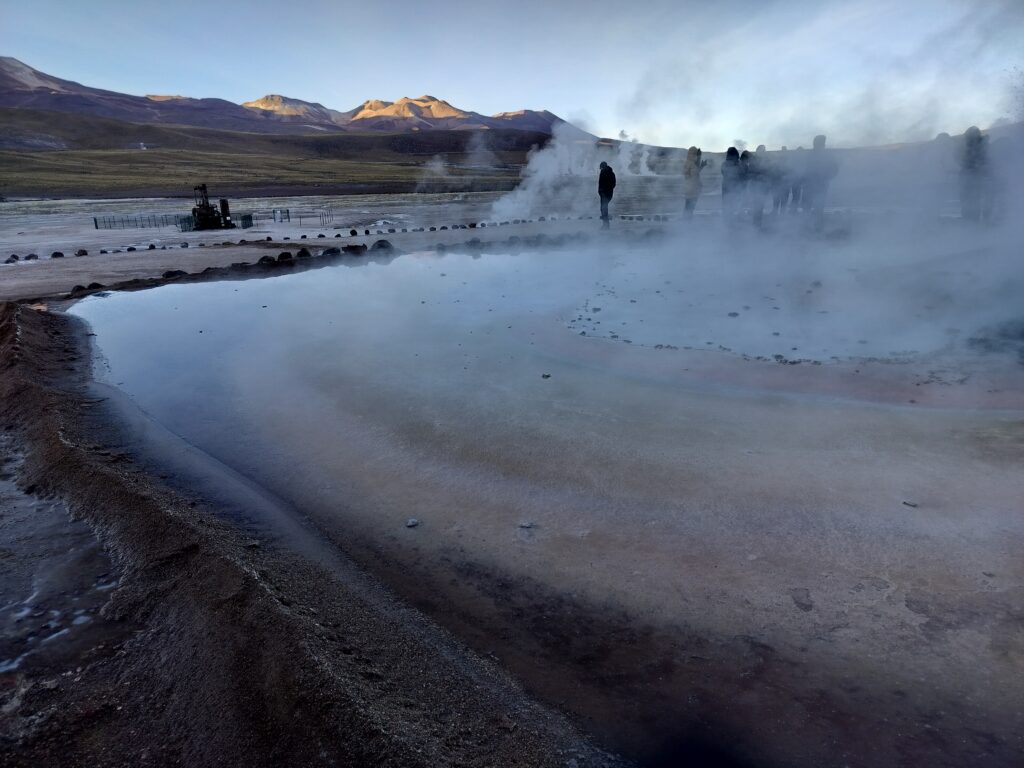
The Andes, part two. The alarm goes off very early; we’re due to set off at 4.30 am to reach the world’s third-largest geothermal area. We have an hour and a half’s drive ahead of us to get from San Pedro, at 2,400 metres, to the Tatio Geysers, situated at over 4,200 metres. We’re all still half-asleep when we arrive at the site, but we’re suddenly wide awake the moment we step out of the van. The thermometer reads -10 degrees. The contrast between the extremely low outside temperature and the extremely high temperature of the water flowing beneath the ground makes the columns of steam rising from the approximately 80 fumaroles in the area particularly visible – which explains why we were woken up in the middle of the night. Fortunately, after our visit to the site, we’re in for a lovely breakfast with a view.
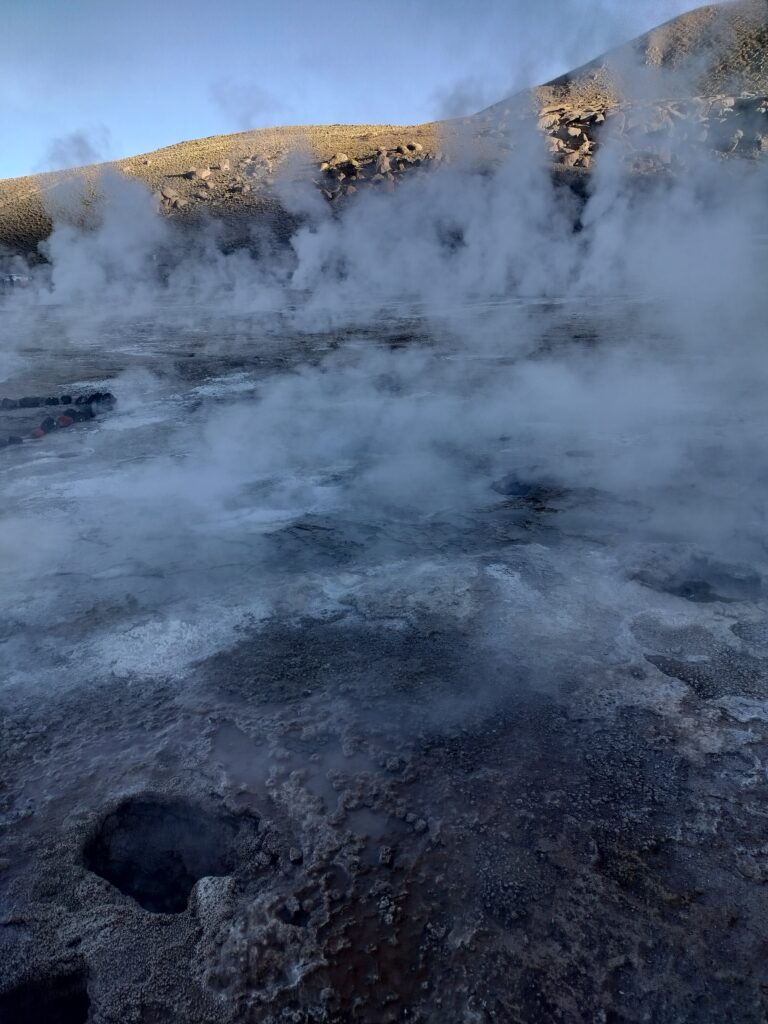
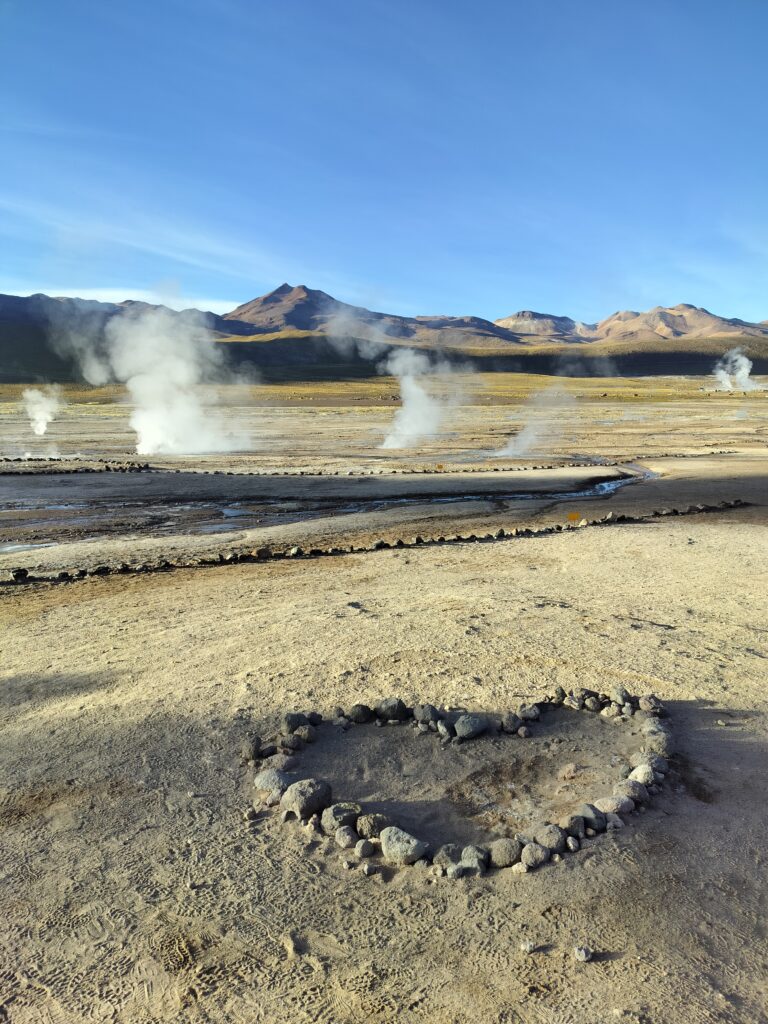
Vado Putana
The Tatio Geysers are one of the most iconic attractions in the Atacama Desert, but the excursion also includes other stops. The first is at Vado Putana, a spectacular oasis at an altitude of 4,200 metres at the foot of the Putana volcano, situated on the return journey to San Pedro. As well as its stunning colours, which are reminiscent of some of the sights along the Ruta de los Salares, the oasis is also an ideal spot for spotting some wildlife.

Machuca
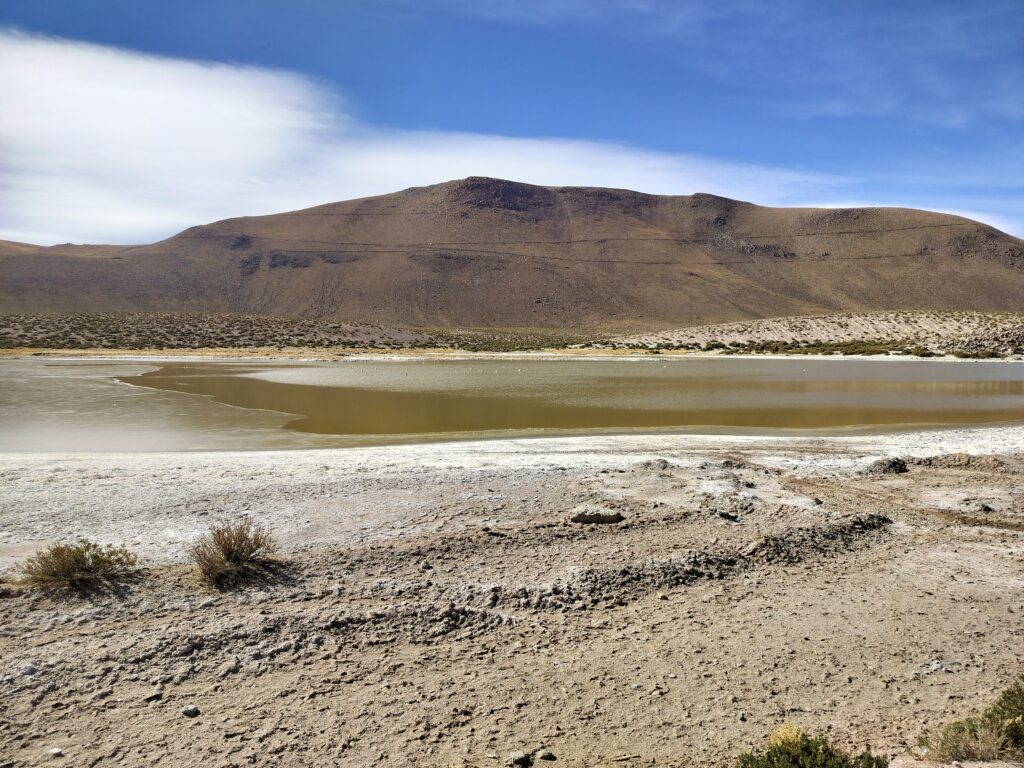
The second stop on the way back is in Machuca, first for a quick visit to the small village, and then to see Machuca Lagoon, with its distinctive greenish colour and home to flocks of pink flamingos and a variety of wildlife. This is also the final stop on the excursion; we’ll be back in San Pedro around lunchtime.
Day 5: Piedras Rojas and Lagunas Altiplancas
It’s our last day in the Atacama Desert and also our last in Chile, before crossing the border into Bolivia to continue our journey to the Salar de Uyuni. So we need to end on a high note, and there’s no better way to do that than by taking part in what I consider to be the most beautiful excursion in the Atacama Desert: the one that takes you to the Salar de Aguas Calientes, better known as Piedras Rojas, and the stunning high-altitude lagoons of Miscanti and Miniques. Actually, I’d planned to go on this excursion a few days earlier, but the park was closed for a few days due to bad weather (wind and clouds).
Laguna Chaxa
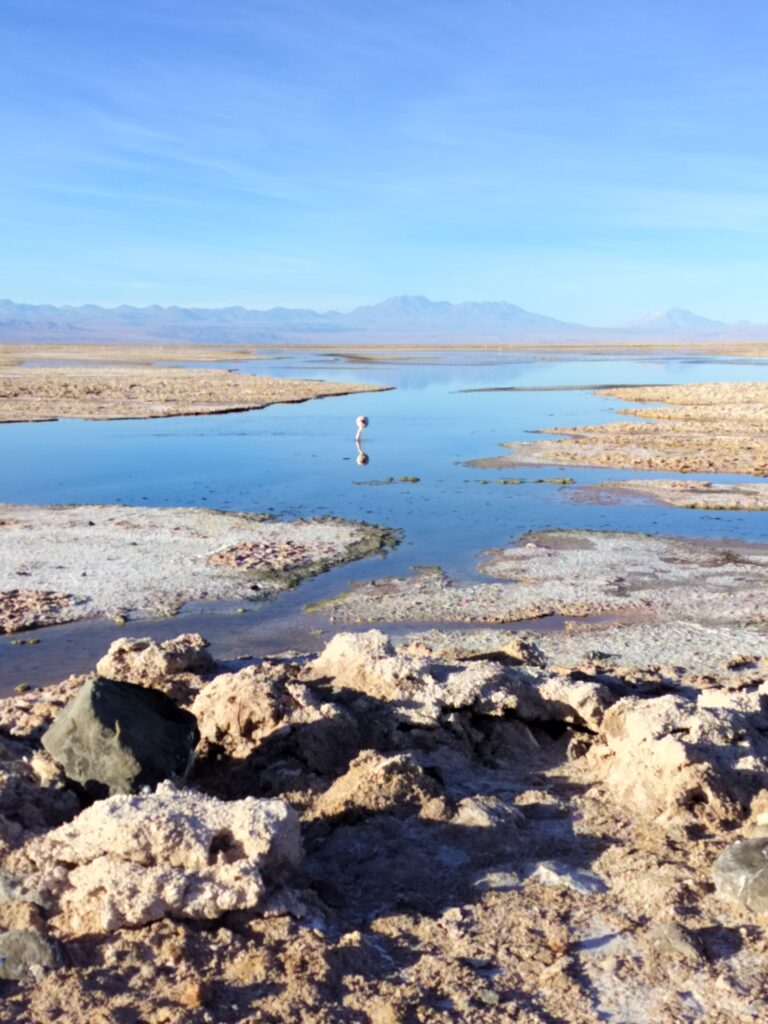
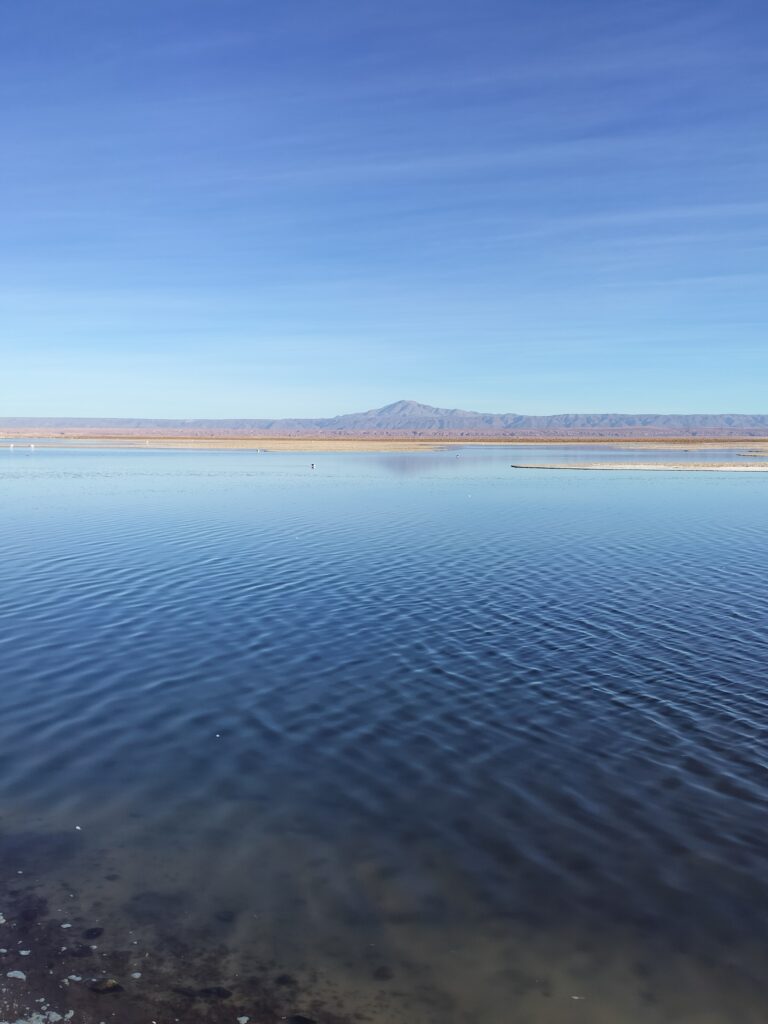
The excursion lasts the whole day; the first stop is the small town of Socaire, where we stop for breakfast and take a short look around the surrounding park (which isn’t a must-see). After breakfast, it’s on to Laguna Chaxa, the ideal spot for spotting various types of flamingos and serving as a prelude to the next attractions. It is no coincidence, in fact, that this lagoon forms part of the Riserva Natural de los Flamencos, an ecosystem rich in Artemia salina and plankton – the flamingos’ favourite food. Unlike other Andean lakes, the lagoon is surrounded by salt crusts that reflect the surrounding volcanic landscape.
Piedras Rojas
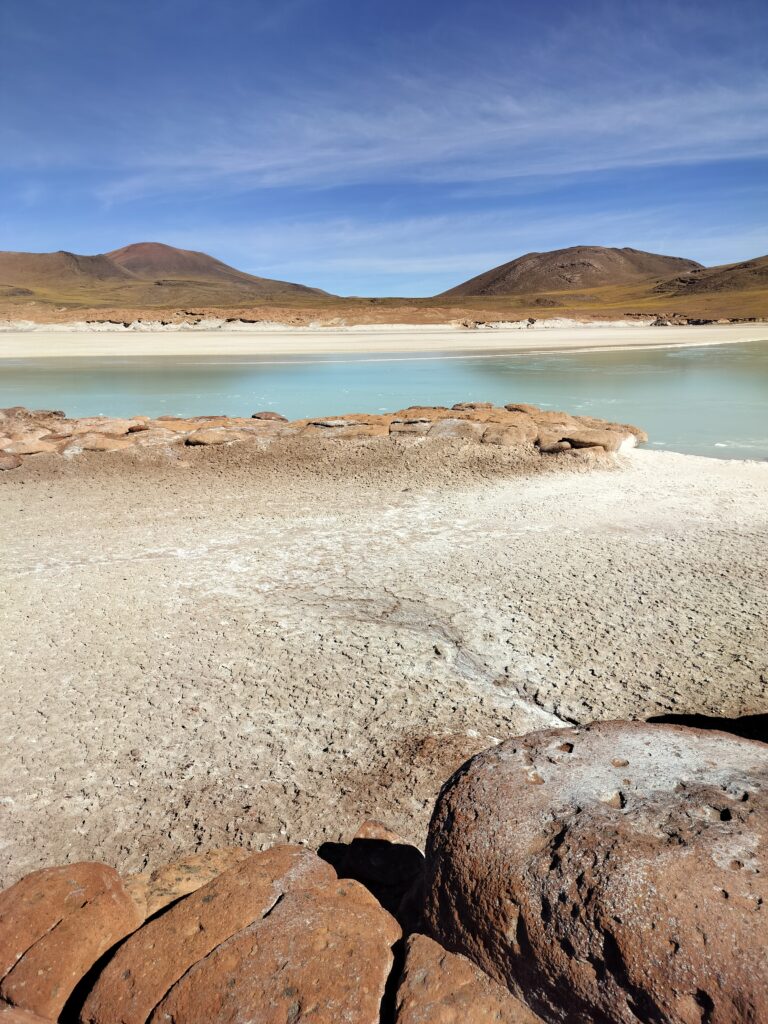
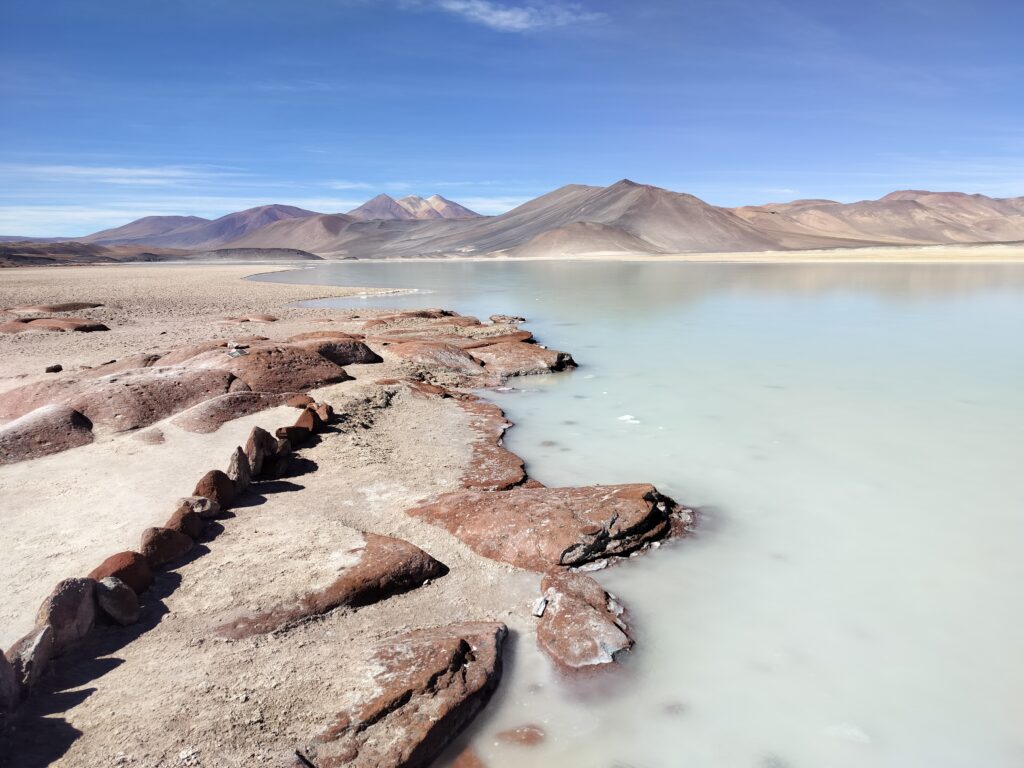
The third stop of the day, which is also the longest, is at Piedras Rojas, the real highlight of the tour and one of the most striking spots in the Atacama Desert. The name of the area derives, as one might easily guess, from the intense red colour of the rocks, which create an almost Martian-like contrast with the blue of the lagoon and the white of the salt. Piedras Rojas is one of the few attractions that requires a bit of a walk to reach (about an hour and a quarter there and back). The walk is essentially on flat ground, though it is still at an altitude of 4,200 metres.

Lagunas altiplanicas
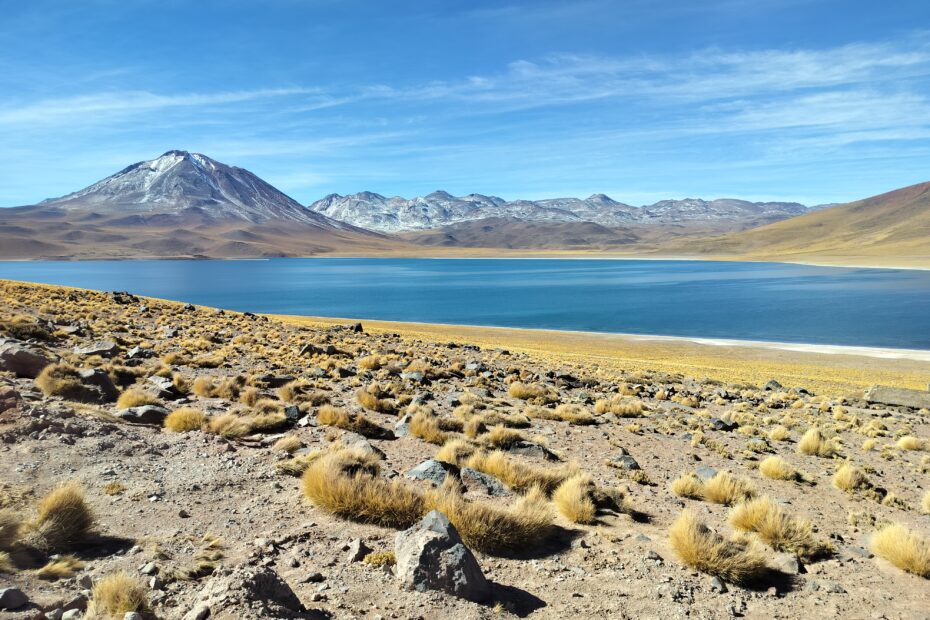
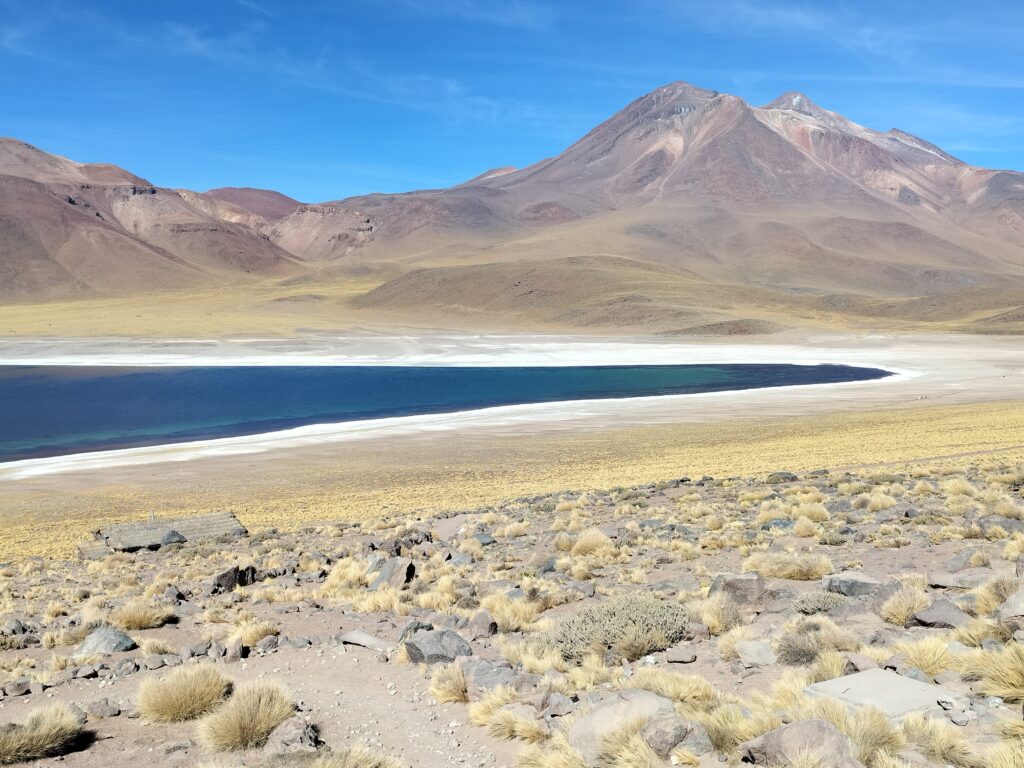
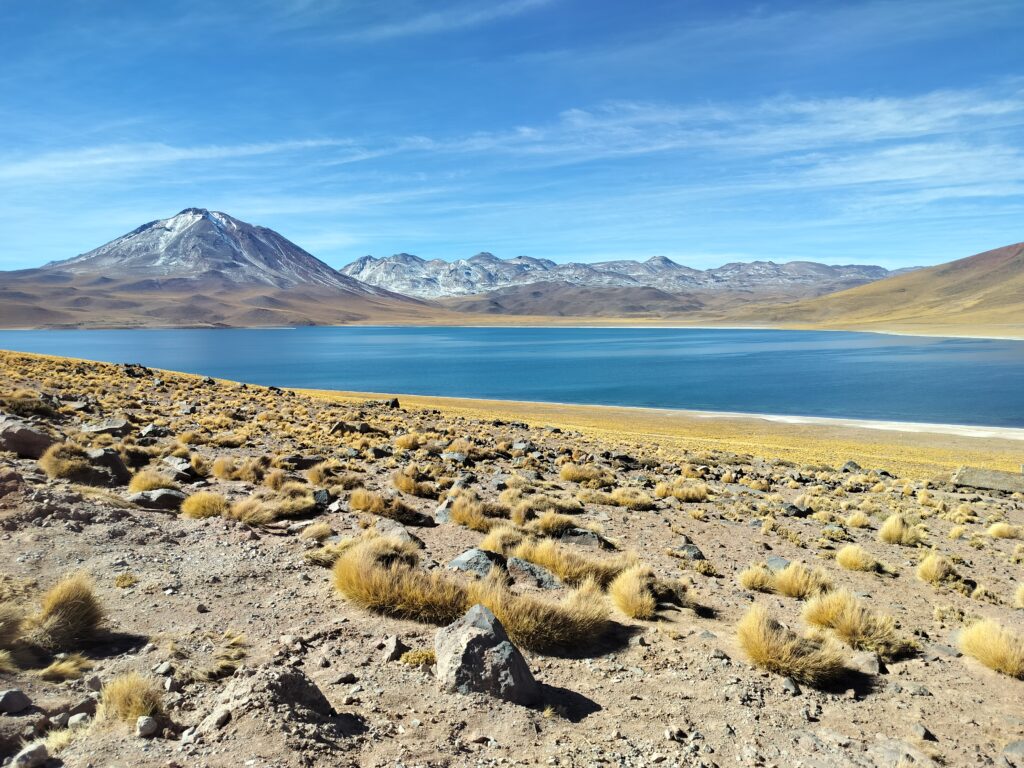
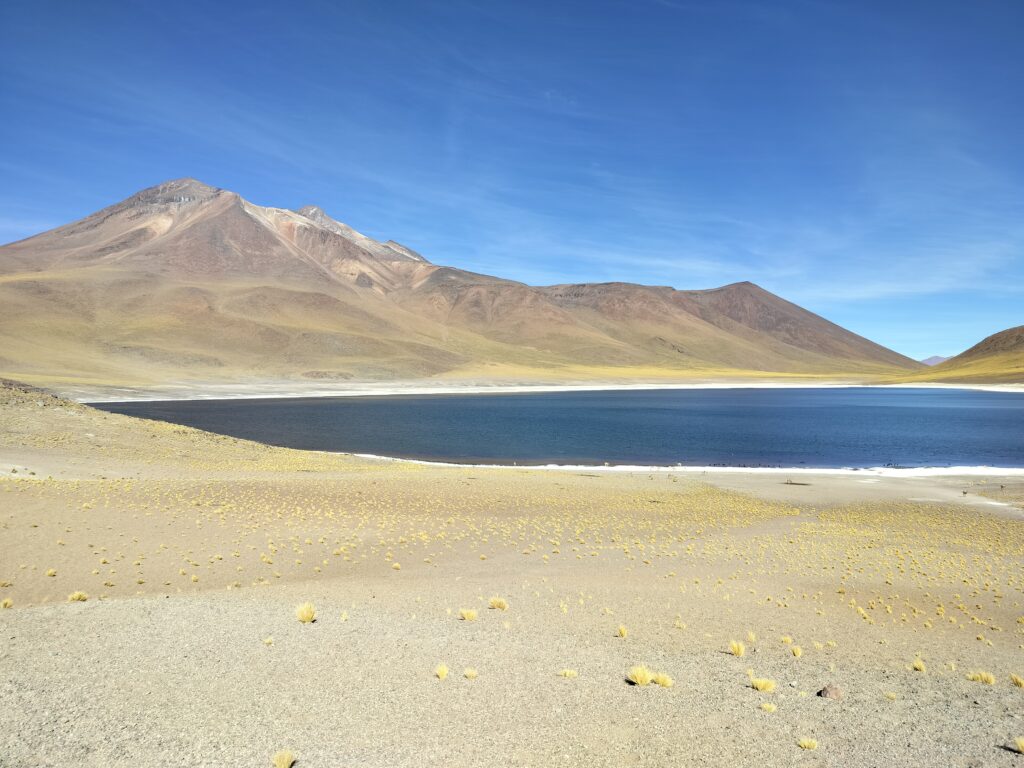
After Piedras Rojas, we descend slightly in altitude to reach the Miscanti and Miniques lagoons, which take their names from the volcanoes that form their backdrop. Originally, the two lakes formed a single body of water, which was later divided by a lava flow from the Miniques volcano. They offer two incredible vistas, created by the contrast between the sapphire-blue water and the surrounding Andean landscape. The two lakes form part of the Los Flamencos Nature Reserve.
Tropic of Capricorn
The very last stop on the excursion is at the sign marking the Tropic of Capricorn. This was certainly the least exciting stop, not least because I’d already seen plenty of similar signs during my trip to Namibia.
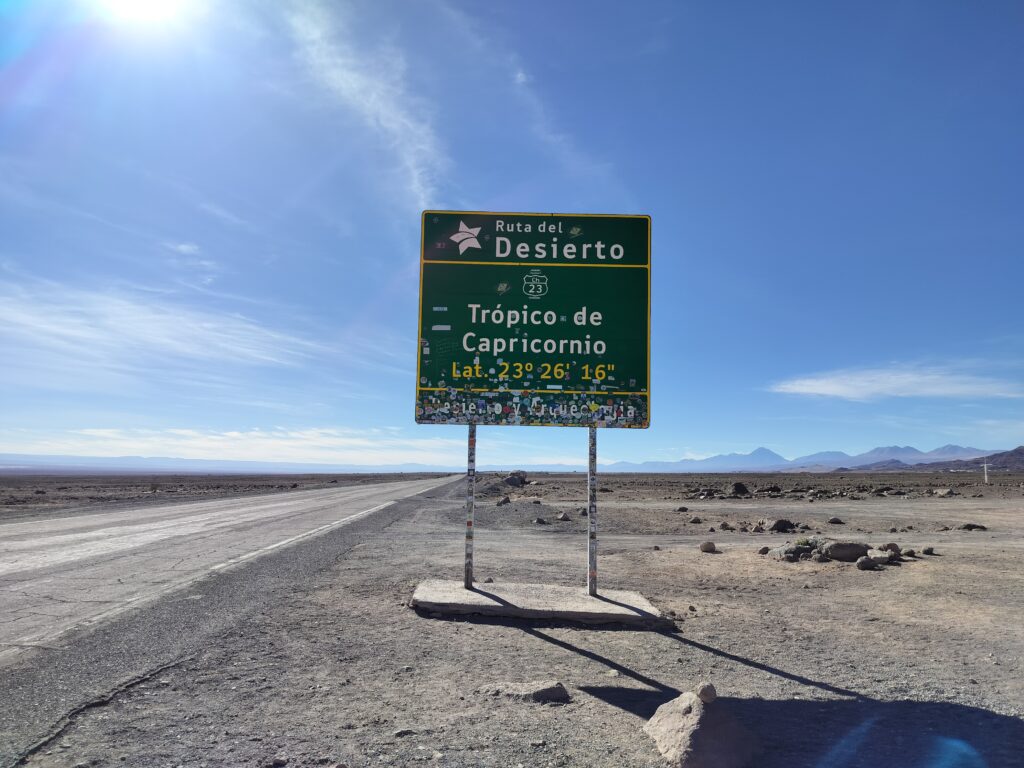
With the Tropic of Capricorn as my final landmark, my journey through Chile comes to a temporary end.
Conclusions
Although it is often regarded simply as a relatively easy addition to a trip to the Salar de Uyuni, the Atacama Desert is a place which, in my opinion, is in no way inferior to the Salar de Uyuni itself. I believe that four full days are the minimum required to appreciate some of its main wonders, taking into account the need to acclimatise.
If I had to choose the most beautiful excursions, I would definitely put Piedras Rojas and the Altiplano lagoons at the top of the list, followed by the Ruta de los Salares and the Tatio Geyser. Given the multitude of incredible attractions, I’ve gone so far as to draw up a top 5 list of the best spots:
- Salar de Aguas Calientes
- Laguna Miscanti
- Salar de Quisquiro
- Laguna Diamante
- Geyser del Tatio
It is worth emphasising once again the excellent organisation of the local agencies in San Pedro, which are always reliable and helpful, as are the people in general.
Related articles: