

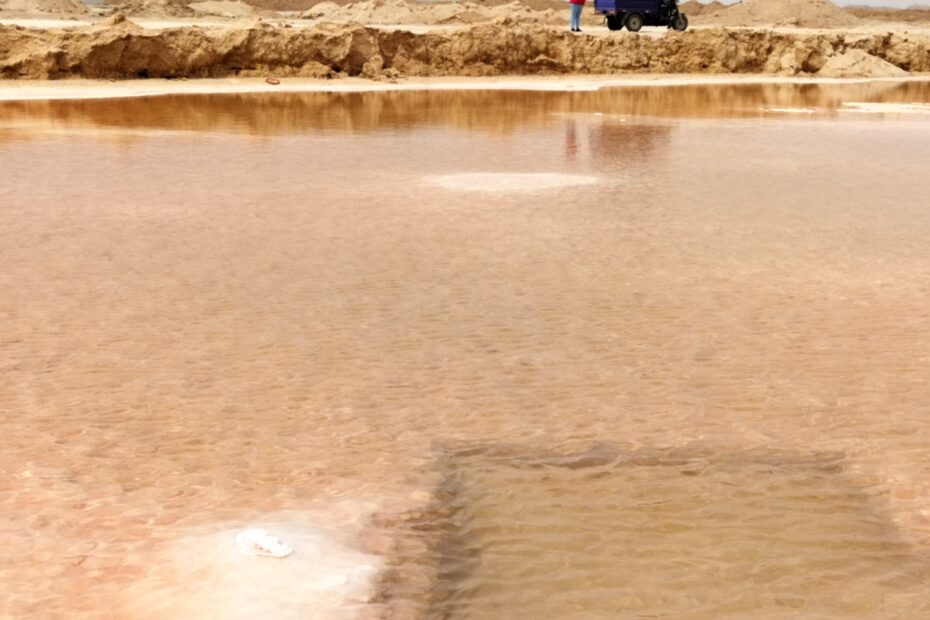
“What makes the desert beautiful is that somewhere it hides a well.”.
A. de Saint-Exupery, The Little Prince
Table of Contents
- Introduction
- Itinerary in pills
- Day 1: White Desert
- Day 2: White Desert and back to Cairo
- Day 3: Giza
- Day 4: Siwa
- Day 5: Siwa, Marsa Matrouth and transfer to Cairo
- Conclusions
Introduction
Tahrir Square was deserted when my wife and I arrived there early in the morning to be ready for our meeting with our driver, who was to take us to the entrance of the Bahariya Oasis. We had arrived in Cairo the previous evening and hadn’t had much time to rest. The first person we met in Cairo’s largest square was a German gentleman in his sixties, whom we soon discovered was one of our fellow travellers. I struck up a conversation with him because I needed to send a message to the driver, who hadn’t arrived even half an hour after the agreed time. We had, in fact, landed in Cairo late in the evening and, due to Ramadan, hadn’t managed to buy a local SIM card.
Our travelling companion was on his fourth trip to Egypt, which is partly why he was surprised to learn that we’d chosen the White Desert as our first stop in the land of the pharaohs. He probably thought this only because he didn’t know how the rest of the trip would unfold.
Itinerary in pills
Unlike what many people do, we visited the Bahariya and Siwa oases on non-consecutive days, leaving a day in between to visit the Pyramids of Giza, which I’ll tell you about in my next articles. These two oases are usually visited as part of a single package, organised through local agencies that can be contacted from Italy. However, we didn’t particularly like this option, partly because the costs generally charged for a private tour organised in this way are quite high and completely out of proportion to the total cost of a trip to Egypt. This is particularly true of the Siwa Oasis, which can easily be visited independently.
To visit the White Desert, however, it is absolutely essential to use a local guide. We went with Ahmed Safari, opting for the 2-day group tour. The cost of the tour is €95 (to be paid directly on site in cash), including park entry fee, a local Bedouin guide, shared van transfers to and from Cairo, meals and overnight accommodation in a tent. If you’re wondering whether it’s possible to stay in the desert for more than two days, or even just for a single day, the answer is yes, but the tour will need to be arranged privately, naturally at a higher cost. I don’t know the price of multi-day private tours, but I can tell you that for the day trip, also based in Cairo, it’s €135.
We reached Siwa, however, by shared minibus, travelling overnight. To visit its main attractions, we simply relied on the accommodation where we were staying, which meant we saved a great deal, as I will explain later in the article.
The itinerary covering the Bahariya Oasis and Siwa Oasis unfolded, in summary, as follows:
| Day | Itinerary | Night |
|---|---|---|
| 0 | Evening arrival in Cairo | Il Cairo |
| 1 | White Desert | Desert |
| 2 | White Desert and back to Cairo | Il Cairo |
| 3 | Giza and evening trasfer to Siwa | Shared van |
| 4 | Siwa | Siwa |
| 5 | Siwa and back to Cairo | Il Cairo |
Day 1: White Desert
Our pick-up is scheduled at 6.30 am in Tahrir Square, which we can easily reach on foot from our accommodation, leaving our larger bags there. Tahrir Square, also known as Independence Square, is the largest square in Cairo and serves as a major hub in the city.
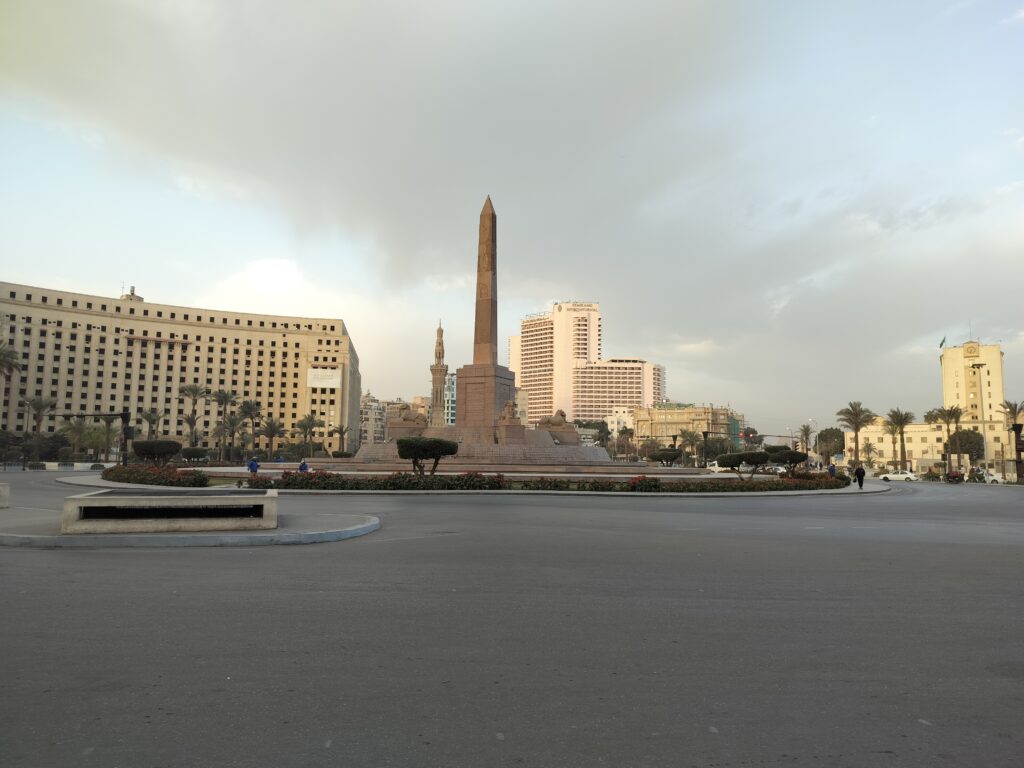
When we arrive, the square is completely empty. The driver arrives at 7 am, and the van is finally full with us on board. We then set off straight away on the long journey which, in about 5 hours, takes us from Cairo to the Bahariya Oasis, where we meet the tour organisers and pay our fee. The fee also includes lunch on the first day, which is served to us as soon as we arrive and just before the tour begins.
The tour includes a visit to the Black Desert, where we start, and the White Desert, both of which are part of the Western Sahara (Libyan). The organisers suggest a quick visit to the Black Desert, so that we can spend more time in the more picturesque White Desert. Two additional stops are also planned: the first at some natural hot springs, and the second to try sandboarding.
Black Desert
The first stop on the tour is the Black Desert, a volcanic desert formed hundreds of millions of years ago. This desert is characterized by vast sand dunes covered in basalt and iron-manganese rocks, which give the dunes their black hues. The visit to the Black Desert consists of a single stop at a vantage point from which you can admire a lunar landscape, formed by a vast plain surrounded by imposing sand cones.
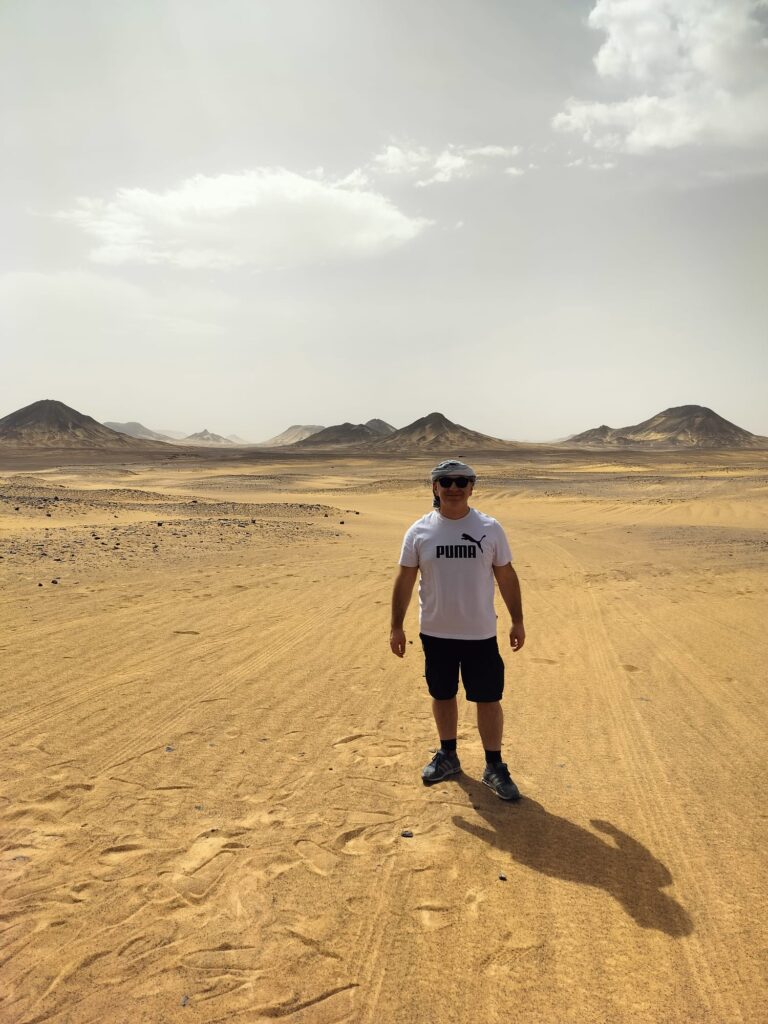
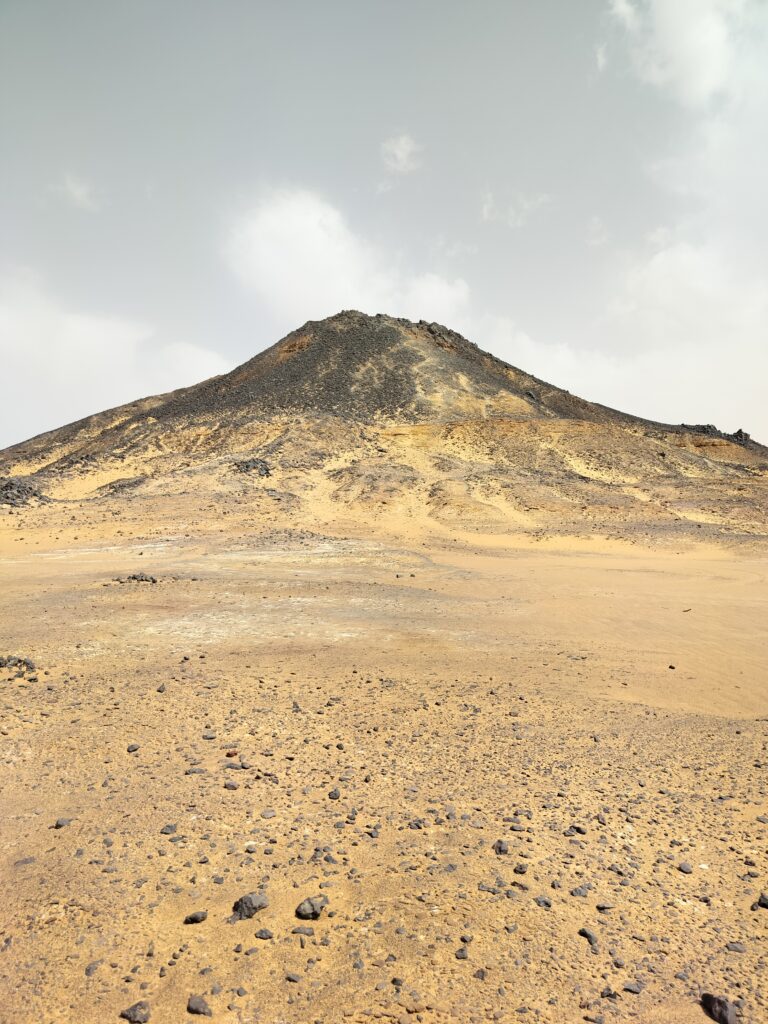
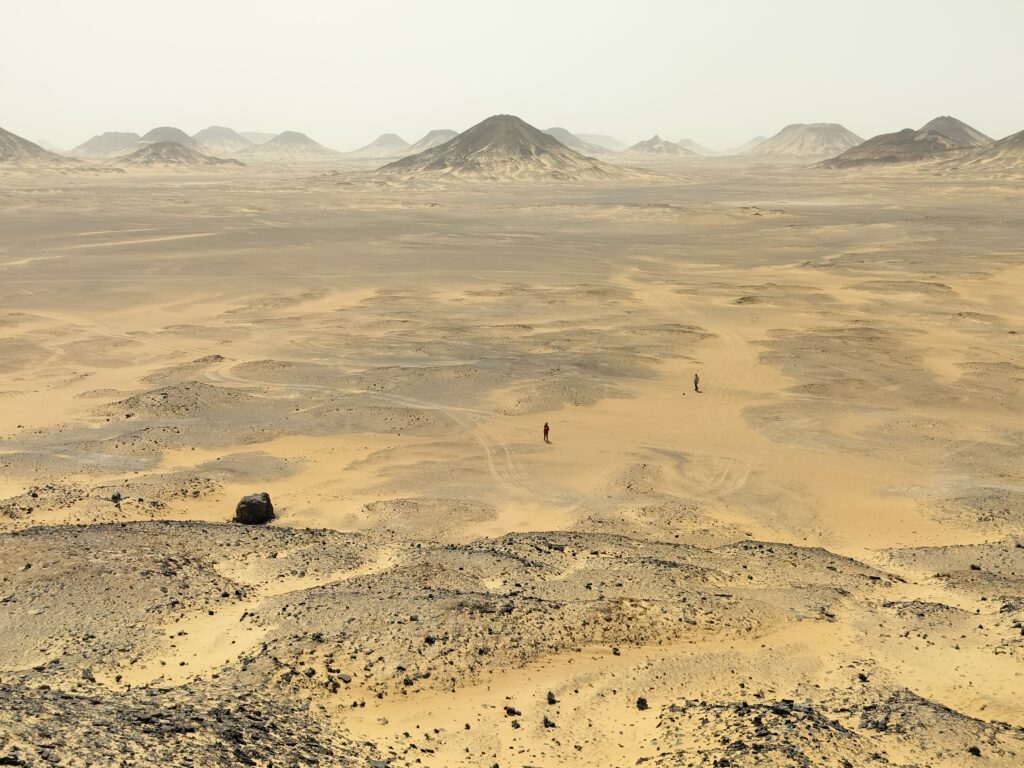
Once our stop is over, we head towards the White Desert. Despite its proximity to the Black Desert, the White Desert has a completely different origin. In fact, it was once covered by the ocean; as the sea receded, it exposed the limestone rocks (which give it its white colour) that formed the seabed. Wind erosion has since smoothed the rocks, sometimes giving them bizarre shapes.
White Desert
The tour of the White Desert includes three stops, spread across the first and second days of the tour. The first stop is at the so-called Crystal Mountain, a rocky ridge composed entirely of crystalline formations of calcite and barite. The most iconic feature of the Crystal Mountain is its natural arch carved into the rock. The stop lasts about half an hour.
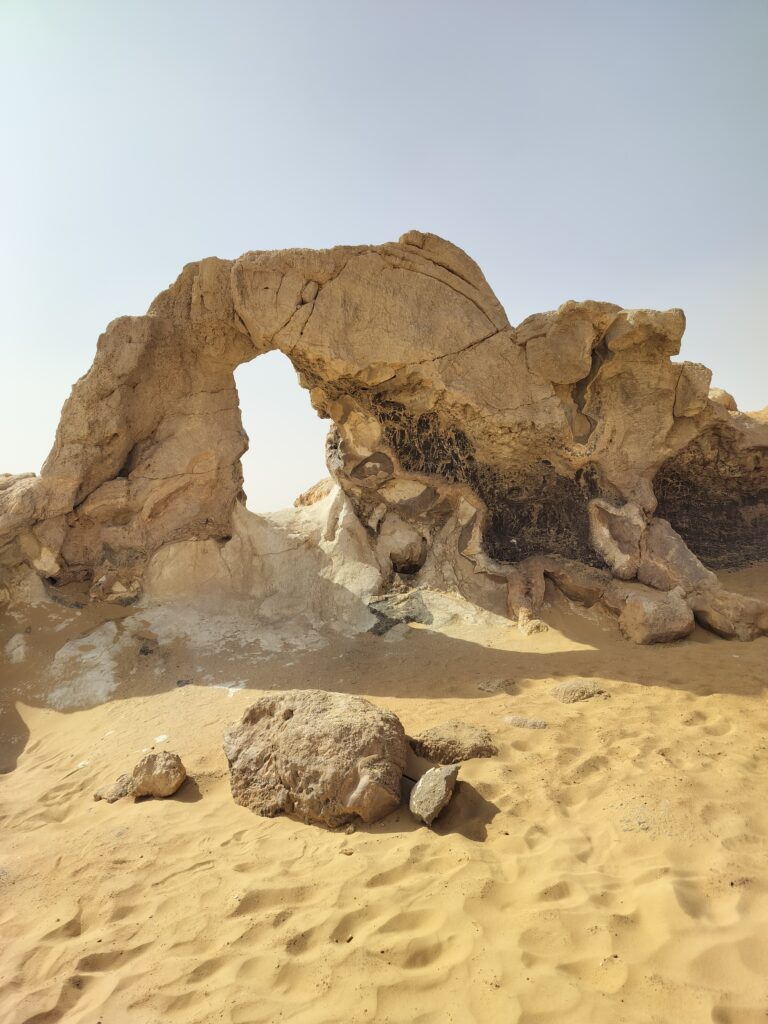
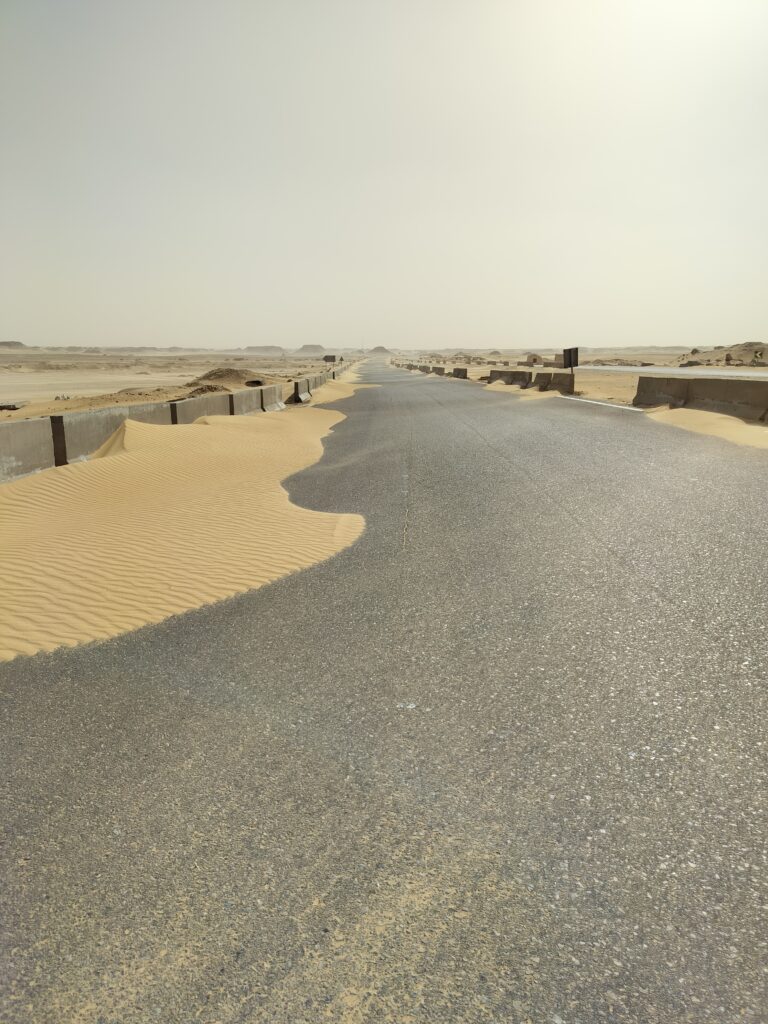
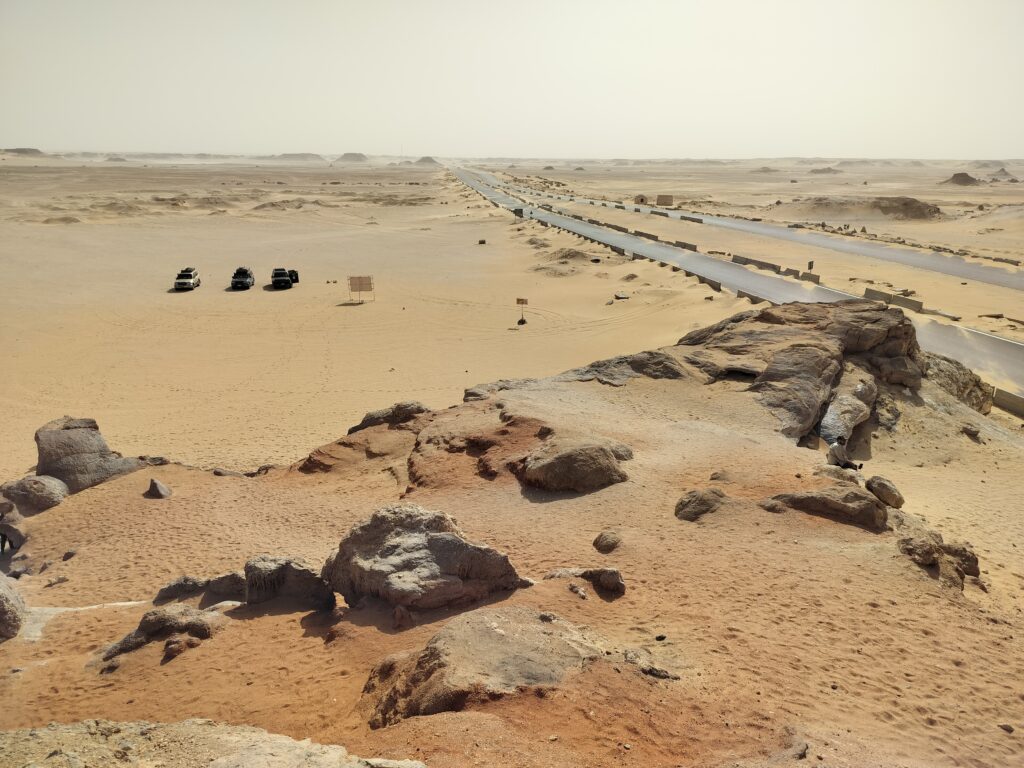
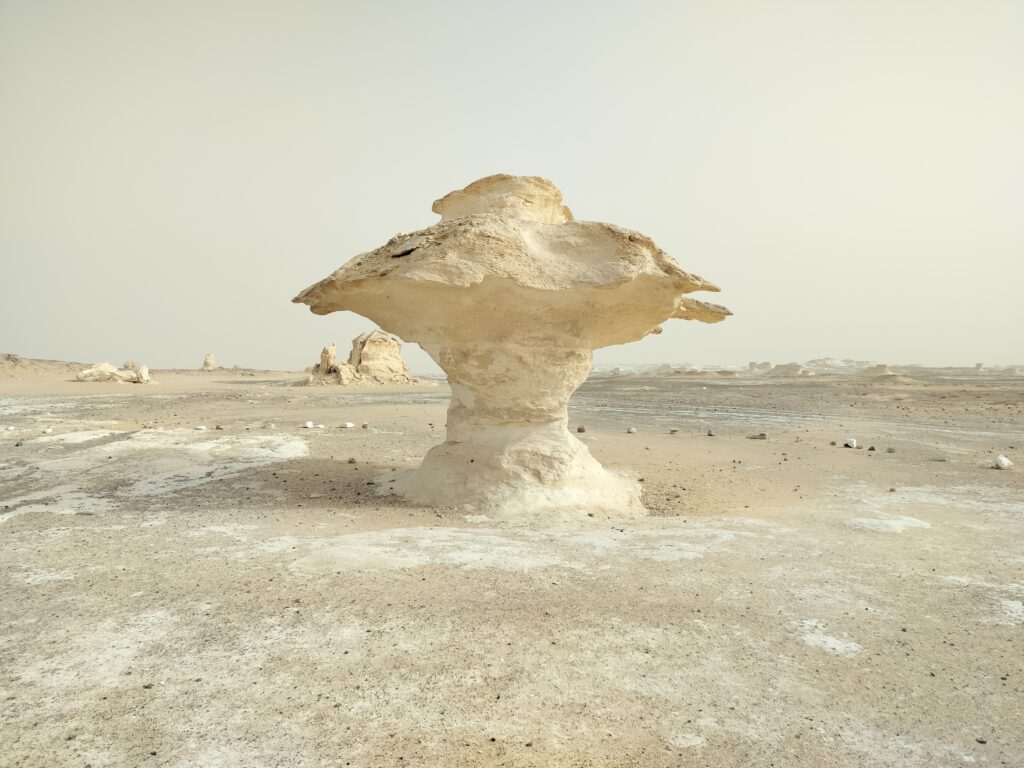
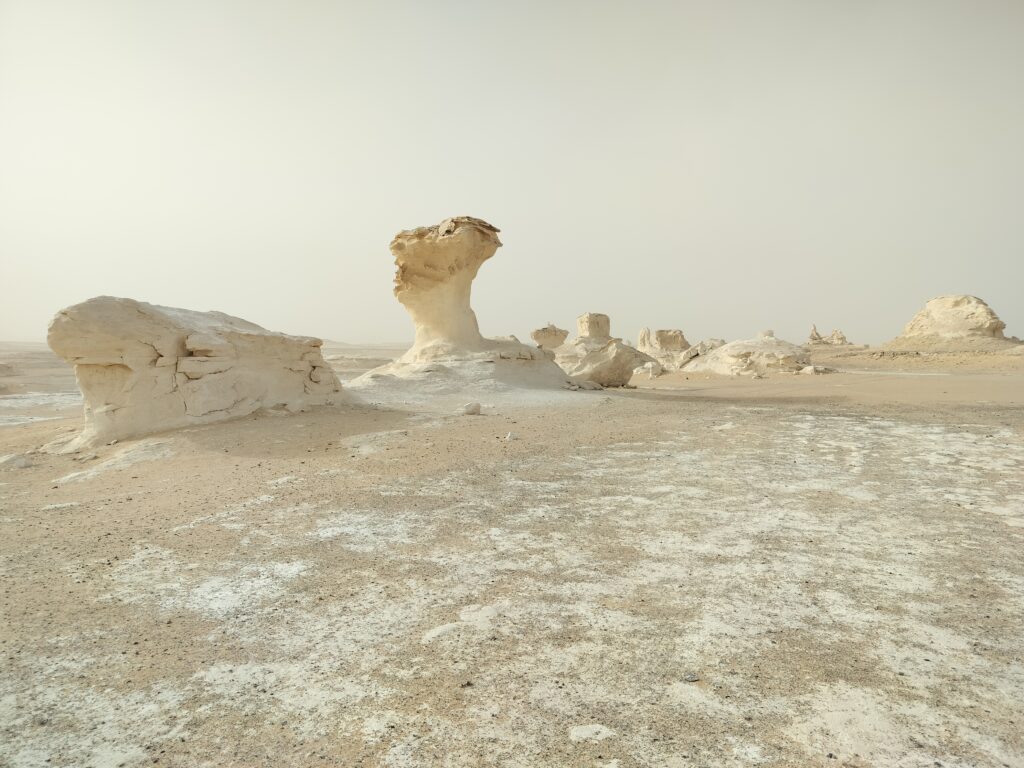
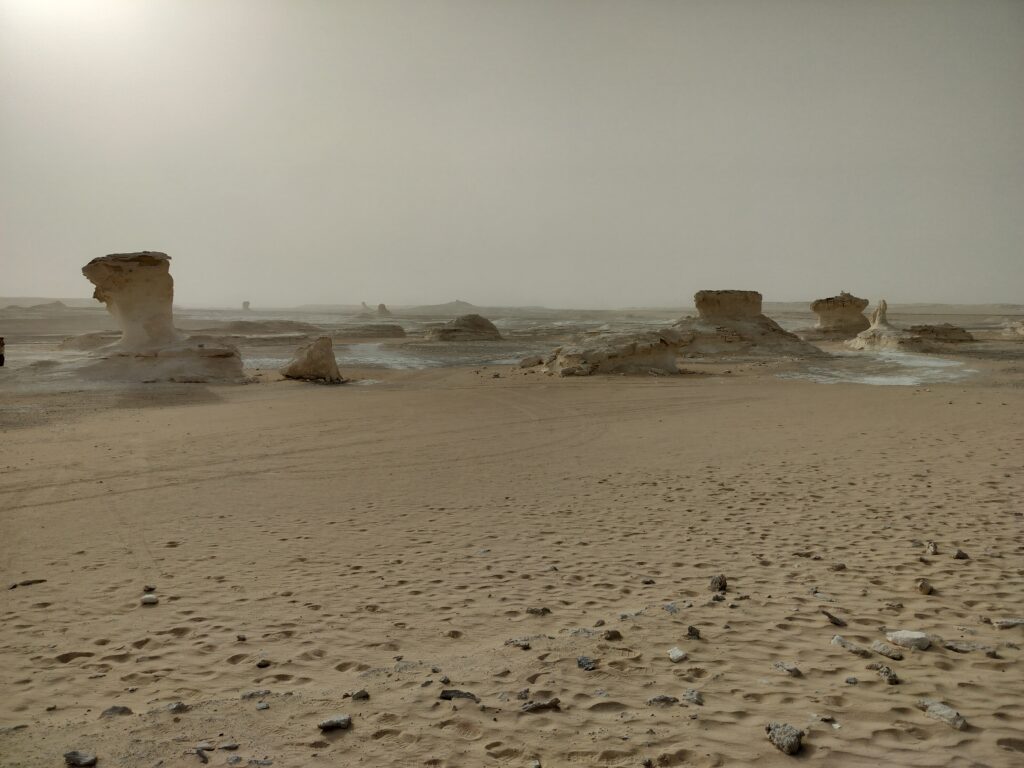
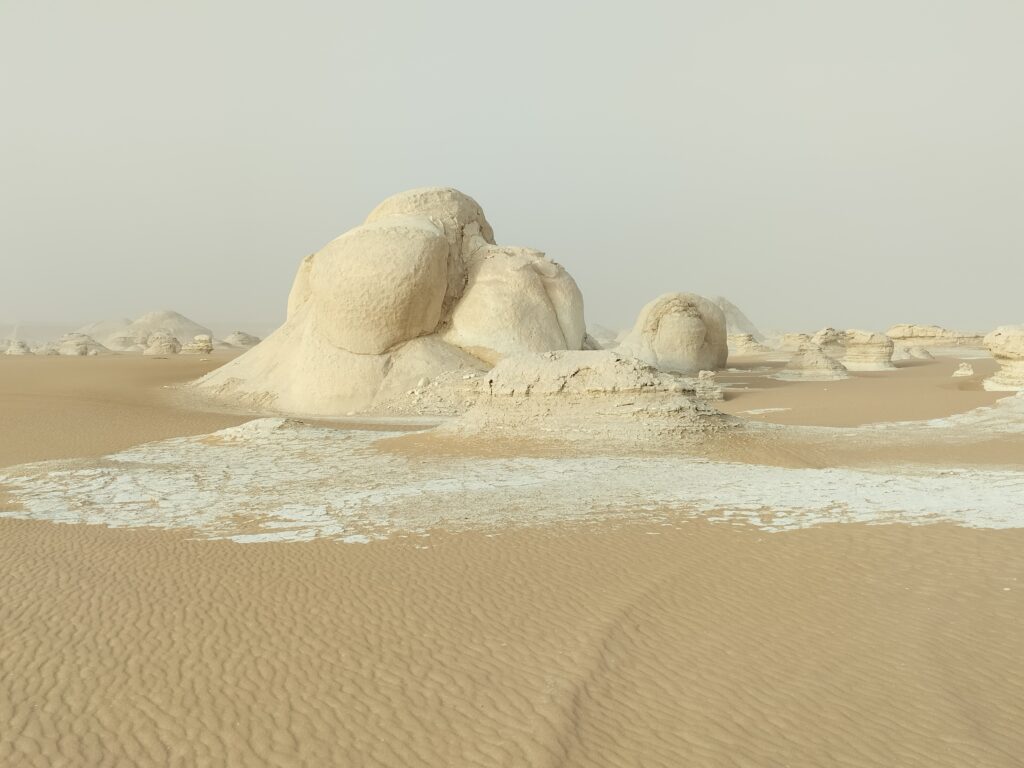
The second stop is in the Agabat Valley, a vast expanse characterized by the so-called ‘Creamy Mountains’ – a series of imposing limestone and gypsum formations that dominate the landscape. The Agabat Valley is extremely large, so the visit to the area is split between the afternoon of the first day of the tour and the morning of the second. Among the most distinctive formations we see on the first day, the most iconic is undoubtedly Mushroom Rock, a rock shaped like an atomic mushroom cloud. The most bizarre formation we come across, however, is, in my opinion, another one, mysteriously less well-known than Mushroom Rock, which you will recognize in the images I have included below.
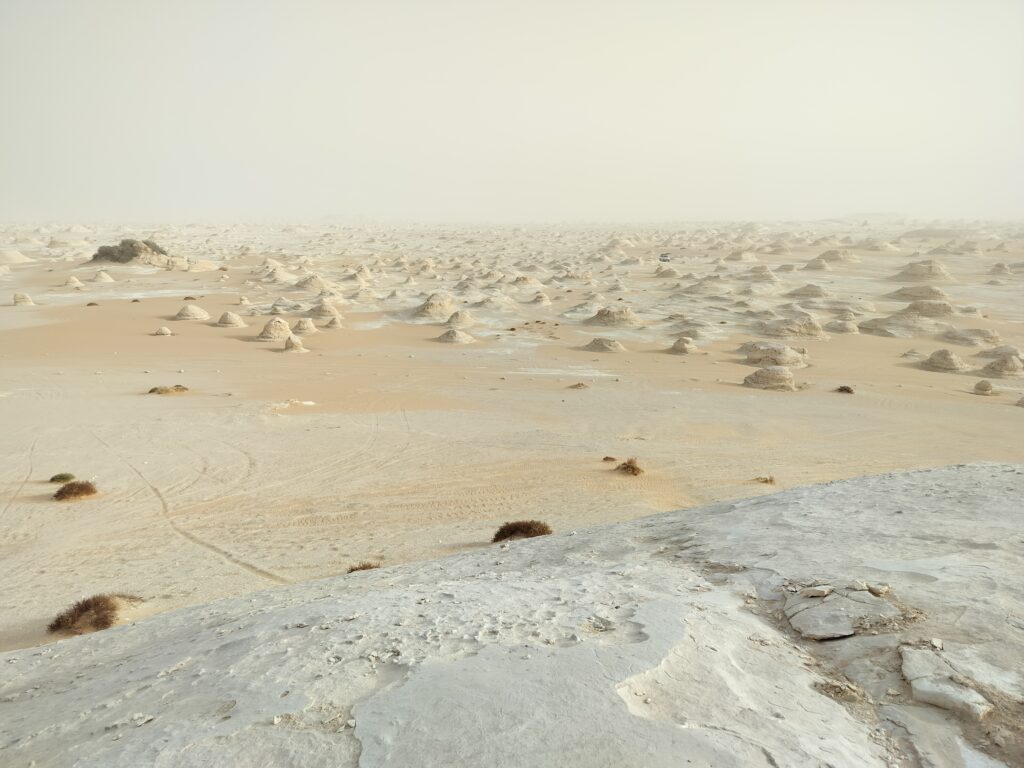
Contrary to our plans, partly due to a sandstorm that had blown in in the meantime, we are unable to stop at the hot springs, but carry on straight to our planned overnight spot. Unfortunately, the storm prevents us from even enjoying the sunset. We therefore pitch our tents whilst our Bedouin guide prepares our dinner.
Day 2: White Desert and back to Cairo
We wake up in our tent covered in sand, which has seeped through the gaps in the fabric thanks to the fierce wind that blew during the night (it should be noted that the tents had no waterproof cover). Breakfast takes a while, which forces us to cut short the only stop planned for the day, back at the Creamy Mountains, but this time at the most famous spot in the White Desert: Chicken Rock, a rock whose shape resembles that of a hen.
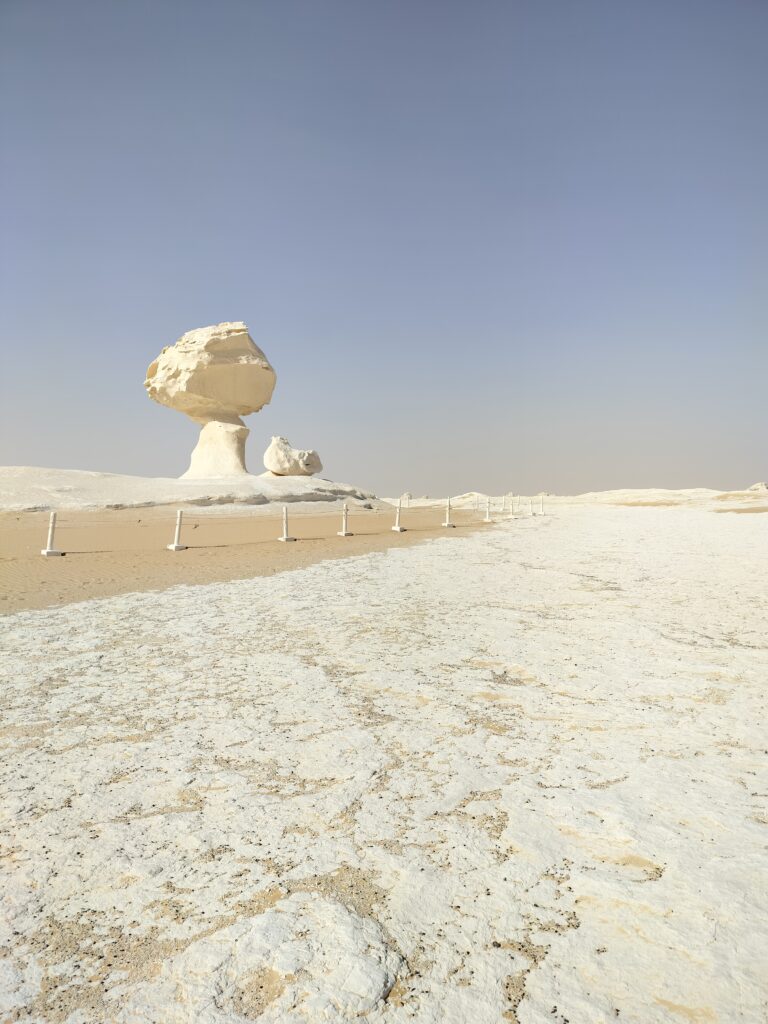
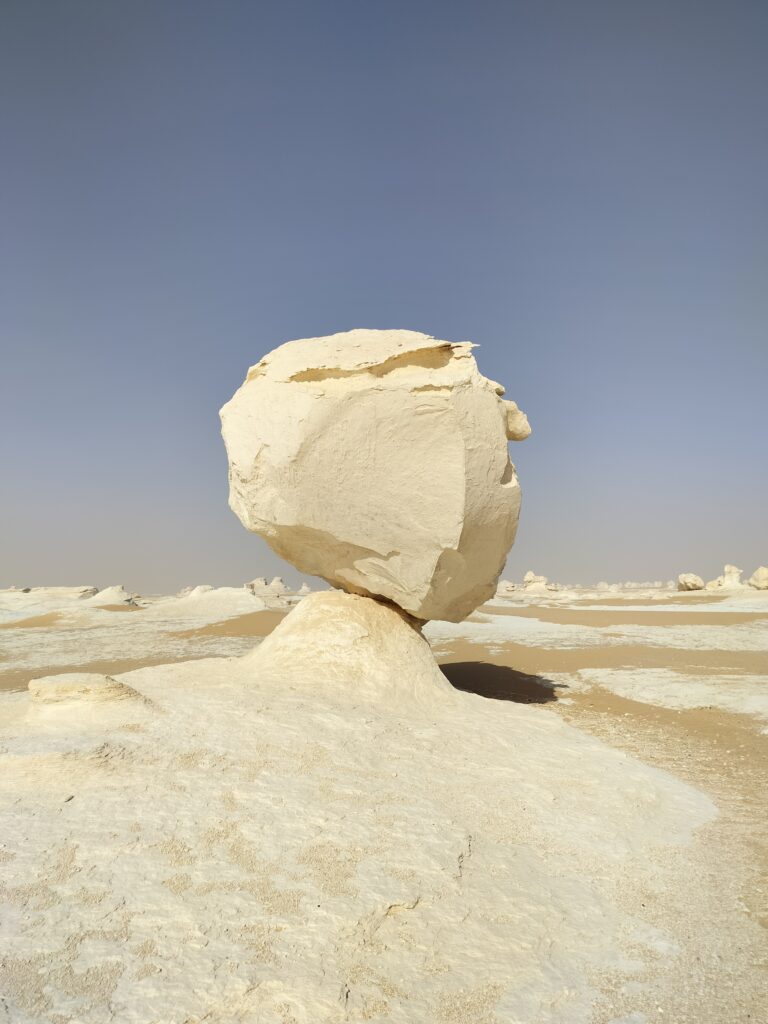
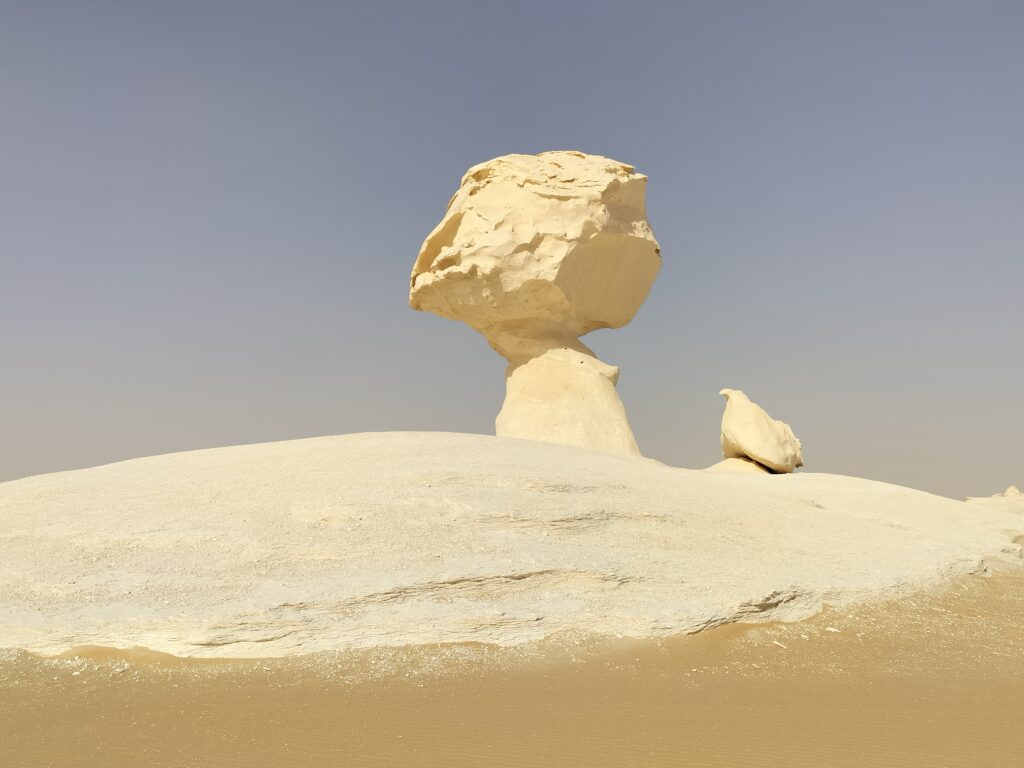
Although this is the park’s most iconic spot, the stop is very brief. This is because, in addition to the extended duration of the aforementioned breakfast, several people prefer not to miss out on the chance to try sandboarding – an activity which, as it is on the itinerary, the guides are required to organize. Personally, I would have gladly skipped it in favour of a longer stop at the Creamy Mountains, but having opted for the group tour, I didn’t insist. Sandboarding, however, turned out to be quite fun in the end, although here too the time available was limited.
It is around 11 am when we set off back towards Cairo, where we arrive at around 4 pm. We therefore still have a little time left to visit some of the city, but I’ll tell you about that in the next episodes.
Day 3: Giza
We’re spending the day in what is probably the most famous part of Egypt. But, as I mentioned, I’ll tell you all about that in my dedicated article on Giza.
Day 4: Siwa
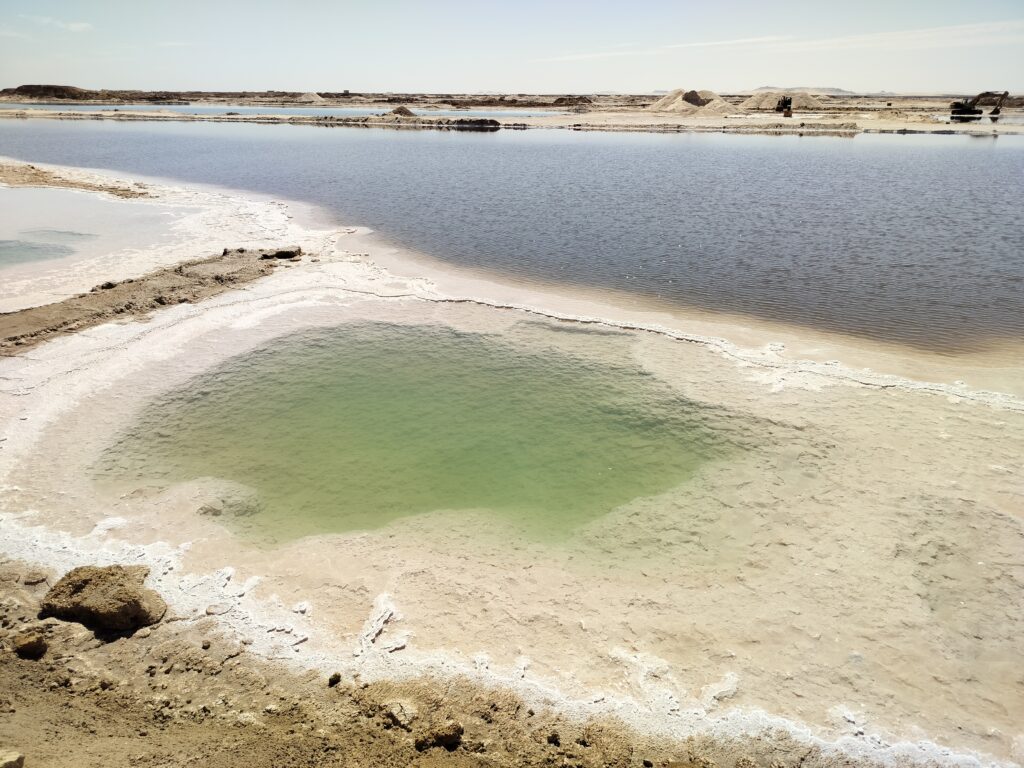
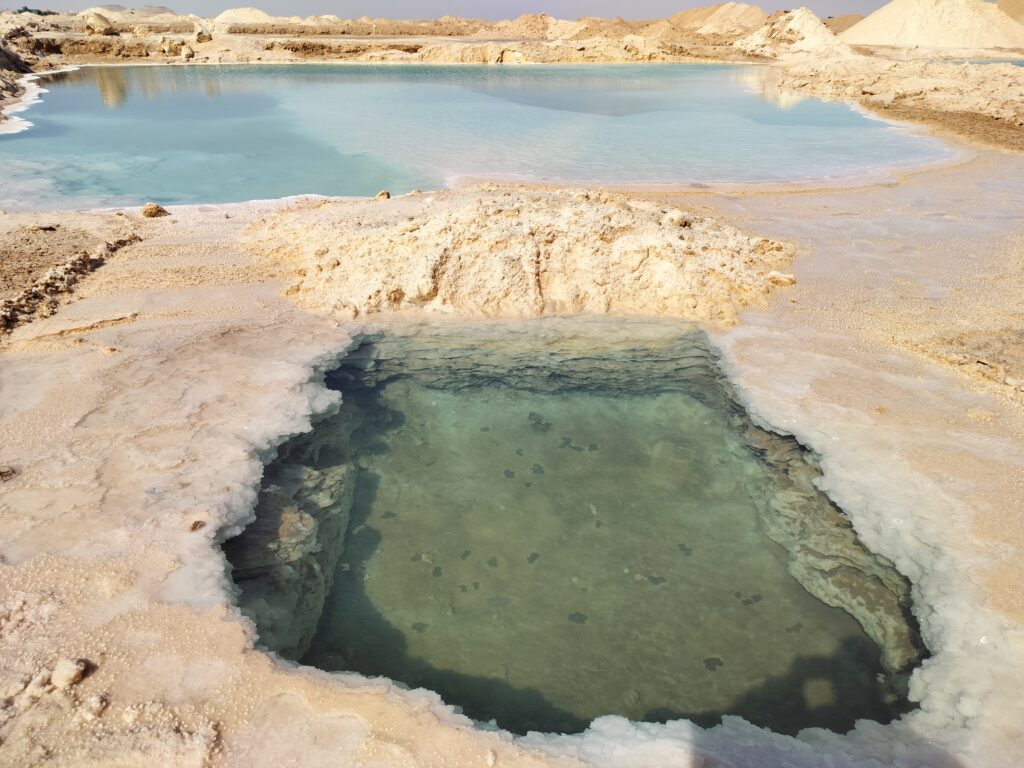
One of the attractions I felt was worth the price of the ticket on its own was the Siwa Oasis, a depression (10 metres below sea level) situated in the heart of the Sahara Desert, which has recently become quite well-known, although it remains off the beaten track. The main attraction of Siwa, a tiny town situated 400 km further south than the Bahariya Oasis, is undoubtedly its salt lakes – pools of salt water that take on a wide variety of colours.
Despite its relative proximity to the Bahariya Oasis, it is not possible to travel directly to Siwa from there, as the road connecting the two oases has been closed by the government. Therefore, to reach Siwa, tourists must set off from Cairo, travel along the Mediterranean coast to Marsa Matrouh, and from there head inland.
Organizing a visit to Siwa independently is fairly straightforward, though many opt for organized tours, which is what we had initially planned to do as well. That was before I received a couple of quotes we’d requested, as the lowest price I came across was around €400 per person (for a private tour with at least two participants, all-inclusive)! For us, that was too expensive.
Hence the obvious solution (which sounds like an oxymoron, but often the best solutions are also the easiest): book a transfer independently and find a hotel that would allow us to organize the tour on the spot. We therefore booked the transfer through Book a Way, departing at 10 pm from Cairo and arriving directly in Siwa at 6 am. Cost: €22 per person.
Given the arrival time—which, incidentally, came after a rather uncomfortable night’s sleep—we decided to book accommodation for two nights, the first of which was really just so we could get some basic rest once we arrived. This was also thanks to the very low cost of the accommodation we chose, namely the Cafour House. Total cost: €46 for two nights.
Through the accommodation, we organized a series of activities, with the aim of visiting the salt flats and the town, which offers a limited but substantial number of attractions, all situated within a short distance of one another. Here is the list of activities the accommodation offers its guests and which we took part in, along with their approximate duration (which I can confirm is accurate). But let’s take it one step at a time.
Having arrived in Siwa after the overnight journey, we first allowed ourselves a little relaxation at our accommodation, which we had asked to pick us up from the bus stop (cost: 100 EGP, equivalent to around €1.50). We also enjoyed breakfast before setting off to explore the oasis.
Salt Pools
The first tour we choose from the list of options is the one dedicated to visiting the salt pools, which we reach by tuk-tuk. Cost: 450 EGP (around €7.50 in total for two people). The weather isn’t great, but we still manage to see the colours of the salt pools quite clearly. The outside temperature, however, is too low to swim in the pools, which have the peculiarity of having a salt concentration of 99%, allowing you to float effortlessly due to the high density of the water (according to Archimedes’ principle, for those who’ve studied it). The lakes are very picturesque, yet the cleanliness of the site leaves much to be desired, with plastic and rubbish sometimes even spilling into the pools. From this point of view, our expectations, at least in this regard, were definitely higher.
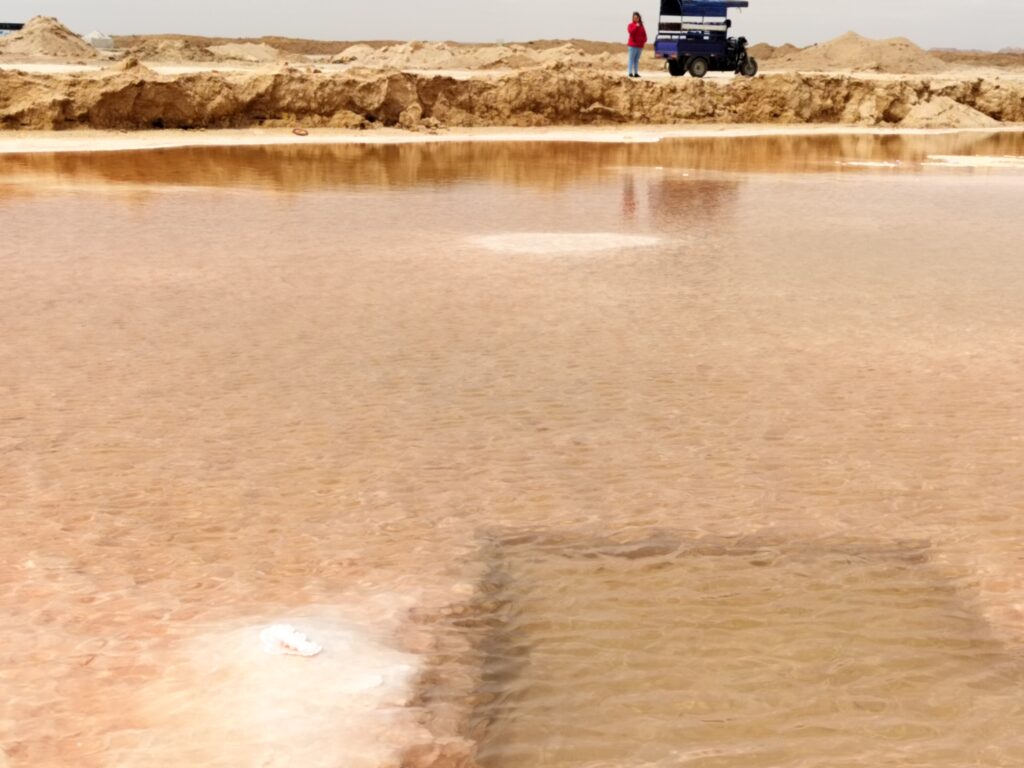
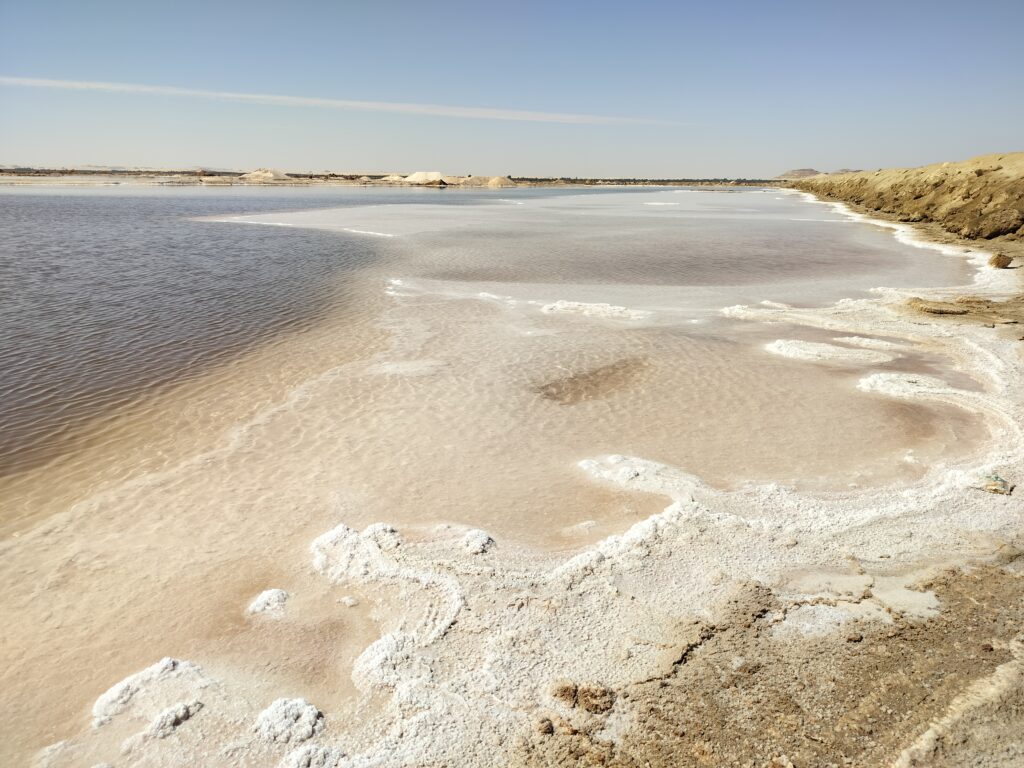
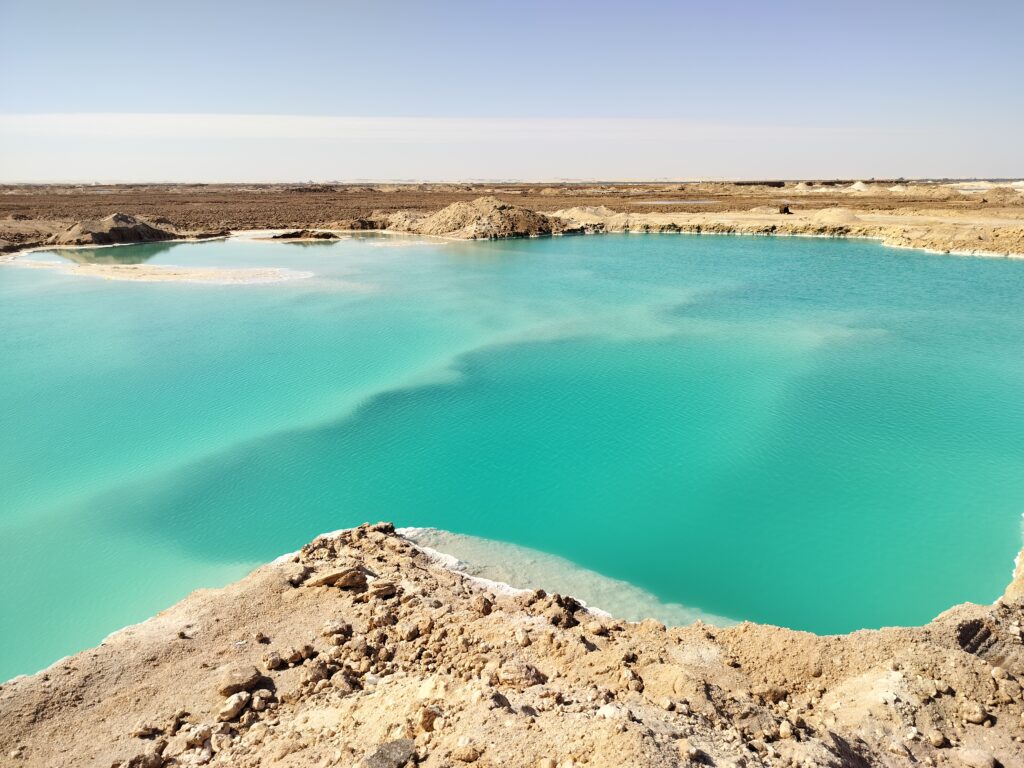
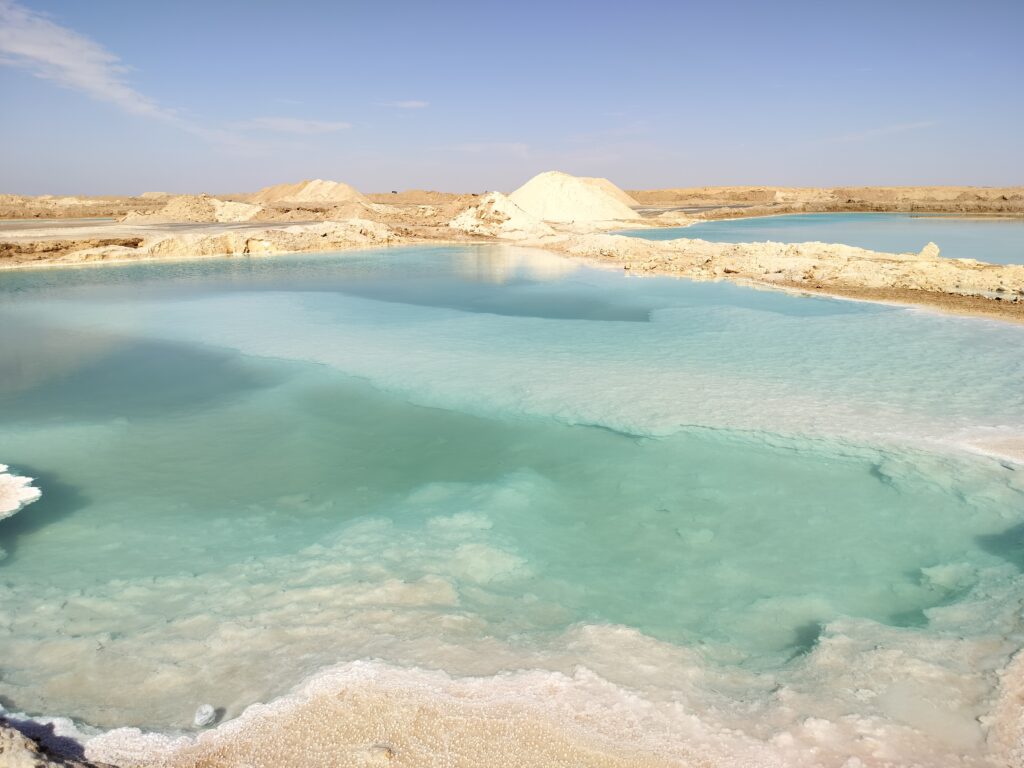
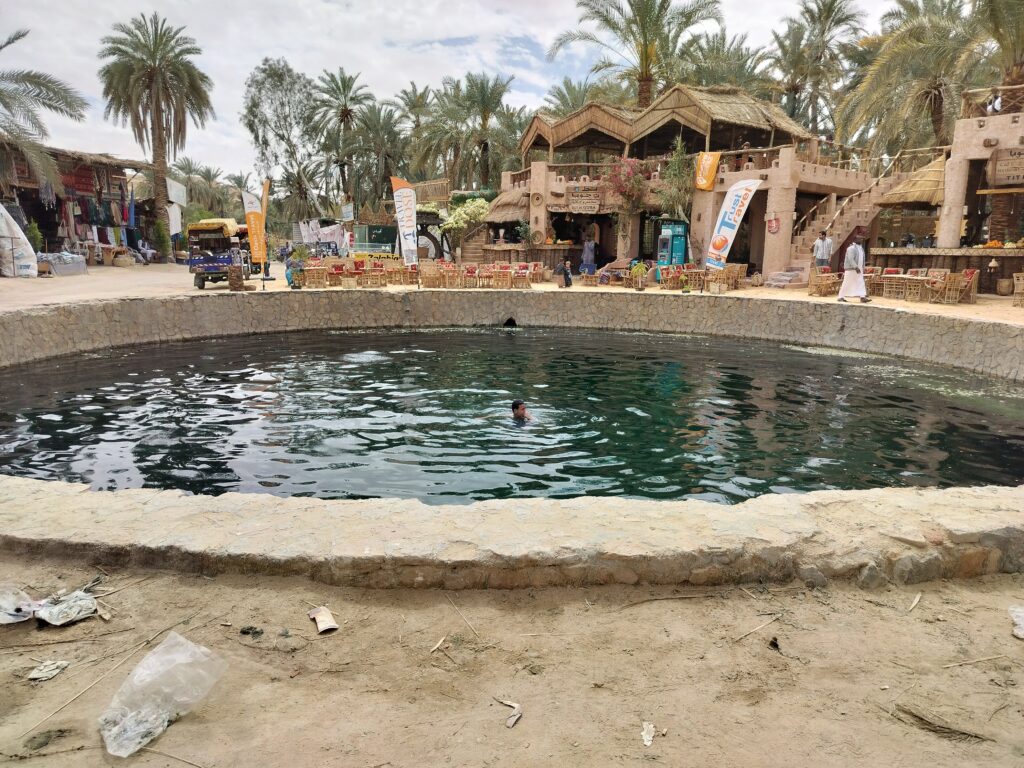
The tour of the salt lakes also includes a visit to Cleopatra’s Pool, a natural hot spring where Queen Cleopatra VII is said to have bathed at least once. Apparently, this led the women of Siwa to believe that doing the same would make them as beautiful as the queen herself. The ‘pool’ consists of a small circular stone basin in which one can bathe, an opportunity I did not miss.
City tour
We’re back at the hotel around lunchtime, so we decide to stay there for a while before setting off on our next tours. At the hotel, we also meet two travellers who decide to join us for the afternoon. Straight after lunch, we set off on the city tour, which includes a number of attractions:
- Dakrour Hill, a rocky, sandy hill used for the so-called ‘sand cure’, whereby people were buried in hot sand to treat joint and muscle problems.
- Cleopatra’s Pool, which we had already visited on the morning tour, but revisited to accommodate the needs of the new participants.
- Temple of Amun-Ra, one of the oldest temples in the world dedicated to the chief Egyptian deity, of which, however, only a few ruins remain visible due to the decision of an Egyptian official who, at the end of the 19th century, had the temple’s stones used to build a house.
- Temple of the Oracle, built during the New Kingdom and dedicated to the triad of Amun. It is so named because it was here that Alexander the Great sought an answer from the god Amun regarding his divine origins and, consequently, his right to rule over Egypt.
- Mount of the Dead, a mountain in which several pharaonic tombs carved into the rock face have been discovered and where it is thought that, among others, Alexander the Great (although his tomb has never been found). The Mountain of the Dead comprises four distinct cemeteries from different periods.
- Shali Fortress, dating from the 13th century, built to protect the inhabitants from Bedouin attacks. The fortress is built from a unique material consisting of a mixture of salt rocks from the region’s salt lakes and clay, which began to collapse following a single heavy rainfall in the early 1900s. The fortress also contains a tiny mosque within its walls.
- Old Market, a sort of small bazaar.
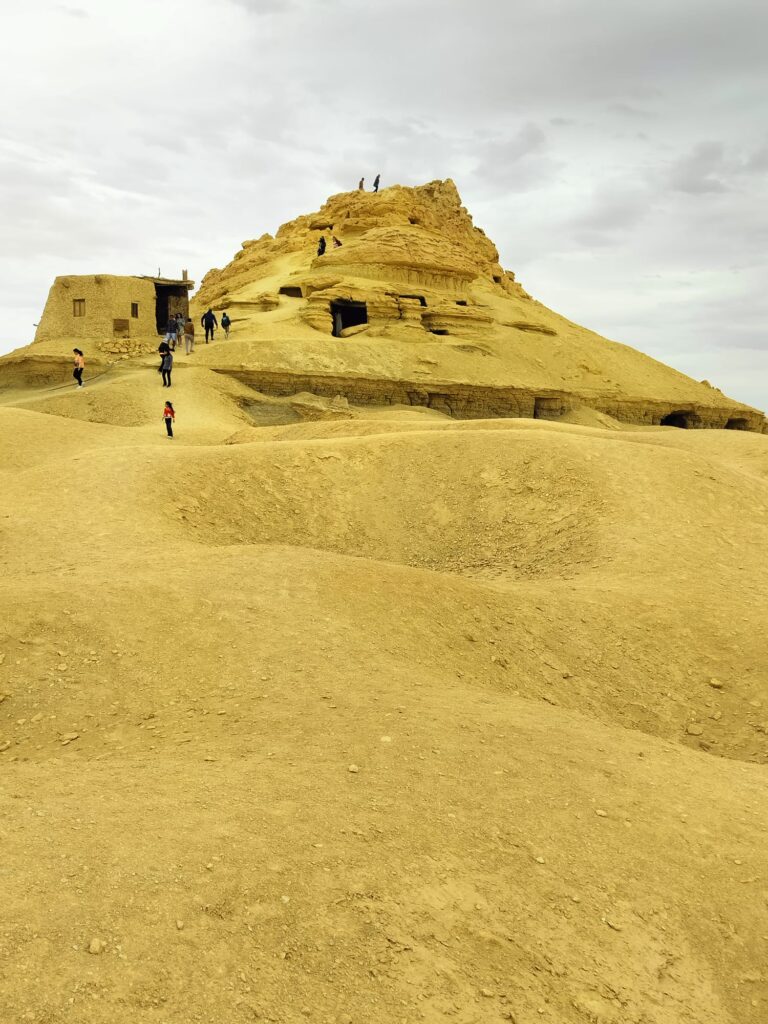
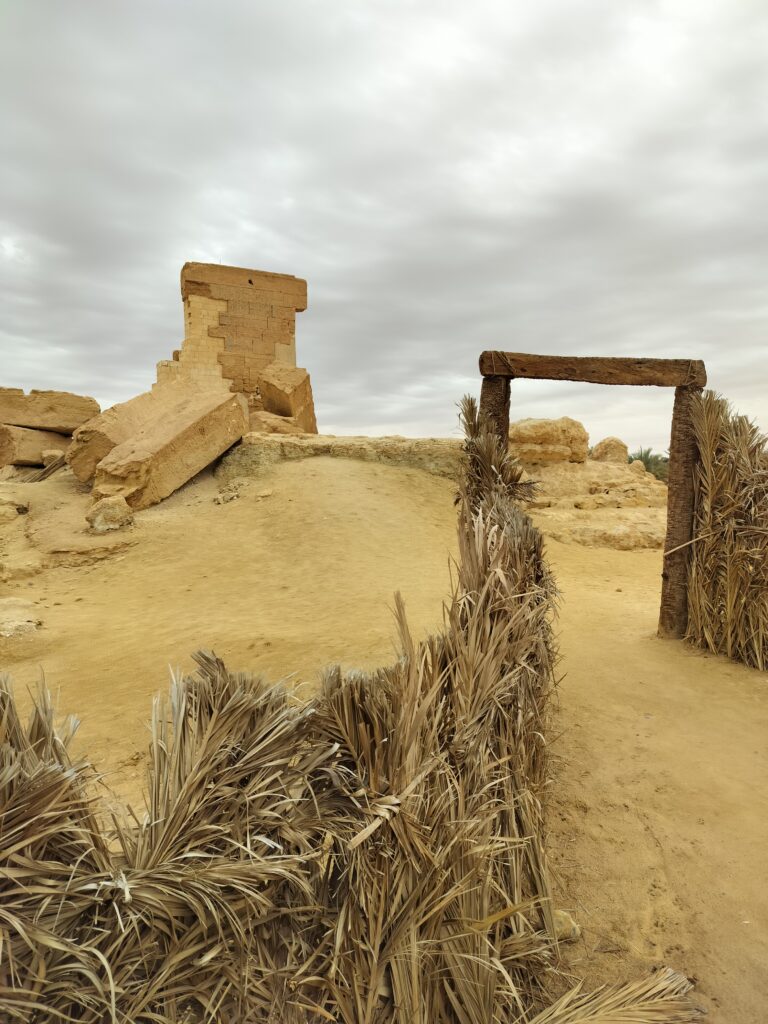
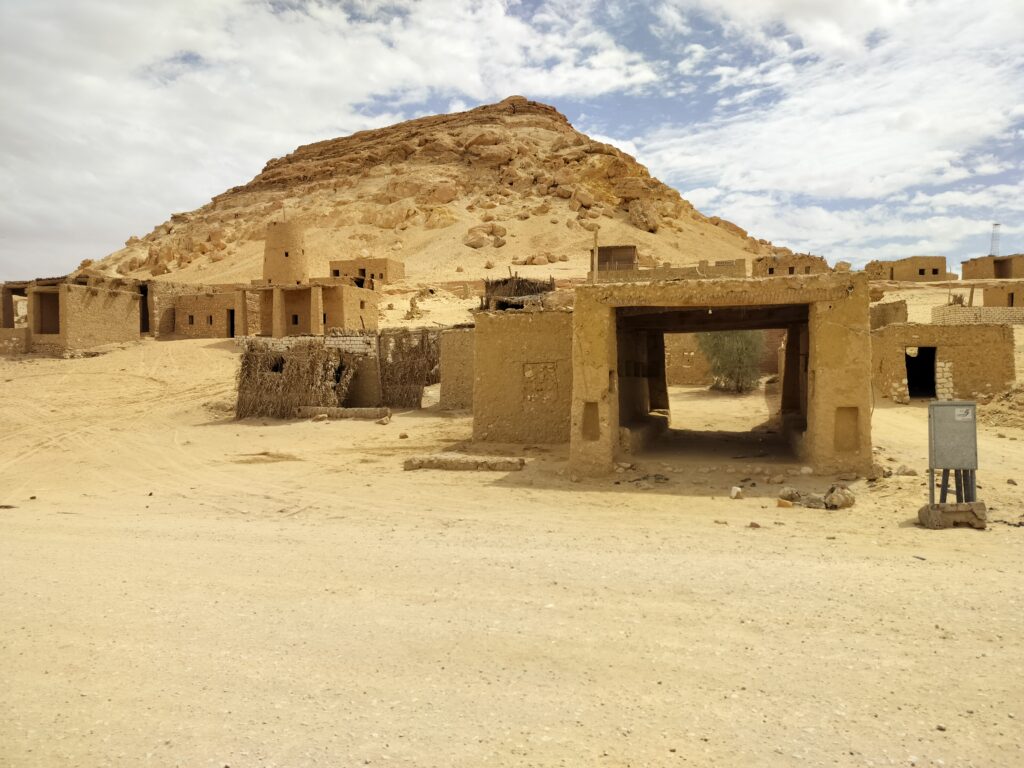
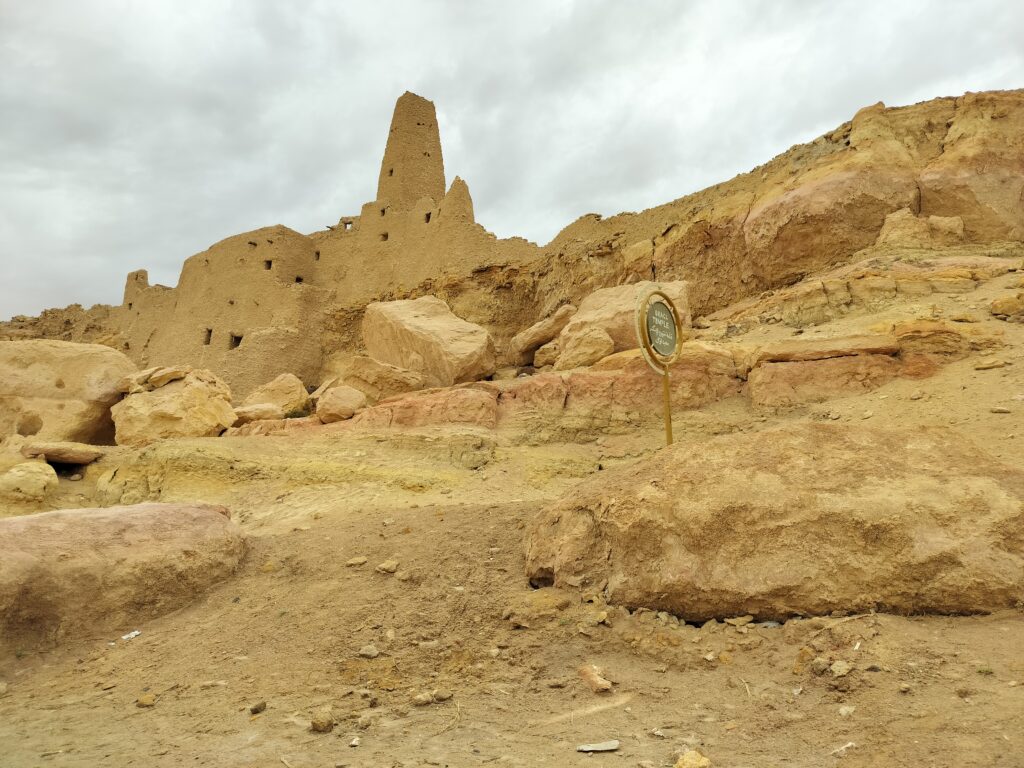
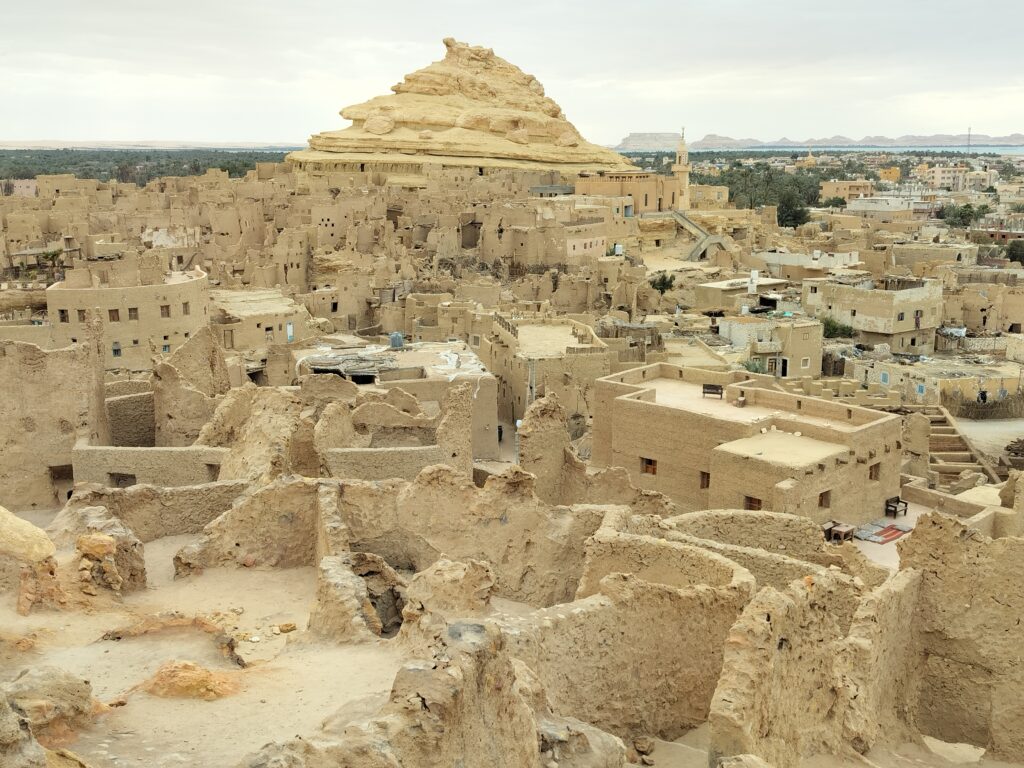
The sights are all very impressive, particularly Shali Fortress and the City of the Dead. The Temple of Amun, however, is not particularly compelling, for the reasons outlined above.
We paid a total of 600 EGP (around €10, to be split between four of us!) for the tour, plus a further 120 EGP (around €2) per person for the Temple of the Oracle and, if I’m not mistaken, another 120 EGP per person for the City of the Dead. The total cost per person, therefore, is 390 EGP (around €6.50).
Fatnas Island
At the end of the city tour, we head straight to Fatnas Island, a small island situated on the salt lake (which is not to be confused with the Salt Pools, but lies to the west of the town), considered the best spot in Siwa from which to watch the sunset. A sunset we would have loved to see, had it not been for a few clouds. For the tour of Fatnas Island, we spend a total of 500 EGP (around €8).
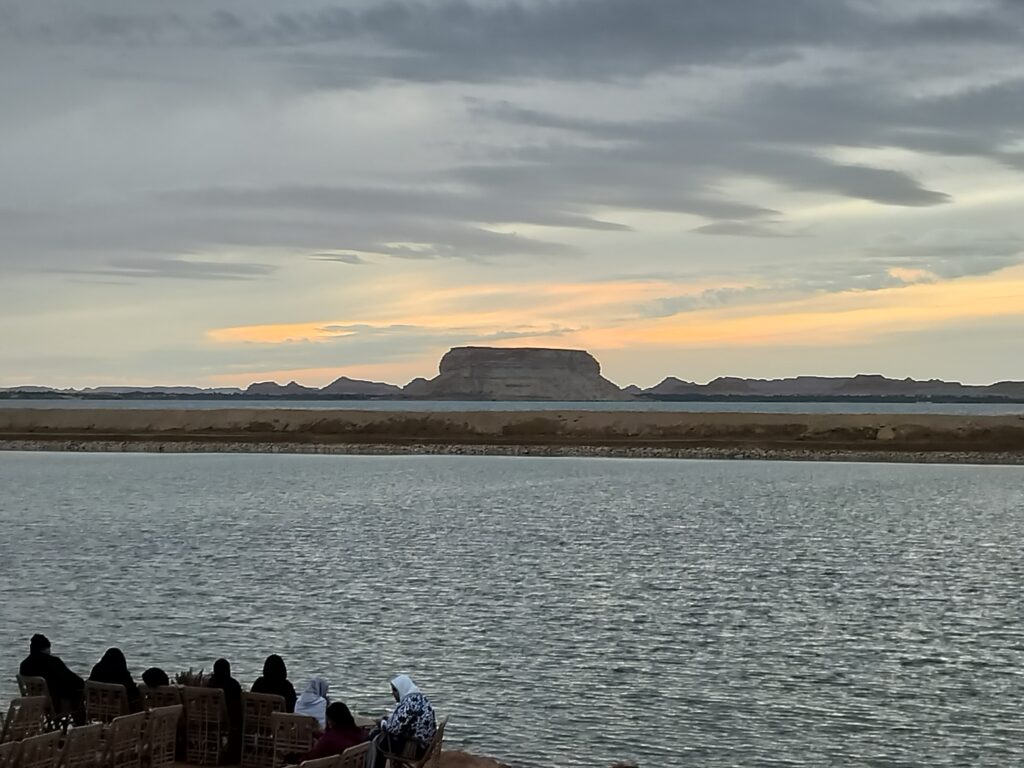
After this third tour, we head back to the hotel to round off the day with a dip in the free hot springs on the premises.
Day 5: Siwa, Marsa Matrouth and transfer to Cairo
Our original plan for the day was to set off early enough to visit a few beaches in Marsa Matrouh, breaking up the journey back to Cairo with a bit of relaxation on the sand. However, as the weather hadn’t been great the previous day, whilst bright sunshine was forecast for today, we decided to delay our departure by a few hours to return to the Salt Pools – the main reason for our visit to Siwa – which we wanted to see in their full splendour. Another factor that made us change our minds was the fact that it wasn’t yet tourist season in Marsa Matrouth, so we wouldn’t have been able to go swimming anyway. But above all, as the hotel managers rightly pointed out, what you find in Siwa can only be found in Siwa, whereas what you find in Marsa Matrouth can easily be found elsewhere too.
So we headed back to the salt lakes straight after breakfast, once again organising the tour through our hotel (but skipping Cleopatra’s Pool this time), spending another 450 EGP (around €7.50) in total. We revisited some of the same places, only this time I managed to have a swim as well.
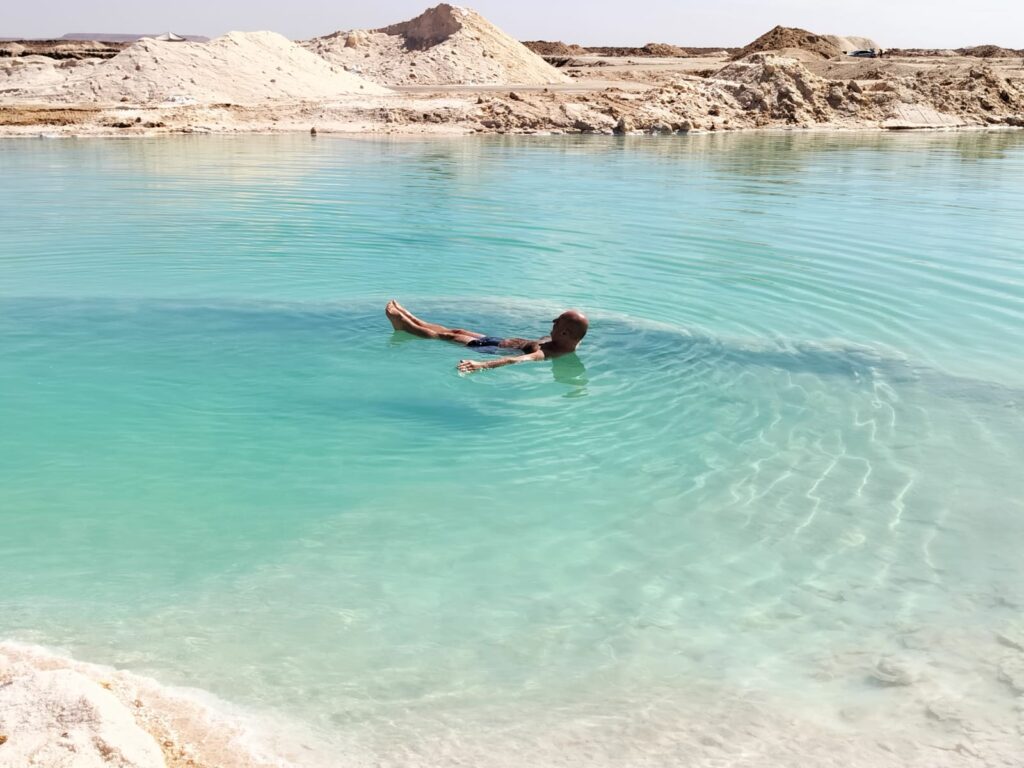
We returned to the hotel around 11am, and after collecting our luggage and the packed lunch we’d requested before setting off on the tour of the pools again, we left Siwa and headed to Marsa Matrouh by private transfer. The private transfer option, costing 3,700 EGP (around €60 in total), was arranged so we could try and see a few beaches before taking the shared van from Marsa Matrouh back to Cairo, at a cost of 900 EGP per person (around €15), departing from the Go Bus station in Matrouh. From Siwa, it is also possible to reach Matrouth by shared van (for a nominal fee), but in that case you need to set off a few hours early, as the vans only leave once they are full and it is not easy to find one at any time. The journey from Siwa to Matrouth takes about three and a half hours.
Among the beaches in Marsa Matrouth we had our sights set on, I’ll mention Coral Eye Beach, Rommel Beach and Ageeba Beach. Unfortunately, due to a lack of time, we had to make do with just a stroll along the seafront.
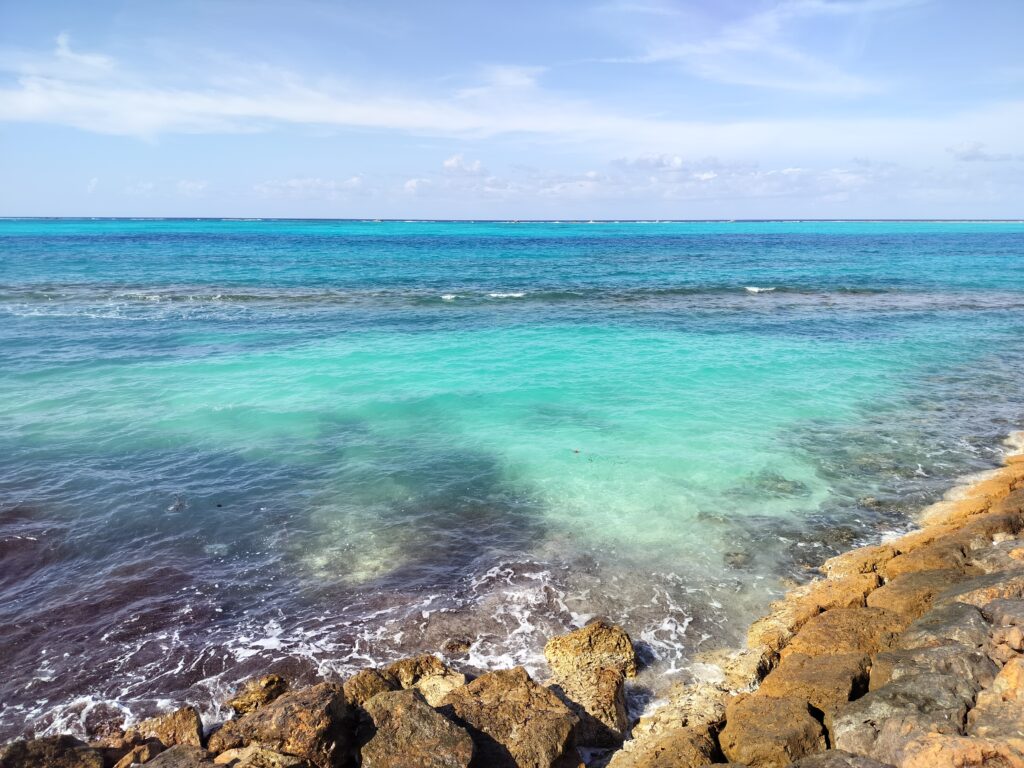
We arrive at the Go Bus station in Matrouh at around 3.30 pm; an hour later we’re in the new minibus taking us straight to Cairo, where we arrive at around 10 pm (we’ve managed to find the only slow driver in Egypt – the journey from Matrouh to Cairo usually takes about five hours).
Conclusions
The experience in the White Desert with the Bedouins was very interesting and enjoyable. In my opinion, a two-day tour is the minimum required to visit this part of Egypt, although even then we were rather pressed for time (though part of the blame for this lay with the tour organizers). Honestly, I’m not sure how feasible it is to cram everything into a single day; I think there’s a very real risk of rushing through everything. Overall, I think choosing a group tour was a good idea, partly to keep costs down, despite the drawbacks of having to cater to a diverse group. The landscapes we visited are stunning, although the comparison with the Namib Desert that I heard from someone struck me as rather far-fetched, both in terms of the emotions evoked (the Namib Desert wins hands down, in my opinion) and because they are quite different landscapes.
Siwa was also a great experience; we managed to visit everything we were interested in whilst keeping costs down considerably, and we probably enjoyed the experience more than we would have if we’d gone with a private tour. The salt flats have truly splendid colours, but we didn’t like the lack of care for the landscape, with so much rubbish scattered about haphazardly. The town is definitely worth a visit; in particular, we really enjoyed Shali Fortress and the City of the Dead.
Great content! Keep up the good work!
Thank you so much! 🙂