“The Pyramids of Giza rank amongst the most magnificent works created by the human mind and hand. Imposing examples of ancient architecture, characterised by their precise structure, absolute stability and exact orientation, the pyramids have captured the imagination of people throughout the ages. Their geometric shape, silhouetted against the sky, seems to be the product of a science that has reached such a level of synthesis as to appear the perfect manifestation of a mathematical or astronomical theory.”
G. Goyon, The Secret of the Great Pyramids
Table of Contents
Introduction
I could not have introduced this travelogue with better words than those of Goyon. If there is one image that springs to mind for anyone thinking of Egypt, it is certainly that of the pyramids. Enormous tombs built at the behest of the pharaohs, dating back several millennia before the birth of Christ and bearing witness to the grandeur of Egyptian civilisation, one of the first to have developed in the course of history.
The most famous pyramids and the Sphinx are located in Giza, one of the three cities that make up the Cairo metropolitan area, alongside Cairo itself and the lesser-known Qalyubia. Giza is also home to the Grand Egyptian Museum (GEM), the new Egyptian museum, which opened in 2025 and to which a number of artefacts of great historical importance have been moved, including some from the Old Egyptian Museum (located in Tahrir Square).
Itinerary in pills
⭐ Fun scale: 8/10
🏛️ Not to miss: the panoramic view of the three pyramids of Giza and the Sphinx, the Step Pyramid and Tutankhamun’s Tomb
⏱️ Total time: one intense day
👣 Mood: art and history
💰 Giza pyramids and Sphinx: 700 EGP (~ 12€); Saqqara: 600 EGP (~ 10€); Dashur: 200 EGP (~ 3,50€); GEM: 1590 EGP (~ 25€). Other optional costs below
💡 Keep in mind: all doable within the indicated time, but very intense
🎟️ Tip: If you want to go inside a pyramid, choose the red one at Dashur – entry is free. It’s best to have a driver; a guide is optional. Bear in mind the opening hours during Ramadan.
It takes about half an hour by car to reach Giza from the centre of Cairo. Another half-hour’s drive takes you from Giza to Saqqara, which in turn is a further 20 minutes’ drive from Dashur. Saqqara is known, amongst other things, for the Step Pyramid, the first pyramid ever built, whilst Dashur is home to the Red Pyramid and the Rhomboidal Pyramid. As well as Dashur and Saqqara, we had considered visiting Memphis, the ancient capital of Egypt, but in the end we decided to skip it due to a lack of time.
The sites at Giza, Dashur and Saqqara are generally open until 5 pm, with last admission (for each site) at 4 pm. As our tour took place on the last day before the end of Ramadan, closing time was brought forward by one hour.
You can visit the pyramids of Giza, Dashur and Saqqara independently, or opt for a guided tour, either as part of a group or a private tour. If you decide to visit independently – at least for Saqqara and Dashur – it is strongly recommended that you arrange (in advance and clearly) your transfers with a single driver, rather than using Uber or taxis. This is because, in the areas around Dashur and Saqqara, Uber is often unavailable, whilst using conventional taxis on call risks costing more than necessary.
Given the historical significance of the sites, we decided to visit the pyramids of Giza, Saqqara and Dashur with an Italian-speaking guide. In particular, we contacted Egypt Safari Tours, with whom we agreed on an itinerary that would allow us to finish all the visits in time to visit the GEM, which closed at 7 pm on the day in question (last admission at 5 pm).
The cost of the tour was €112 per person, including all entrance tickets and lunch. This price is fairly in line with what’s generally available, bearing in mind that hiring an Italian-speaking guide usually costs a little extra. The cost of a driver (without a guide) for a day trip to visit all three sites, departing from Downtown Cairo, generally ranges between €45 and €60 per person, whilst the cost of admission tickets to the various sites is 700 EGP (around €12), 600 EGP (around €10) and 200 EGP (around €3.50), respectively, for the Pyramids of Giza, Saqqara and Dashur. In particular, the price quoted for the Giza complex does not include entry to the interior of any of the pyramids, which is charged separately. We decided to save our money, both because we were aware that inside the pyramids we would be seeing virtually nothing whilst walking through claustrophobic corridors, and because we were going to visit the interior of the Red Pyramid at Dashur for free a few hours later.
Admission to the GEM, which we visited independently, costs 1,590 EGP (around €25) per person (adult price). It’s worth buying tickets in advance on the GEM website. If you’re interested, bear in mind that on Wednesdays and Saturdays the museum is open until 10 pm. During Ramadan, it closes earlier at 4 pm.
Giza pyramids
Our tour begins at around 7.30 am, the time we’d agreed for the pick-up at our hotel. During the drive to Giza, our guide begins to give us an introduction to Egyptian history and culture. By 8 am we’re at the entrance to the site. I’d like to point out that there are metal detectors, and in particular that the use of certain electronic devices is prohibited, including even microphones (I was asked to leave mine in the lockers).
The Giza site includes the three most famous pyramids in the world – those of Khufu, Khafre and Menkaure – along with six other smaller pyramids (belonging to the pharaohs’ wives and other members of the royal families) and the famous Sphinx. Within the site, you can travel between the various points of interest on free shuttle buses.
Viewpoints
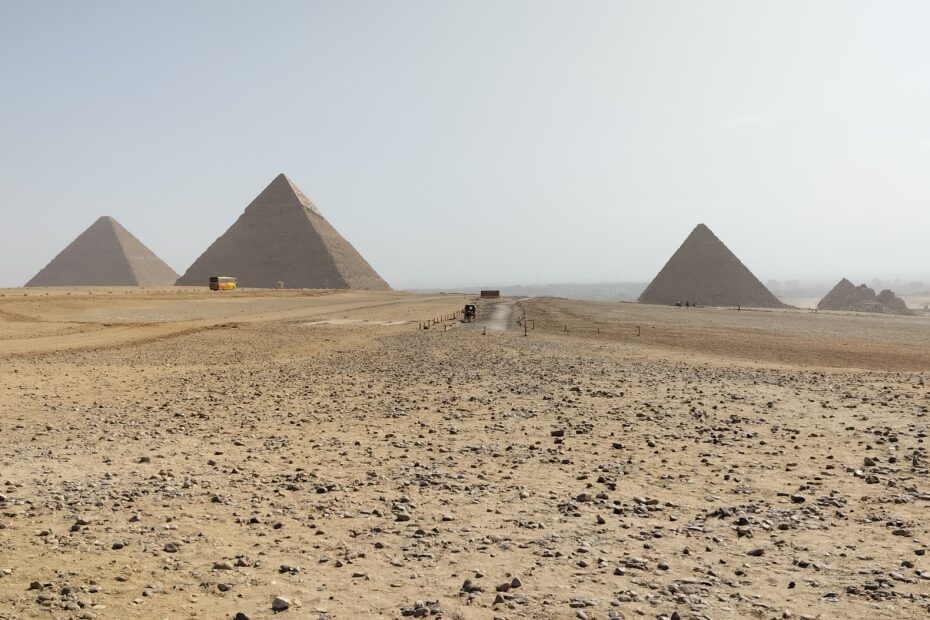
We start the tour at the first viewpoint, from where you can see all three pyramids and catch a glimpse of the three smaller pyramids situated to the south of the Pyramid of Menkaure.
This is the most famous and most visited viewpoint in the pyramid complex, but it is not actually the only one and, in my opinion, not even the most impressive. There is, in fact, a second viewpoint, which offers a better perspective from which to appreciate the three main pyramids and all six queens’ pyramids. As for the latter, the three pyramids situated to the south of the Pyramid of Menkaure are clearly visible, but with a little care, you can also make out the three pyramids to the east of the Pyramid of Khufu. The largest of the pyramids situated to the south of Menkaure’s pyramid belongs to the pharaoh’s wife, whilst it is not known for certain who is buried in the other two, although they are thought to be women considered important to the pharaohs. The three pyramids to the east of Khufu’s pyramid, on the other hand, belong to Khufu’s two wives and his daughter.
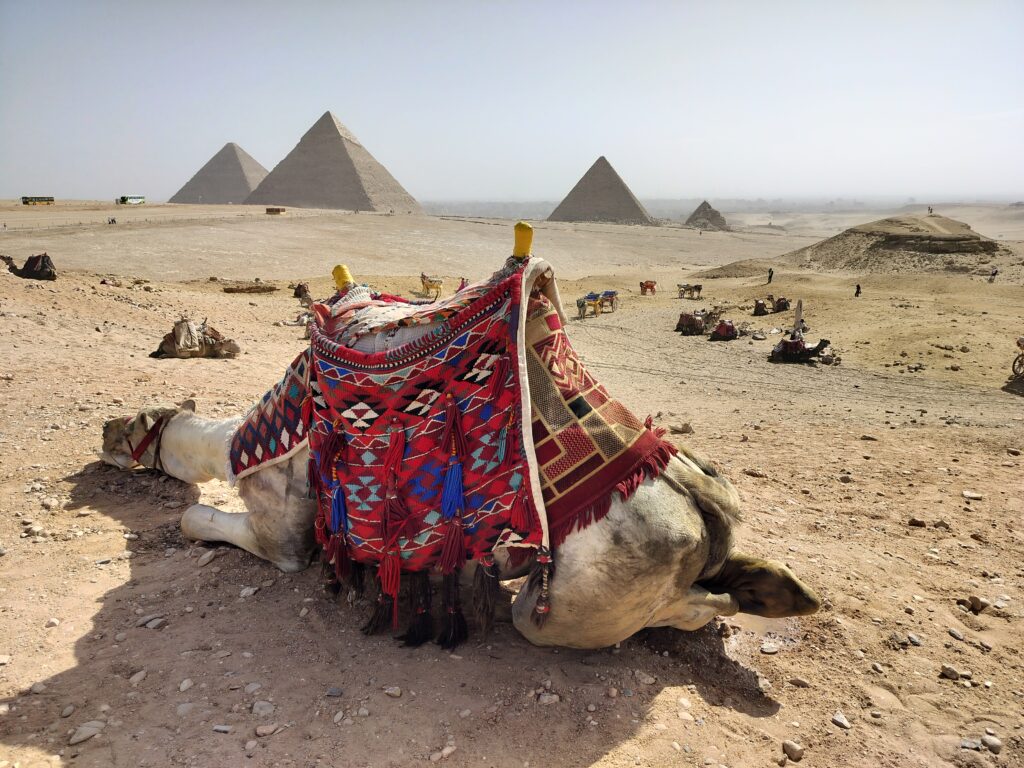
Unfortunately, to reach this viewpoint, you have to take a camel ride or a horse-drawn carriage ride at an extra cost of 1,000 EGP (around €17), which is practically more than the site’s entrance fee. As it seems the camel ride is rather harsh on the animals, we decided to opt for the horse-drawn carriage instead. In any case, though, it’s really just a tourist trap, and looking back, I’m not sure I’d do it again. To reach the viewpoint in question, in fact, a very short walk would suffice, which would also save time, considering that the carriage drivers enjoy wasting time taking ridiculous photos, the sort you’d want to delete from your camera’s memory straight away. At least, that’s what I did.

Khufu Pyramid
After visiting the viewpoints, we take the shuttle bus to the vicinity of the pyramids of Khufu and Khafre. We do not, however, get close to the pyramid of Menkaure, the shortest of the three (‘only’ 65 metres).
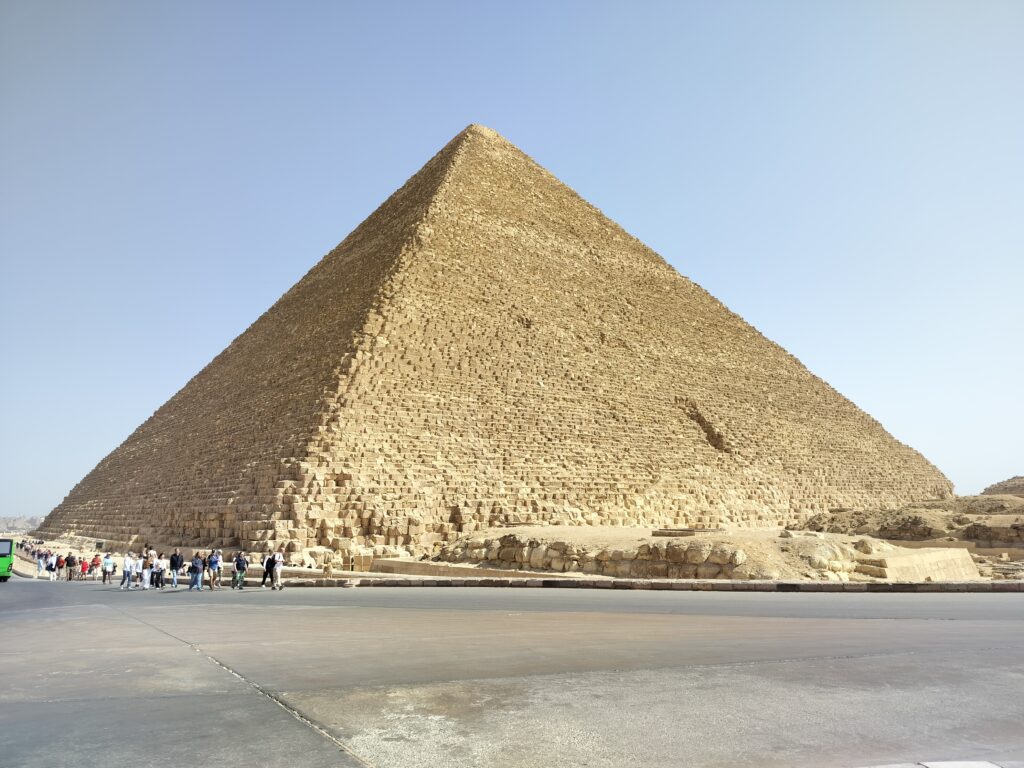
The Pyramid of Cheops dates back to around 2500 BC and, at 146 metres high, is the largest pyramid in the world. The pyramid was built using over 2 million stone blocks in honour of the first pharaoh of the Fourth Dynasty, and is the only one of the Seven Wonders of the Ancient World still standing today.
Khafre Pyramid
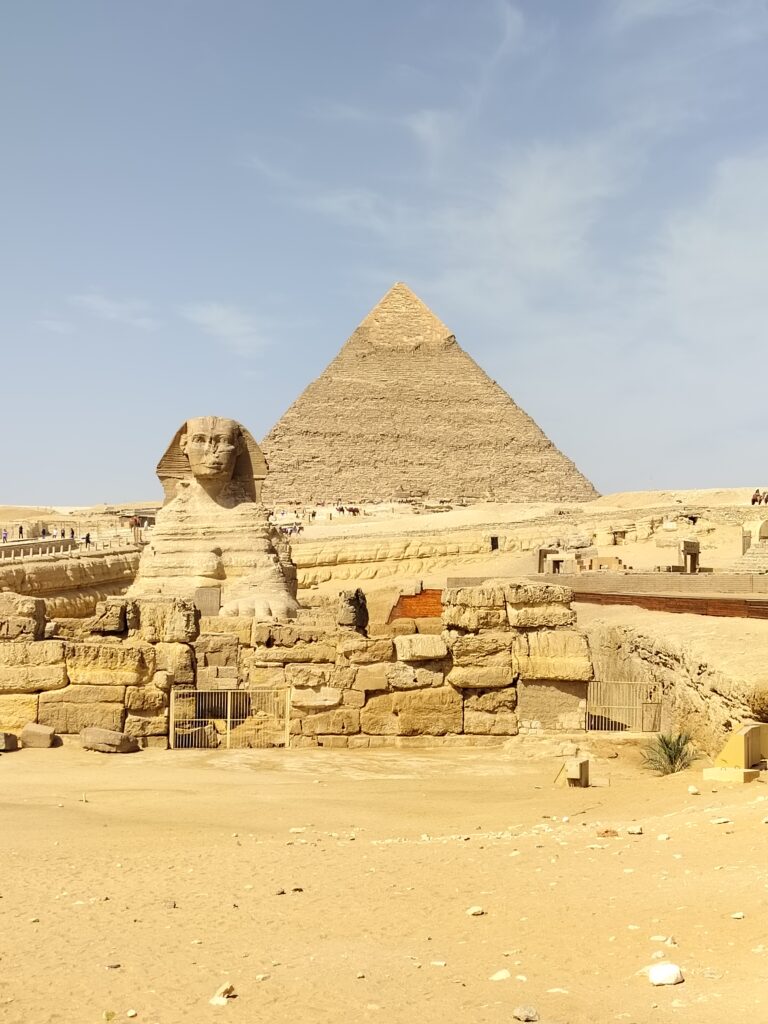
The Pyramid of Khafre was built after that of Khufu and belongs to Khufu’s son. The Pyramid of Khafre is second in height only to that of Khufu (the difference is less than 3 metres!), although it appears taller when viewed from a distance, as it was built on a raised platform. The Pyramid of Khafre is also easily recognisable by its apex, which still retains part of its original smooth stone casing.

The Great Sphinx
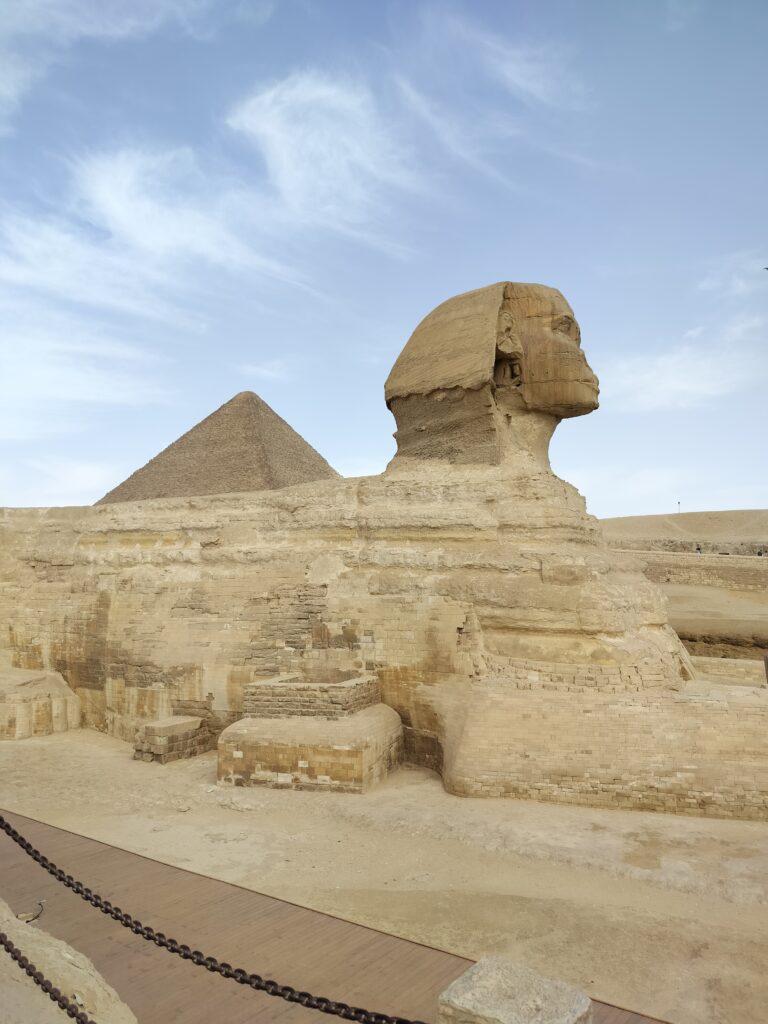
Near the Pyramid of Khafre stands the famous Great Sphinx, which depicts Pharaoh Khafre himself with the body of a lion and his head covered by the nemes, a symbol of royal status. The Great Sphinx also holds the world record for its size, measuring 72 metres in length and 20 metres in height, and was built in ancient times to act as a guardian of the pyramids.
A visit to the Great Sphinx brings the tour of the Giza pyramid complex to a close, having lasted a total of around 3 hours.
Leaving the Giza complex behind, we head for the Royal Hotel, where we’ll be stopping for lunch, during which we’ll also sample the famous koshari.
Dashur
Rhomboidal Pyramid
After our lunch break, our driver takes us to the Dashur complex, where we first visit the rhomboidal pyramid, dating from 2600 BC and built on the orders of Pharaoh Snefru, father of Khufu. The distinctive feature of this pyramid lies in the change in slope halfway up; whilst the reason for this is not fully understood, it marks a transition between step pyramids and smooth-sided pyramids. The rhomboidal pyramid is also one of the few to retain much of its smooth stone casing.

Red Pyramid
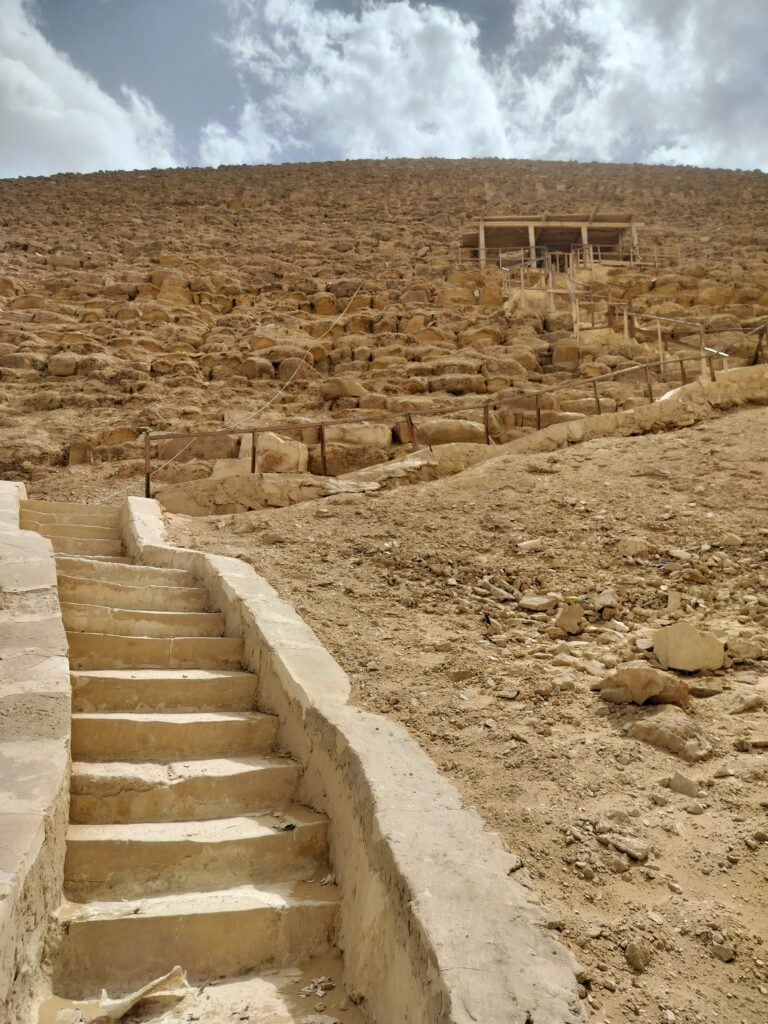
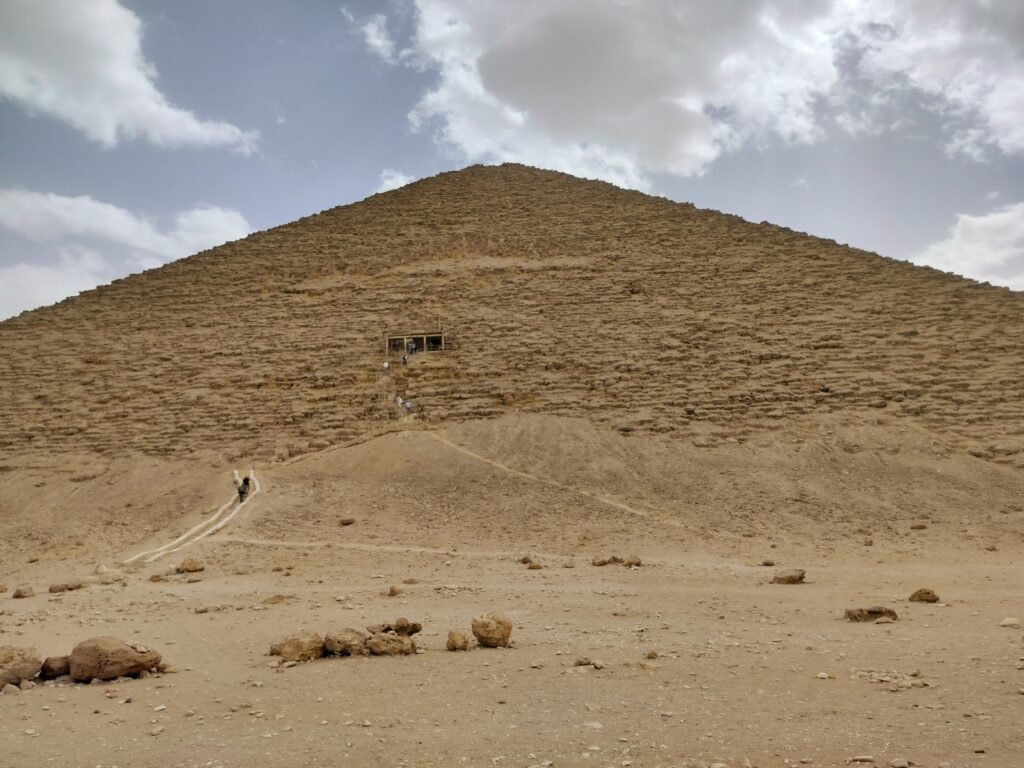
A short distance from the rhomboidal pyramid stands the Red Pyramid, considered the first smooth-faced pyramid in history and also built at the behest of Pharaoh Sneferu, in which he is believed to be buried. The pyramid takes its name from the hue that the stone of which it is made takes on at sunset. Furthermore, at 104 metres high, the Red Pyramid is the third tallest of all, after the pyramids of Khufu and Khafre.
We also visit the Red Pyramid from the inside, descending along a narrow tunnel for about sixty metres, at the end of which there are three burial chambers devoid of any decoration whatsoever. The visit is therefore not particularly exciting, but at least it is free (apart from the odd person asking for a tip for reasons that are rather baffling).

Saqqara
The tour of the Dashur complex takes about an hour, after which we head to the Saqqara Necropolis, which mainly contains the tombs of the pharaohs of the Third Dynasty. The area is accessed through a stone wall, followed by a short colonnade.
Tombs of Teti and Kagemni
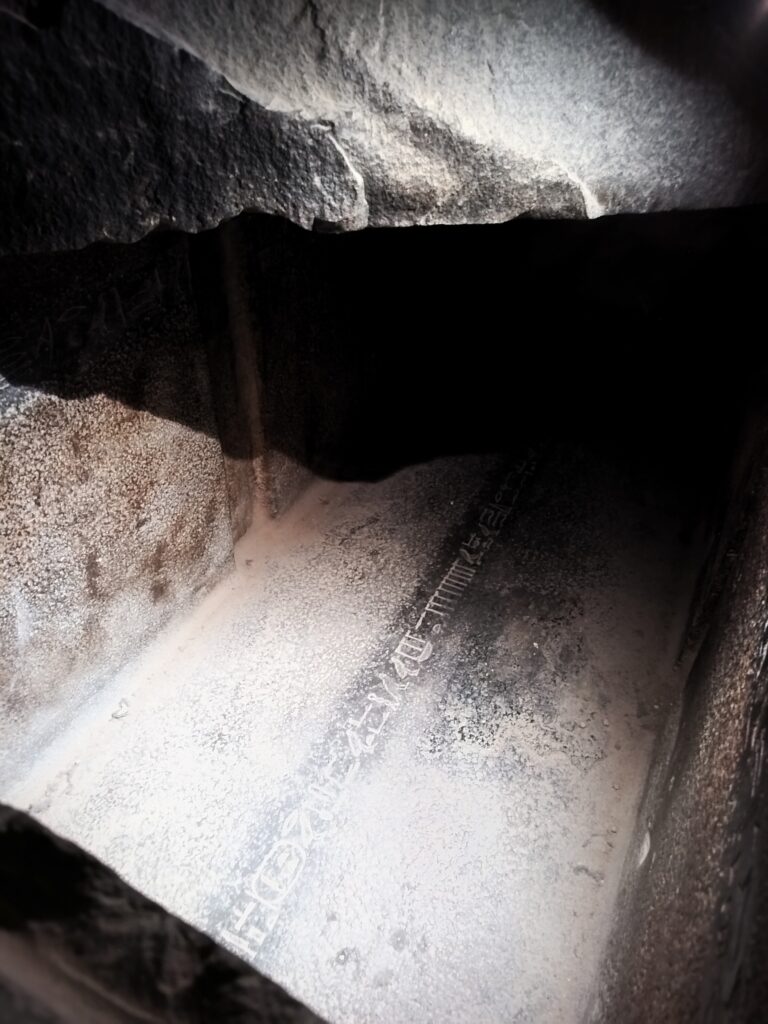
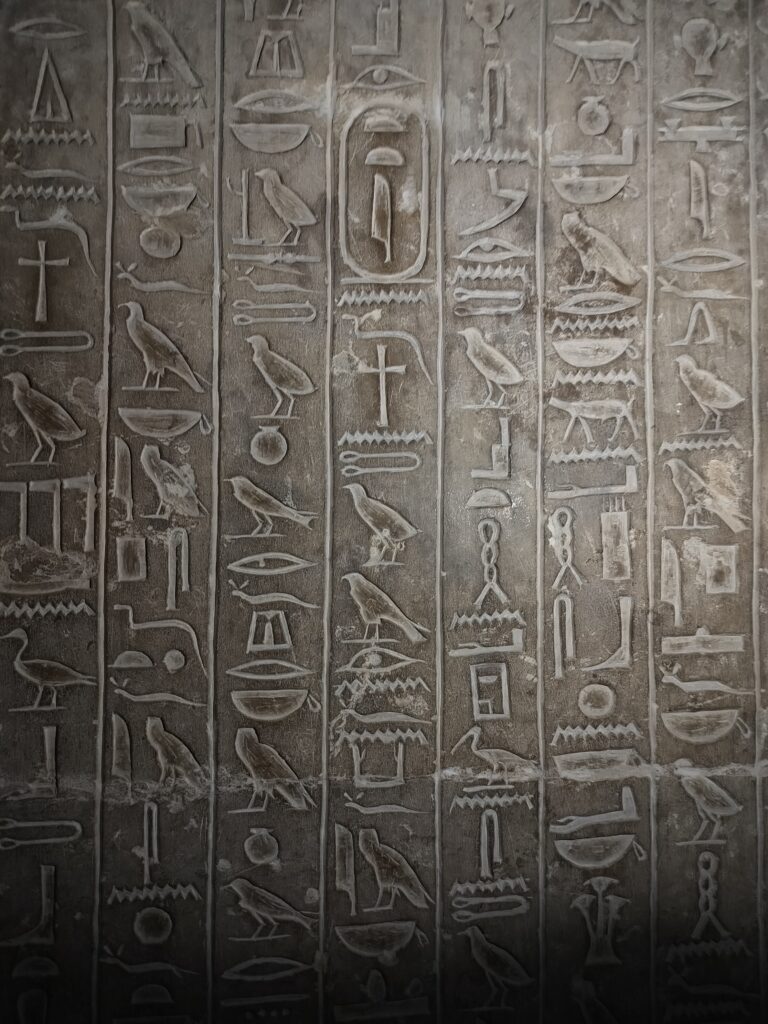
Let’s begin our tour of Saqqara at the Tomb of Teti, situated inside the pyramid dedicated to him. From the outside, the pyramid is not well preserved; it looks more like a pile of rubble. Inside, however, it is well worth going in to see the ceiling adorned with stars (symbolising the Egyptian conception of the tomb as a microcosm) and the hieroglyphs on the walls – considered to be the oldest known religious texts – as well as the sarcophagus. The descent into the Pyramid of Teti is considerably less strenuous than that into the Red Pyramid.
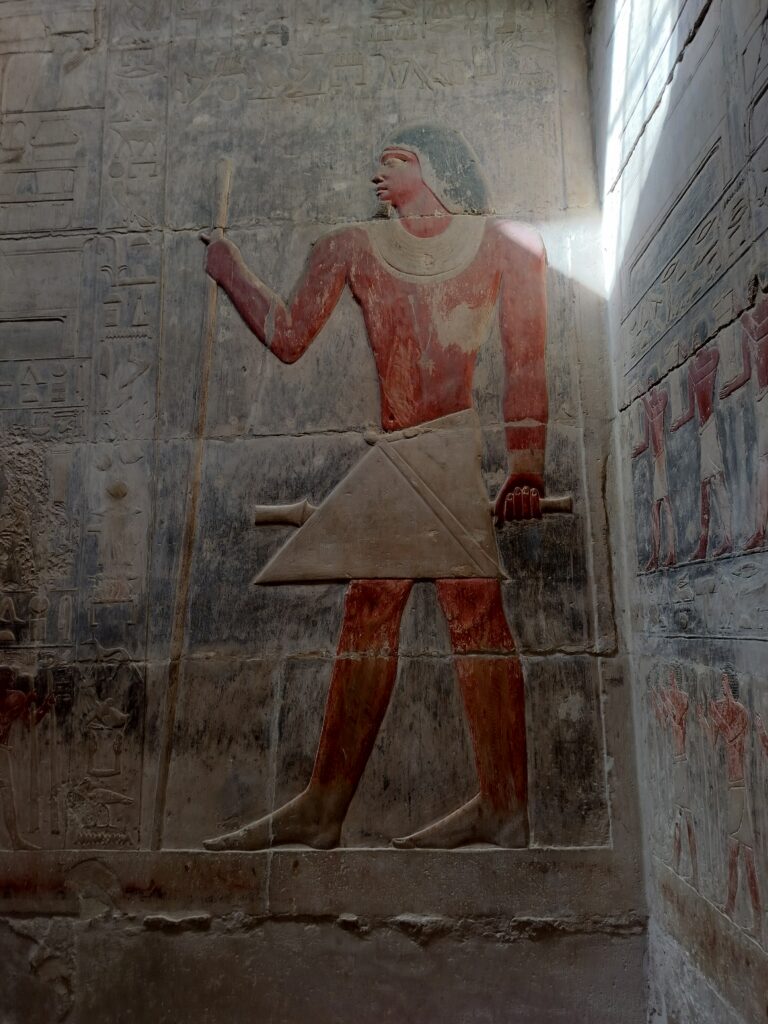
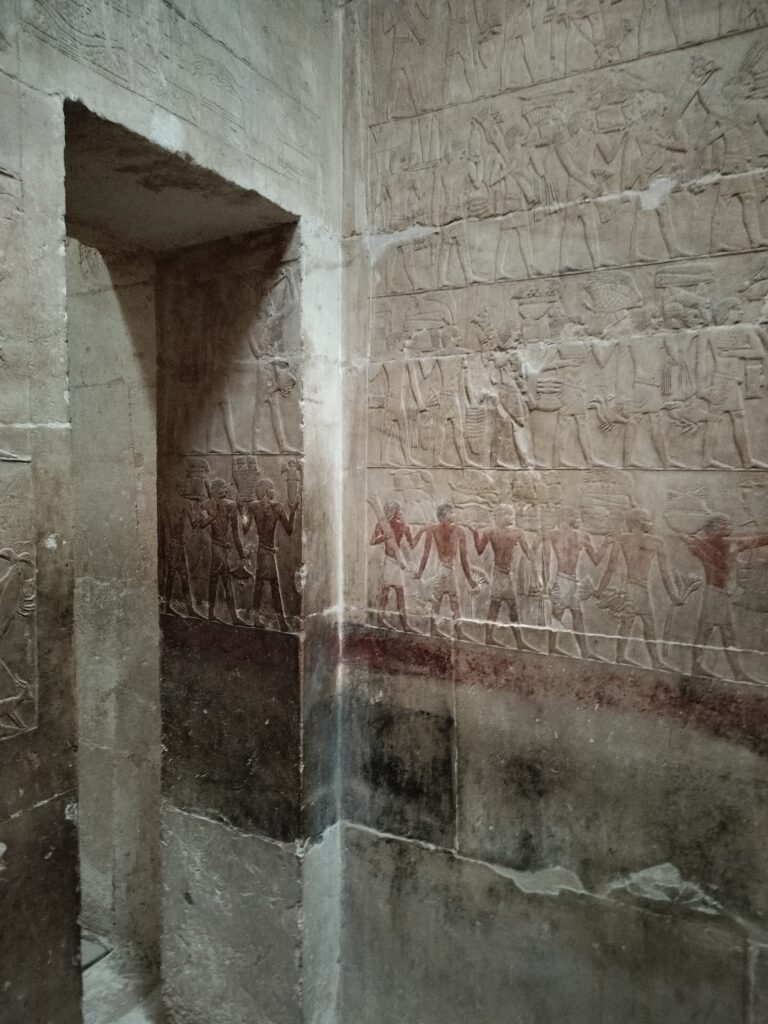
Having left Teti’s tomb, we now come to the Tomb of Kagemni, dedicated to the Grand Vizier during the reign of Teti. The tomb is not situated inside a pyramid and consists of a series of chambers decorated with well-preserved bas-reliefs depicting scenes from everyday life.
Djoser’s Step Pyramid
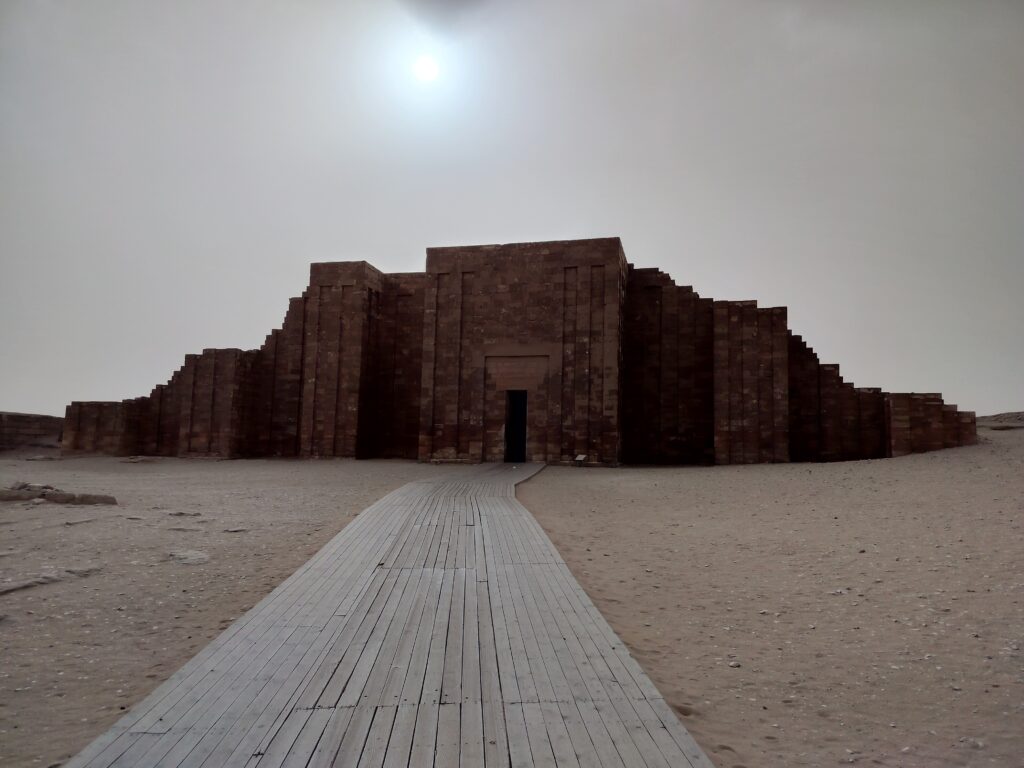
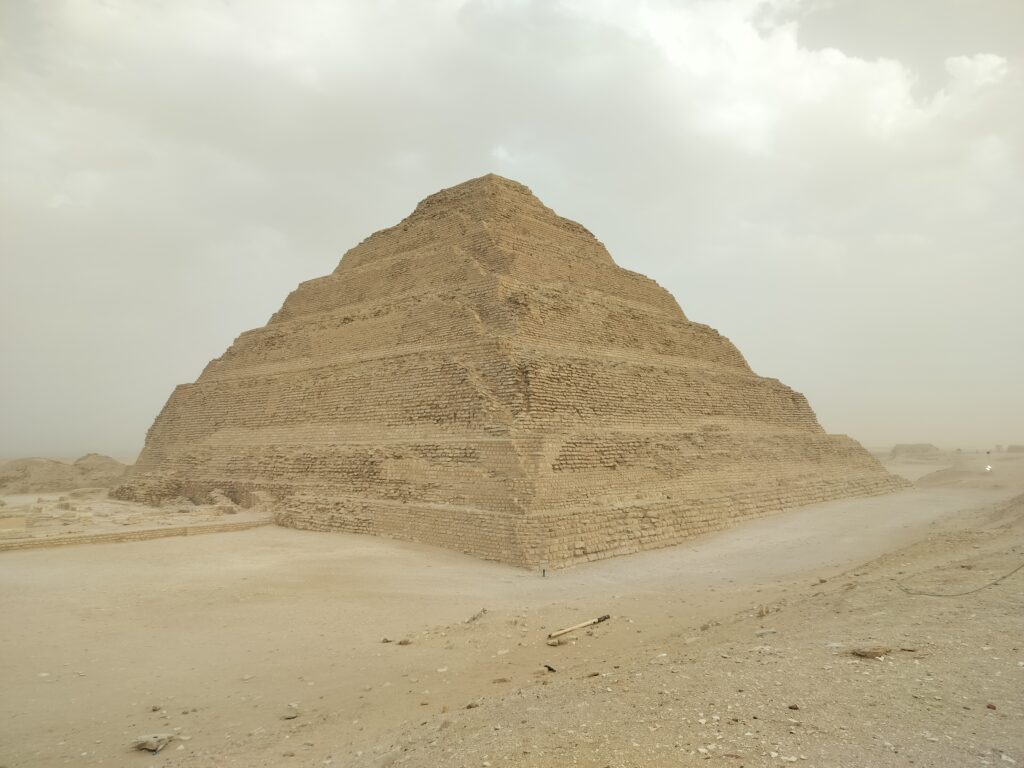
After Kagemni’s Tomb, it is finally time to visit the main attraction of the Saqqara complex: the Step Pyramid of Djoser, the first king of the Third Dynasty (2700 BC). It is the first pyramid ever built and also the oldest large stone structure in history. The pyramid was built in several stages, eventually reaching its final form with a total height of 60 metres, and houses several mastabas belonging to Djoser’s family. The stepped shape is thought to be the result of a design error. We only visit the pyramid from the outside, thus avoiding the 280 EGP (around €5) surcharge required to go inside.
Tombs of Idut, Unas-Ank and Inefert
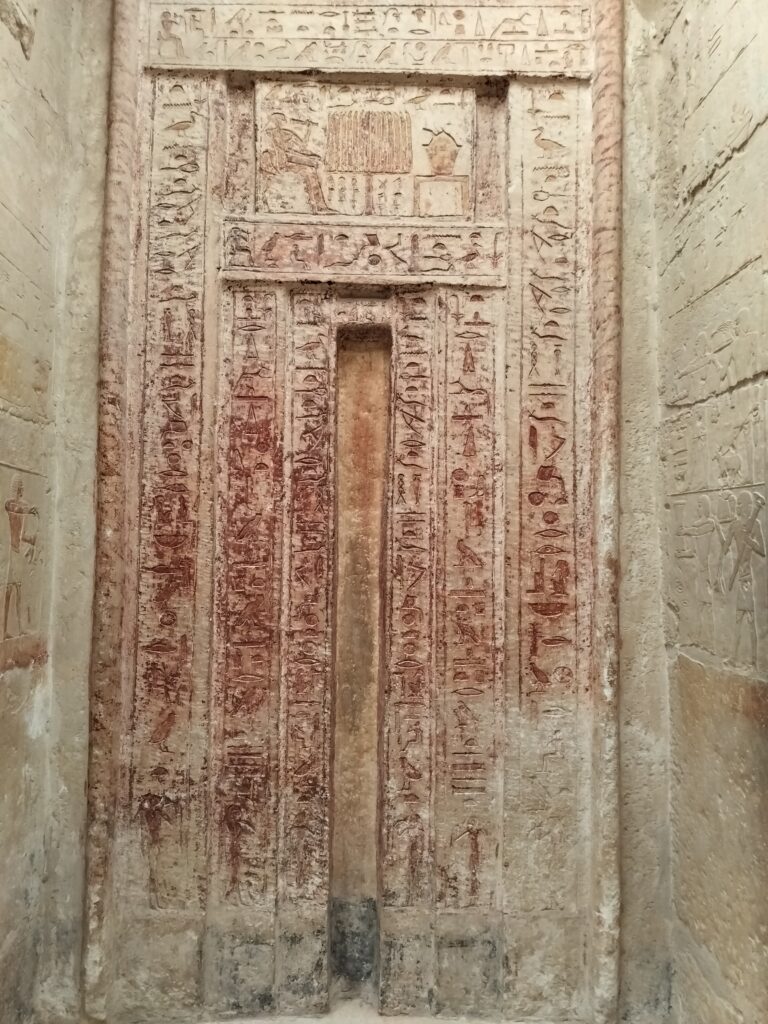
The final attractions we visit in the Saqqara necropolis are the tombs of Idut, daughter of Teti, Unas-Ank, one of Unas’s sons, and Prince Vizier Inefert. These tombs, too, are decorated mainly with bas-reliefs depicting scenes from daily life. In particular, Idut’s tomb features, amongst other things, a rare depiction of the birth of a hippopotamus, whilst Inefert’s tomb also depicts the prince himself alongside his wife.
GEM
Our visit to the Saqqara necropolis lasts about 2 hours in total. It is 4 pm when we leave the site and head for the GEM, where we part ways with our guides. We then explore the museum on our own, managing to get in before the last admission, scheduled for 5 pm that day.
The GEM is the world’s largest museum dedicated to Egyptian history and houses collections ranging from prehistory to the Roman era. The museum is divided into a spacious ground floor, open to the public until the official closing time (7 pm in our case), and a series of 12 galleries, which generally close earlier (6 pm in our case).
Tutankhamun’s Gallery
For this reason, we begin our tour of the GEM directly in the museum’s most important gallery – the one dedicated to Tutankhamun, the boy pharaoh. On display in the gallery are over 5,000 artefacts unearthed from his tomb, including the funerary beds and, above all, his golden death mask. The gallery also features a series of installations that recount his life, his health problems and the legends surrounding his mysterious death.

Khufu’s Solar Boat and the entrance area
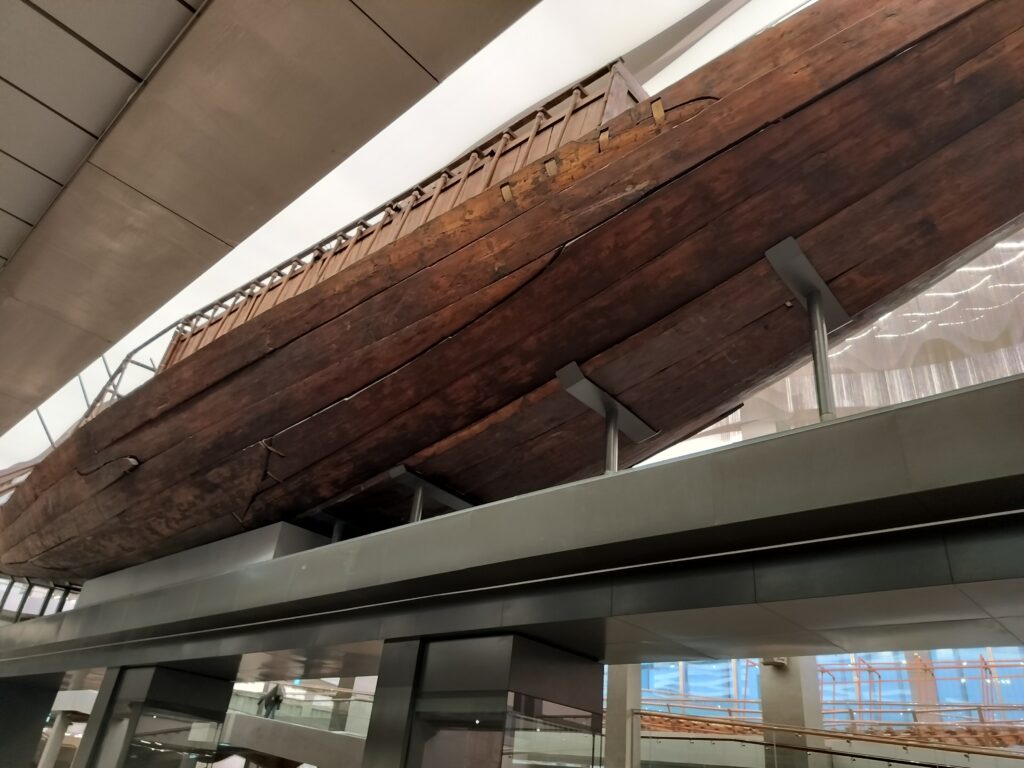
As we leave the gallery dedicated to Tutankhamun, we catch a glimpse, just as we’re about to leave, of Pharaoh Khufu’s Solar Boat, a symbol of Egyptian funerary beliefs. I’d advise you to be on time; the museum staff are extremely strict about opening hours.
Once the galleries have closed, we spend the remaining time at our disposal taking our time to explore the museum’s main atrium, a huge hall covering around 10,000 m². This hall is home to some of the museum’s main attractions, including:
- The enormous statue of Ramses II, carved from 83 tonnes of granite and standing 11 metres tall.
- The Great Stairway, on which 60 monuments are displayed, including royal statues, stelae and other examples of monumental art.
- The Victory Column of Merenptah, dedicated to the Egyptian victories over the Libyans during the reign of Ramses II’s son.
- The statues of the Ptolemaic kings.
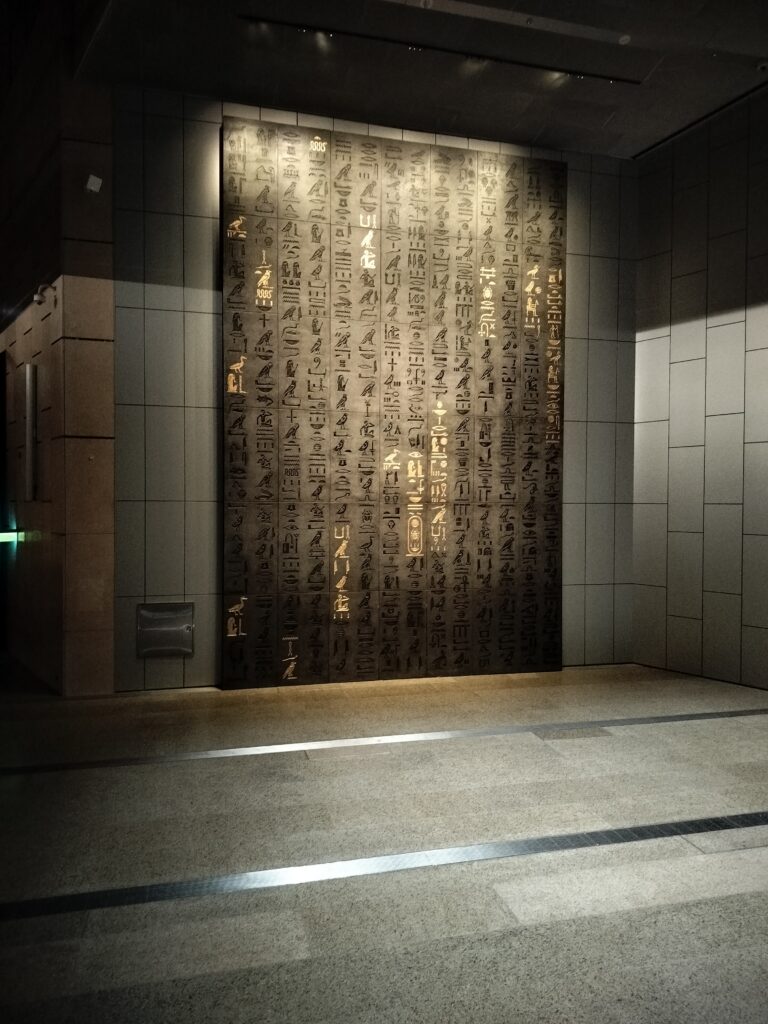
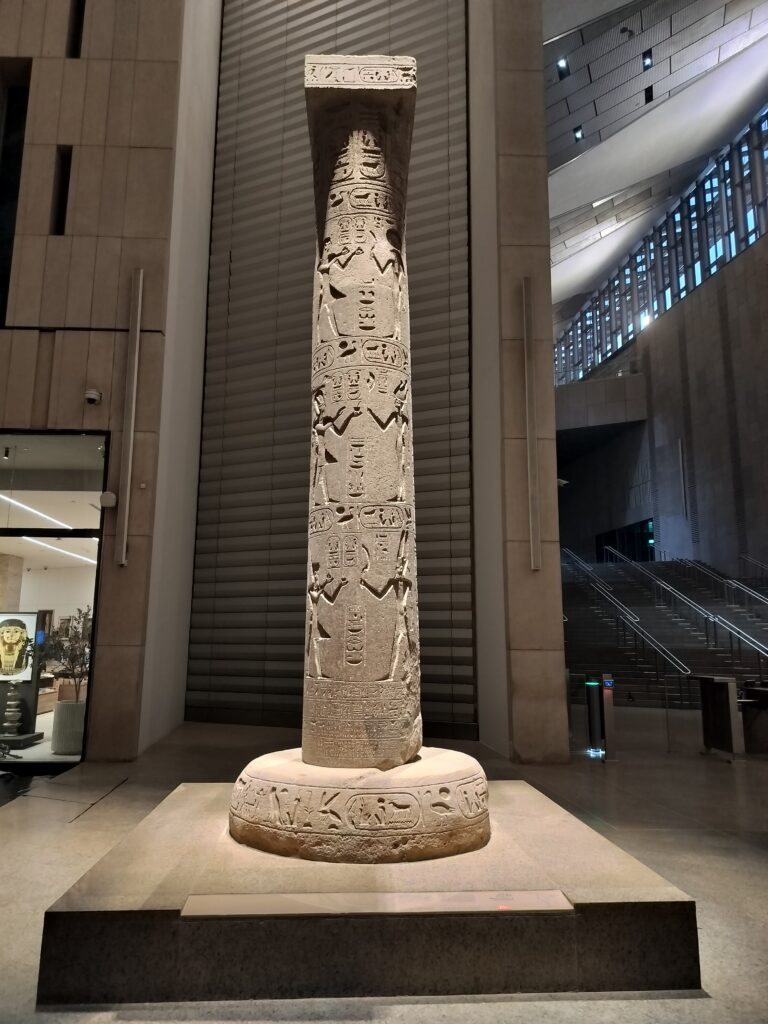
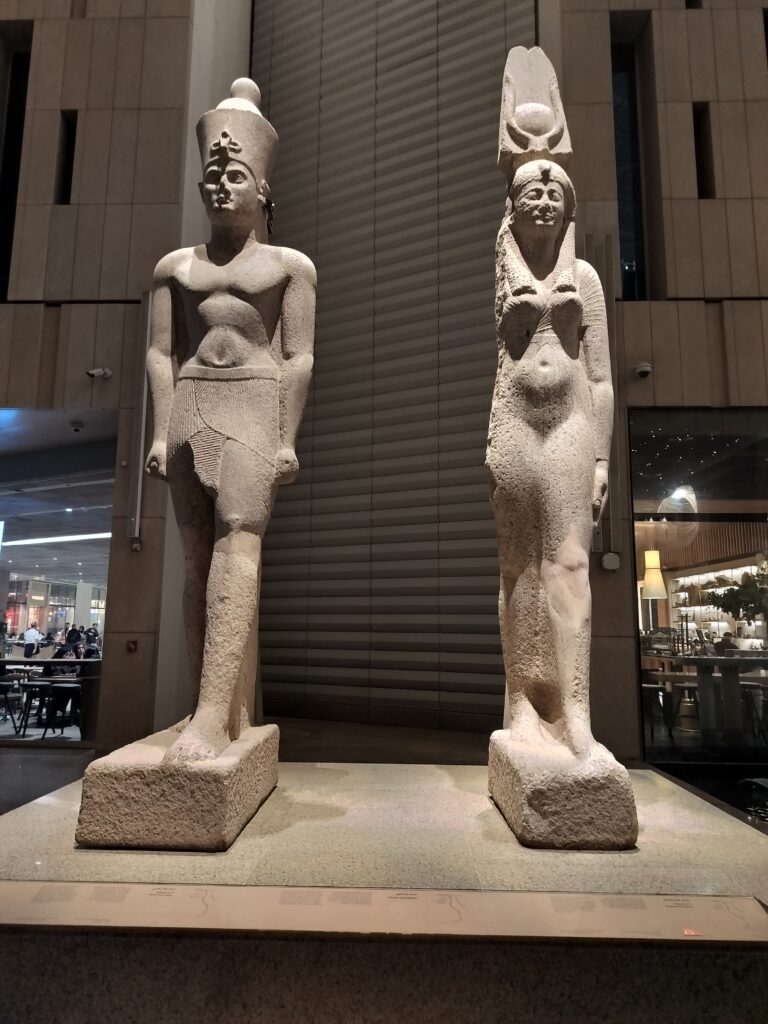
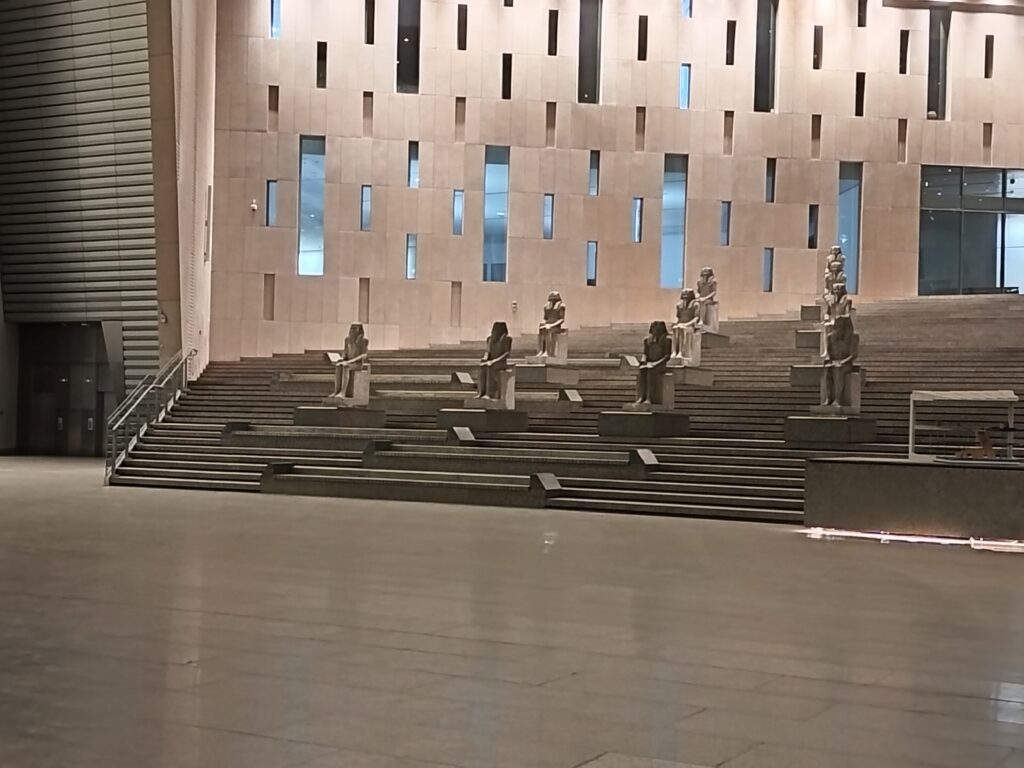
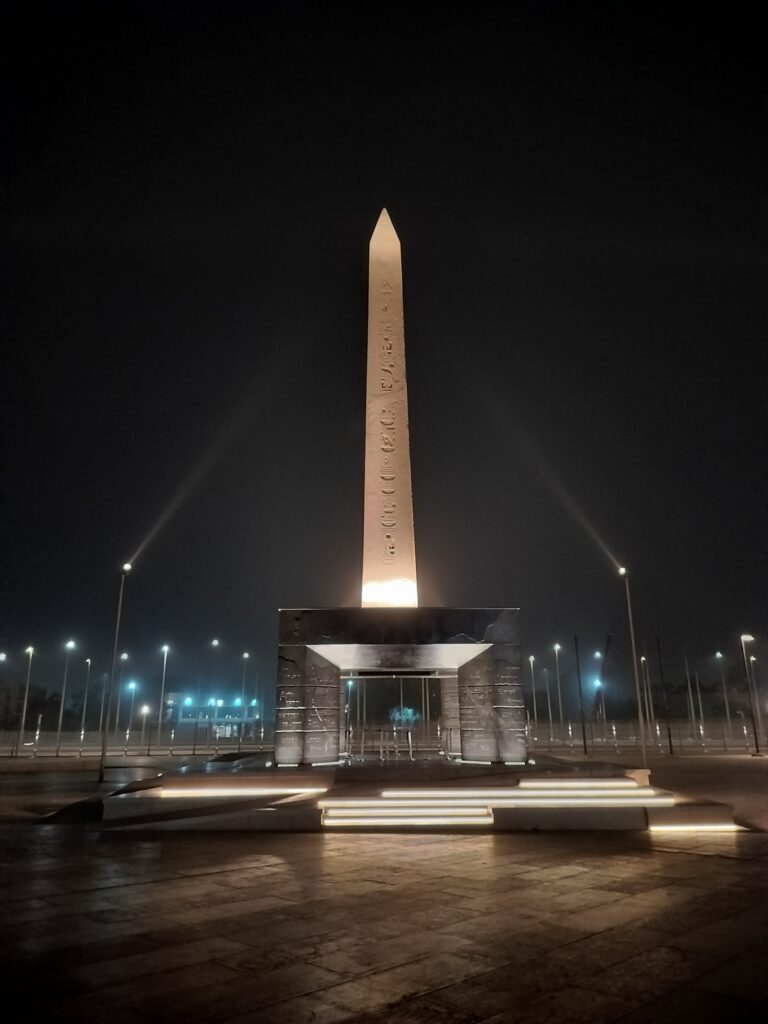
It is only once we have left the museum that we turn our attention to the exterior, where the great ‘Hanging Obelisk’ of Ramses II stands out; it is so named because it was erected in an entrance square. The pedestal on which the obelisk rests is decorated with inscriptions bearing the word ‘Egypt’ in various languages.
Finally, we head back to Cairo by taxi, which we hail at random on the street, because – due to the Ramadan celebrations – Uber won’t let us book one. You might think at this point that it’s been a truly exhausting day, but it’s not over yet. On our return to Cairo, in fact, our fantastic Siwa Bus shared minibus is waiting for us, which will take us to Siwa overnight. The minibus, booked via the very useful Book a Way website, is due to depart at 10 pm.
Conclusions
The day we spent amongst the pyramids of Giza, Dashur and Saqqara was probably the real highlight of our trip to Egypt, along with our visit to Luxor. This is not because the rest of what we saw on our trip was any less impressive, but simply because what you find at Egypt’s historical sites is something you simply cannot imagine finding anywhere else.
The history of the ancient Egyptians is truly awe-inspiring, and seeing with my own eyes what I’d read about in history books as a child was an experience that simply had to be on my list of once-in-a-lifetime trips. I wouldn’t describe the attractions I’ve mentioned in this article as artistically beautiful, but the sheer grandeur and the unique character of that historical era have few rivals anywhere in the world.
Opting for a guided tour was a choice dictated for us both by the need to make the most of our time and by the desire to discover more about Egyptian civilisation. Looking back, whilst our guide certainly rose to the challenge, I’m not sure I’d go for a guided tour again; after all, the information we were given during the day is more or less the same as what I’ve summarised for you in the paragraphs you’ve just read. More likely, I’d arrange transfers with a driver – a cheaper option that would still have allowed us to stick to our desired schedule, which was spot on, although naturally we were feeling rather tired by the end of the day.
Related articles: