

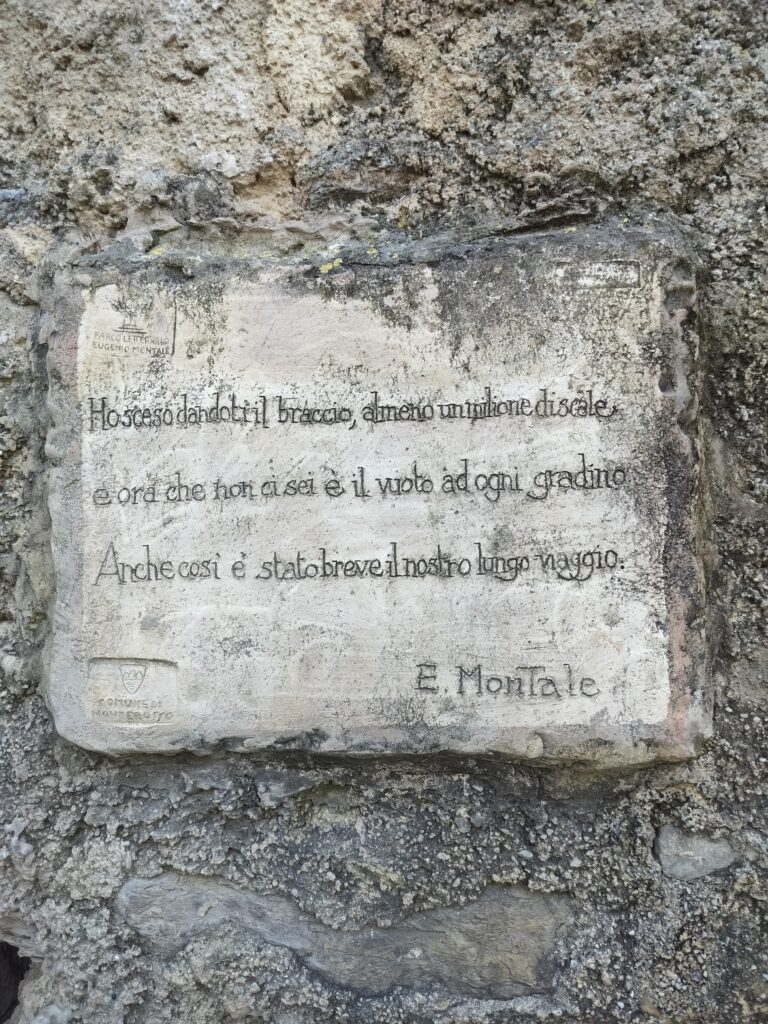
“E una stagione di fiamme e di bruciori
era in noi, tanto
che il mio passo
era il primo a posarsi
sulla costa che il mare infurioso
contorceva.”E. Montale, Punta del Mesco
Table of Contents
- Introduction
- Itinerary in pills
- Day 1: Monterosso
- Day 2: Vernazza, Corniglia, Manarola
- Day 3: Riomaggiore
- Conclusions
Introduction
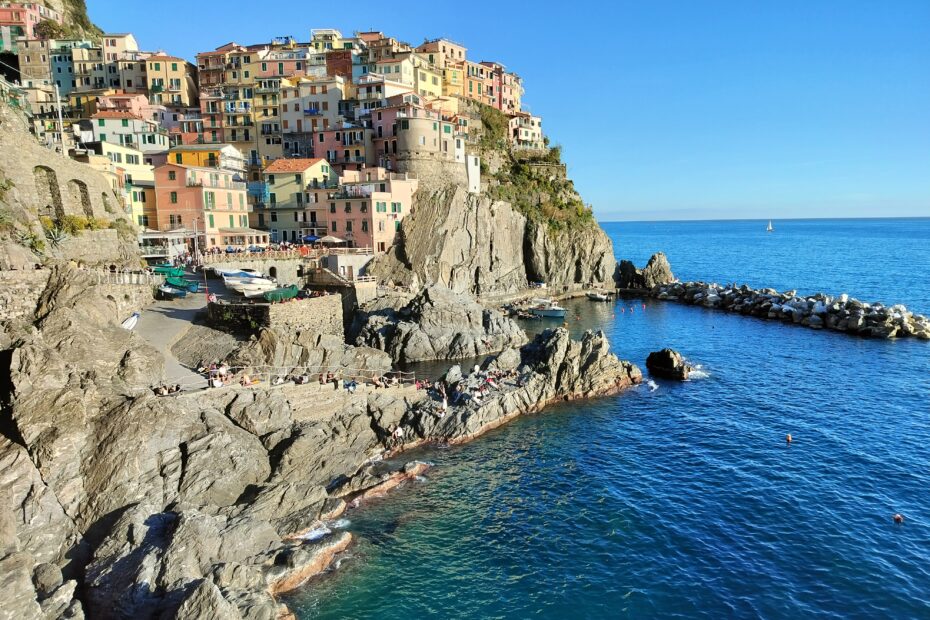
When we talk about Cinque Terre, we are referring to five villages in the province of La Spezia, perched high above the sea along a very short stretch of the Ligurian coast. Just 15 kilometres separate Monterosso, the northernmost village, from Riomaggiore, the southernmost. In between, starting from the north, lie Vernazza, Corniglia and Manarola. What the villages of the Cinque Terre have in common are their picturesque landscapes, characterised by clusters of colourful houses set on hills overlooking the sea, framed by vineyards and terraces carved into the hillsides.
The Cinque Terre were declared a UNESCO World Heritage Site in the late 1990s, alongside the establishment of the Cinque Terre National Park, with the aim of preserving the environment and the landscape.
In this article, I’ll tell you about our experience, which took place over the Easter bank holiday in 2026 – an excellent time in terms of the weather, but terrible if you’re looking for relaxation and tranquillity.
Itinerary in pills
Our trip to the Cinque Terre lasted three days: one full day (the second) and two half-days (the first and third). We stayed in La Spezia, at the Affittacamere O Sole Mio, which I recommend for the cleanliness of the rooms, but above all for the restaurant attached to the guesthouse. From there, it’s easy to get to the train station by bus, the mode of transport we used to travel between the various villages.
To this end, we purchased the Cinque Terre Card, which allows unlimited train travel on the days of your choice and guarantees free access to certain tourist attractions, including the famous Via dell’Amore, a short path linking the villages of Manarola and Riomaggiore. The cost of this card depends on the days chosen for your visit; it increases at weekends and during the high season, according to three tiers (green, yellow and red, with prices rising). The cost is based on the number of calendar days you use it, not on the times. So, to put it simply, if you manage your time like we did, you’ll have to pay for 3 days, even if your visit lasts less than 48 hours in total. My first advice, therefore, is not to do as we did, partly because the card, on red-tier days, costs a fortune. We paid €81 per person, buying the card at La Spezia station. This figure, however, is actually good value, considering that if you buy the train ticket separately, each journey costs €10 (for a journey of just 3 minutes from one village to another), and naturally, this does not include the attractions covered by the card. The card can also be purchased on the Cinque Terre National Park website; the price remains the same whether you buy it online or on site.
You can also get around the Cinque Terre on foot if you wish, but the trails take a while and there is a charge for them too. If you choose this option, it might be worth buying the Cinque Terre Trekking Card, available on the Cinque Terre National Park website or at the station. Another way to visit the Cinque Terre is by boat, though this only connects 4 of the 5 villages, as Corniglia has no direct access to the sea. If you’re interested, you can find details on this website.
On the first day (or rather, our first half-day), we visited Monterosso, the largest of the five villages. On the second day, we moved between Vernazza, Corniglia and Manarola. Finally, the last half-day was spent in Riomaggiore and on the Via dell’Amore.
Below, you will find a summary table of our itinerary, with maps of the walking routes.
| Day | Villages (with maps) |
|---|---|
| 1 | Monterosso |
| 2 | Vernazza, Corniglia, Manarola |
| 3 | Riomaggiore |
Day 1: Monterosso
We arrive in La Spezia around midday. After having lunch and checking into our room, we take the bus to La Spezia’s main station, where we buy the Cinque Terre card. We then board the next available train and arrive at our destination within few minutes. Setting off from the station, we take a stroll through the old town, passing by the main points of interest:
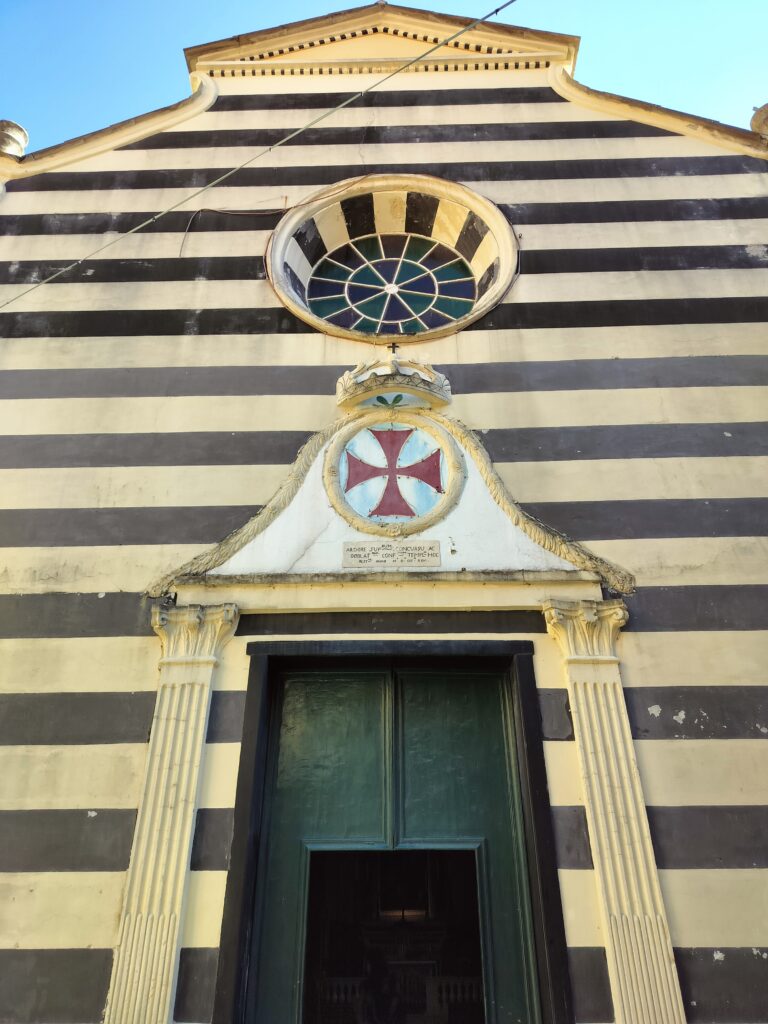
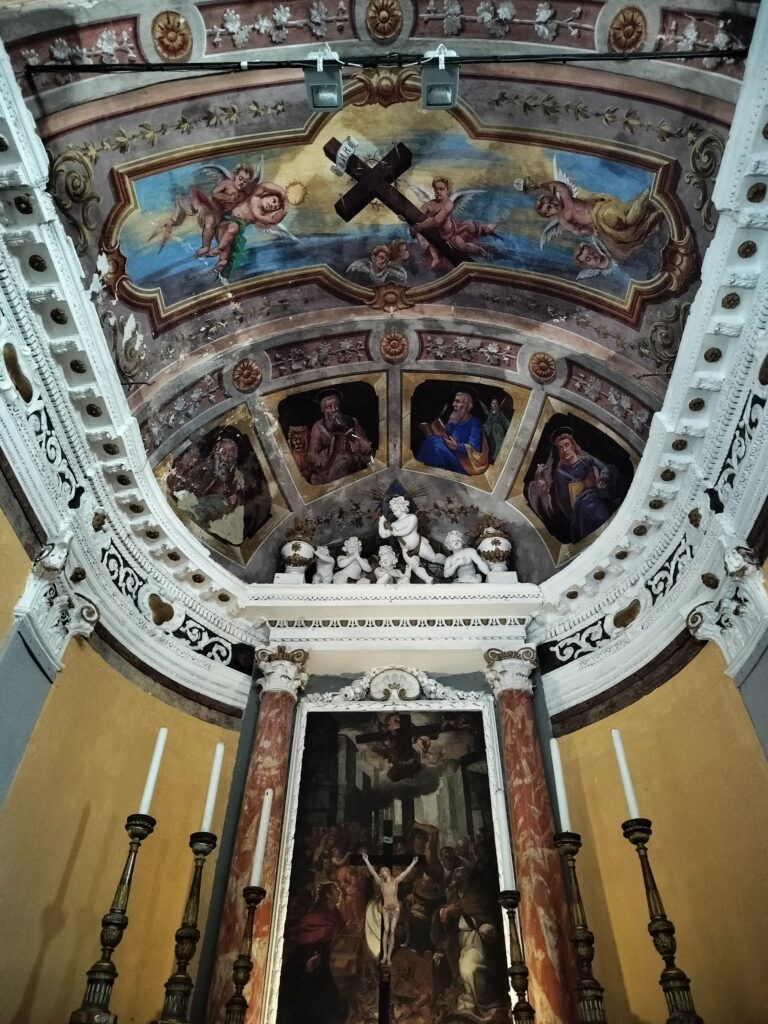
- The Oratory of Santa Croce, also known as the Oratory of the Bianchi, dates back to the 15th century and remained in use until the 17th century. The brotherhood, whose members wore white robes, also ran the village hospital and cared for the sick.
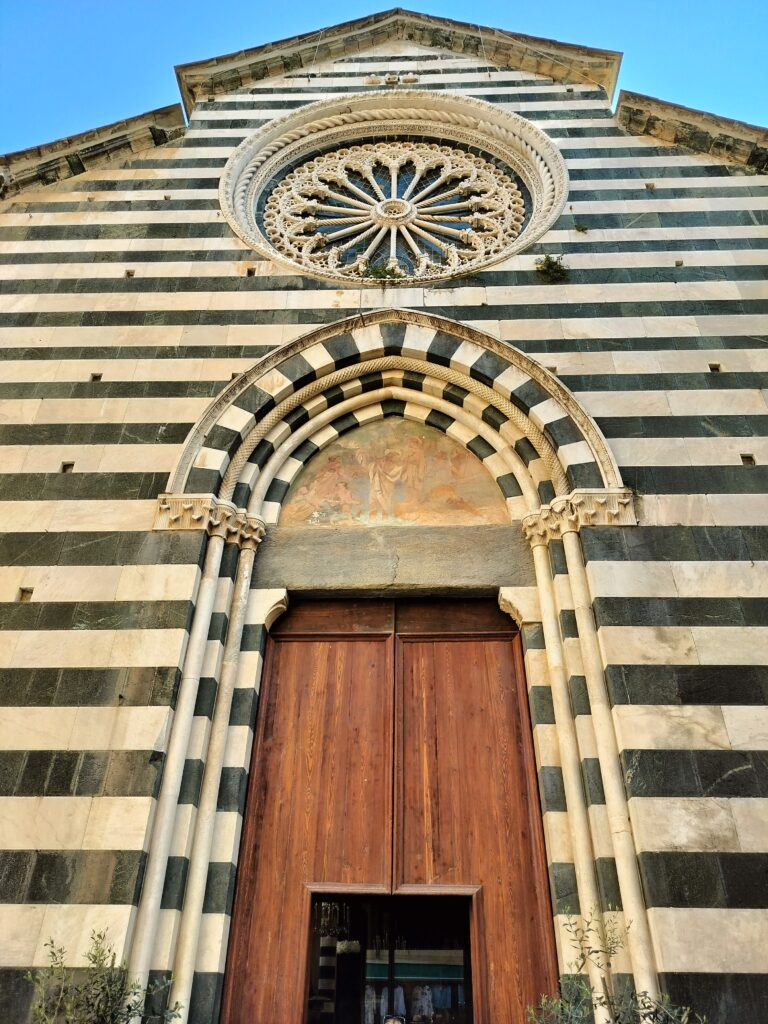
- Church of St John the Baptist, dating from the early 14th century and an example of Ligurian Gothic architecture. On the church façade is a large rose window, attributed to Matteo and Pietro da Campilio.
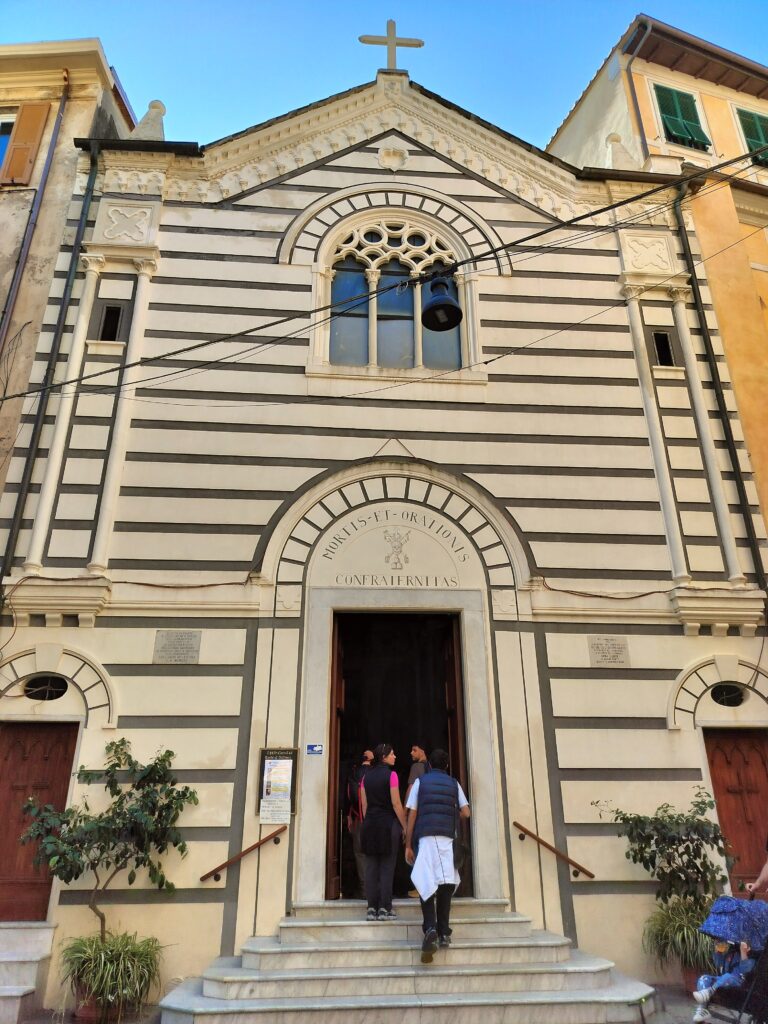
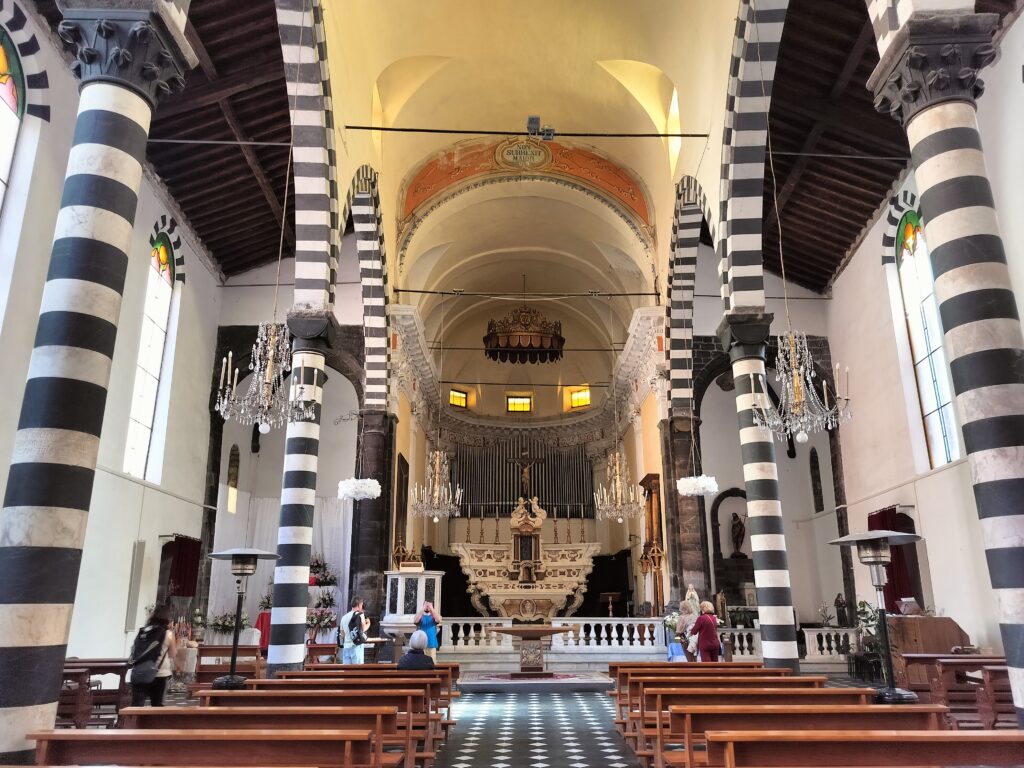
- Oratory of Mortis et Orationis or of the Blacks, dating from the 17th century. The brotherhood, so named for the colour of their robes, was responsible for assisting widows, orphans and shipwrecked sailors. Inside, there is a wooden statue of St Anthony the Great, dating back to the year 1000.
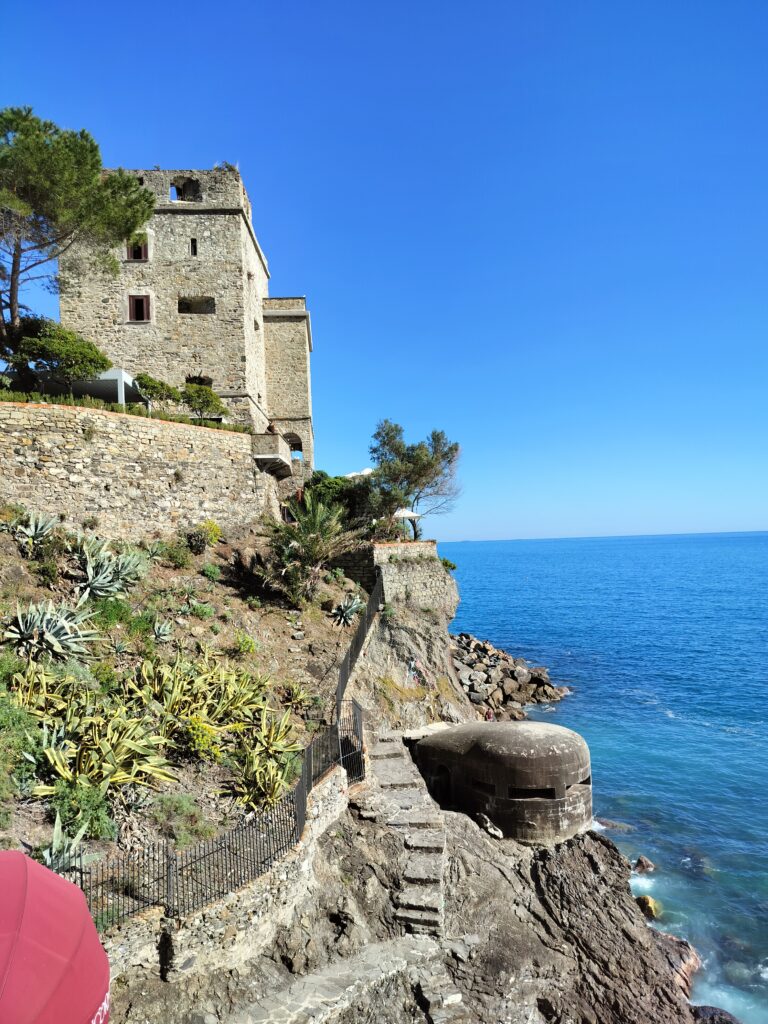
- Torre Aurora, a 16th-century watchtower, built for defensive purposes and part of Monterosso Castle, now almost completely destroyed.
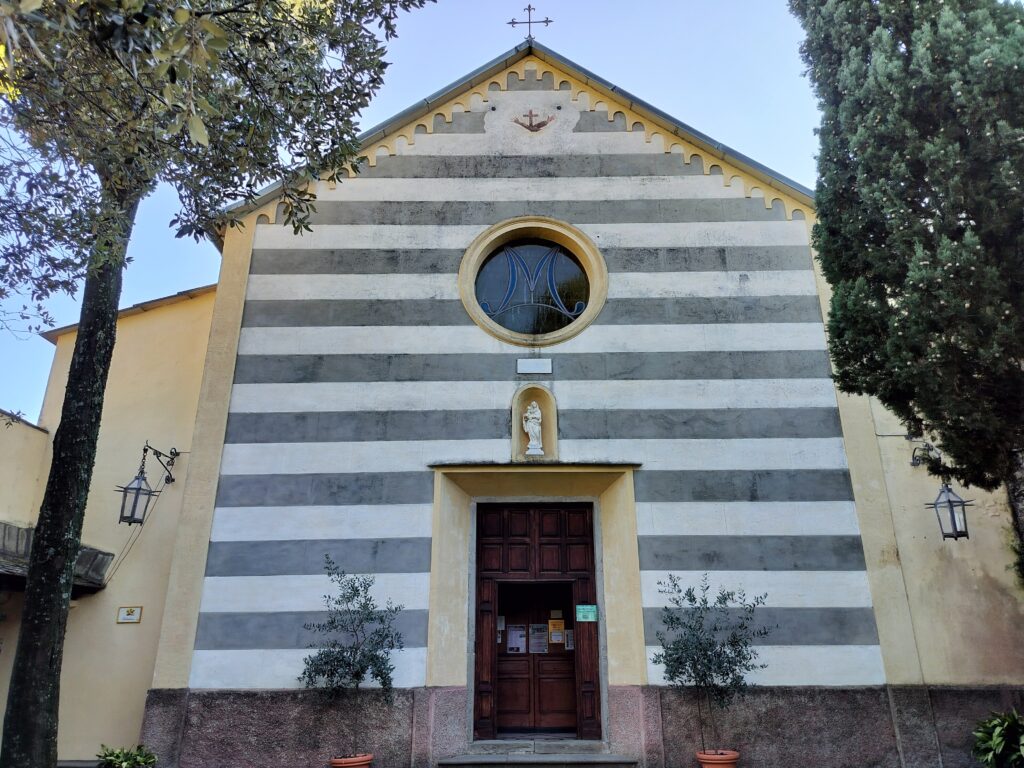
- Capuchin Convent and Church of St Francis. The convent dates back to the 17th century and is used as a guesthouse. In the past, it was also used to house cholera patients during the construction of the Genoa-La Spezia railway, which opened at the end of the 19th century. The Church of St Francis, situated next to the convent, is a simple single-nave building, inside which is housed, amongst other things, a painting depicting the Crucifixion, historically attributed to Van Dyck (though the artist is actually anonymous). Nearby, there is also a bronze statue of St Francis. Please note that to reach the convent, you must climb a short but steep flight of steps, at the top of which you can enjoy a superb panoramic view.
- Eugenio Montale’s Villa, which belonged to the great Italian poet, for whom Monterosso was the inspiration for some of his beautiful poems.
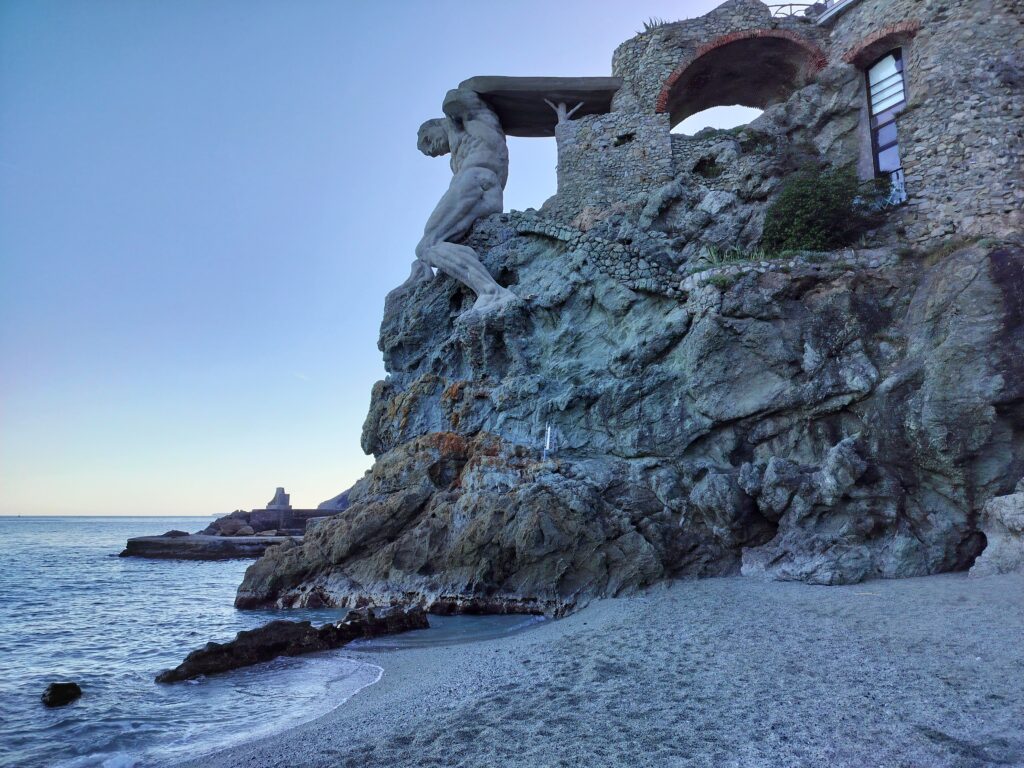
- The Statue of the Giant, situated at Punta Mesco and dating back to the early 20th century. The statue depicts Neptune and is carved into the rock. Unfortunately, over the years it has been damaged by various incidents.
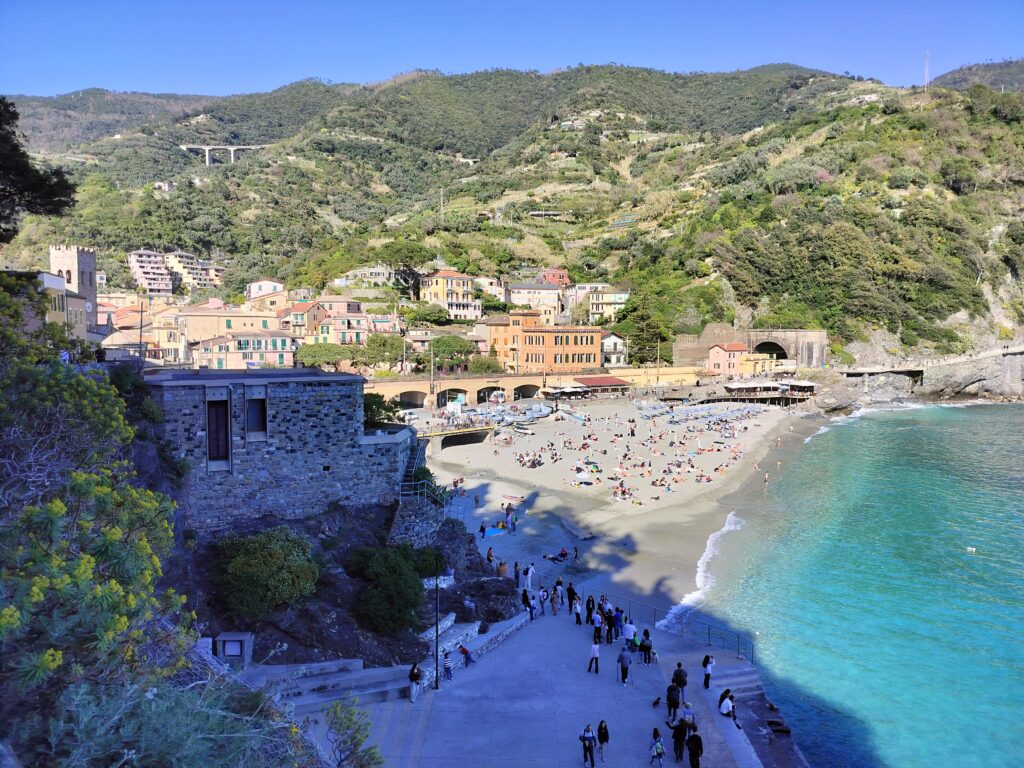
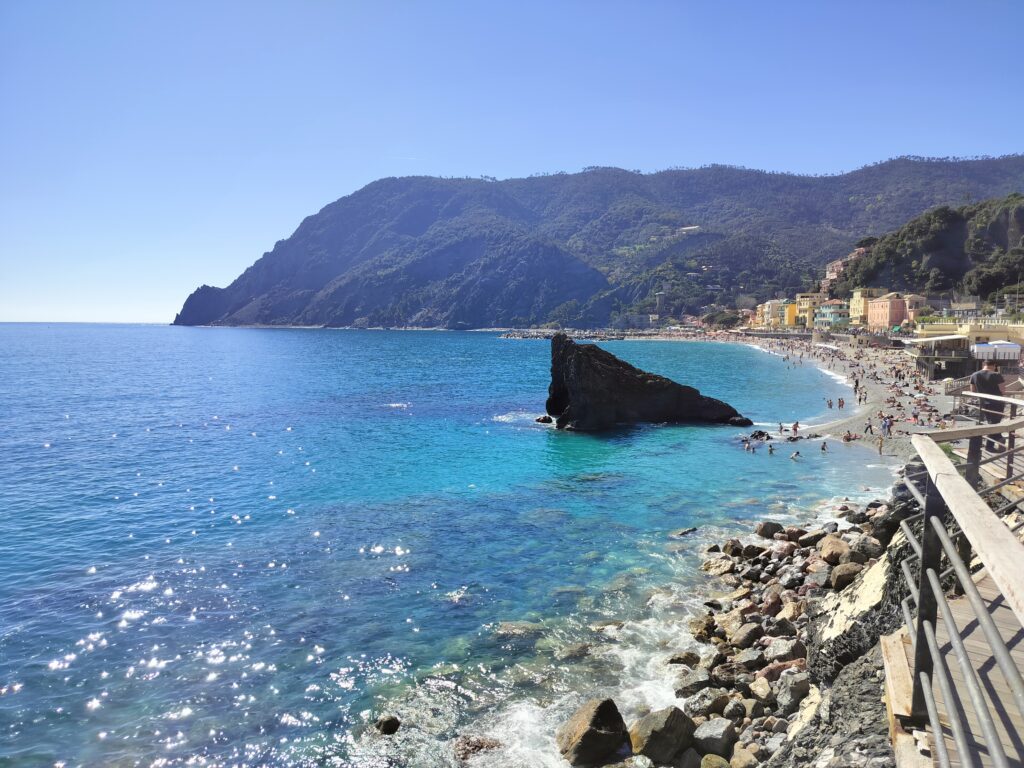
Compared to the other villages of the Cinque Terre, Monterosso is also the only one with a beach truly worthy of the name – namely Fegina beach– so we spend the rest of our time after the walk relaxing by the sea, before catching the train back to La Spezia.
Day 2: Vernazza, Corniglia, Manarola
Vernazza
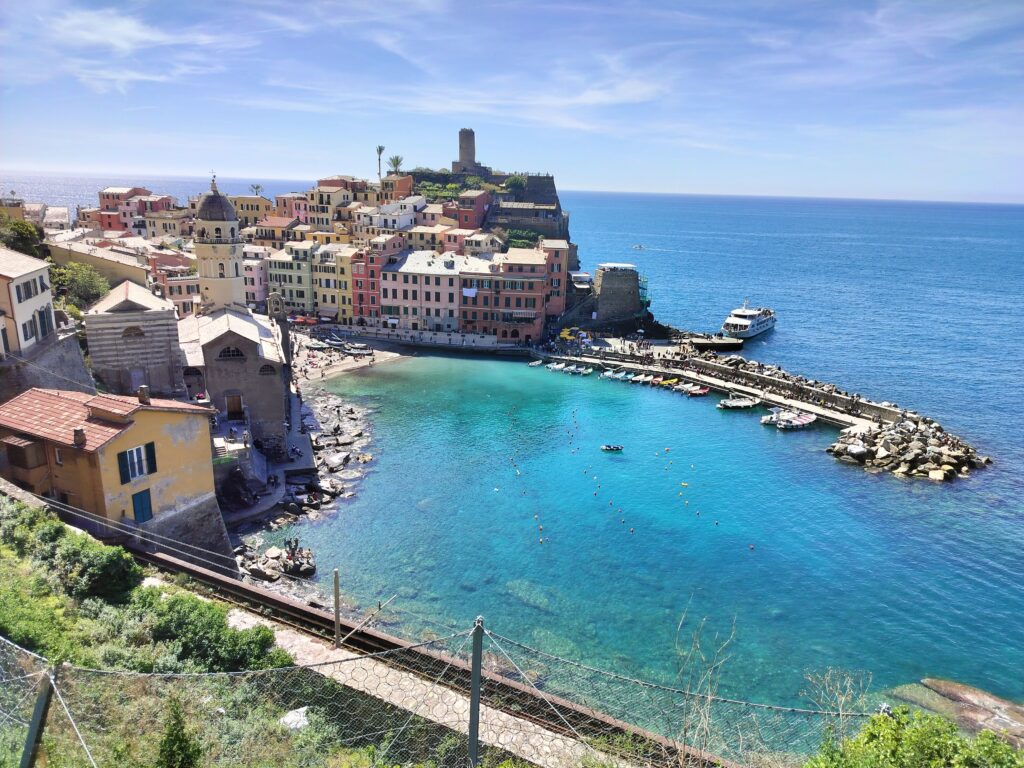
My expectations of Vernazza were very high, as this village is widely regarded as the most picturesque in the Cinque Terre and indeed one of the most beautiful in Italy. It’s Easter Sunday, the train is packed with people, but we’re not put off. Setting off from the station, we come across a number of places of interest:
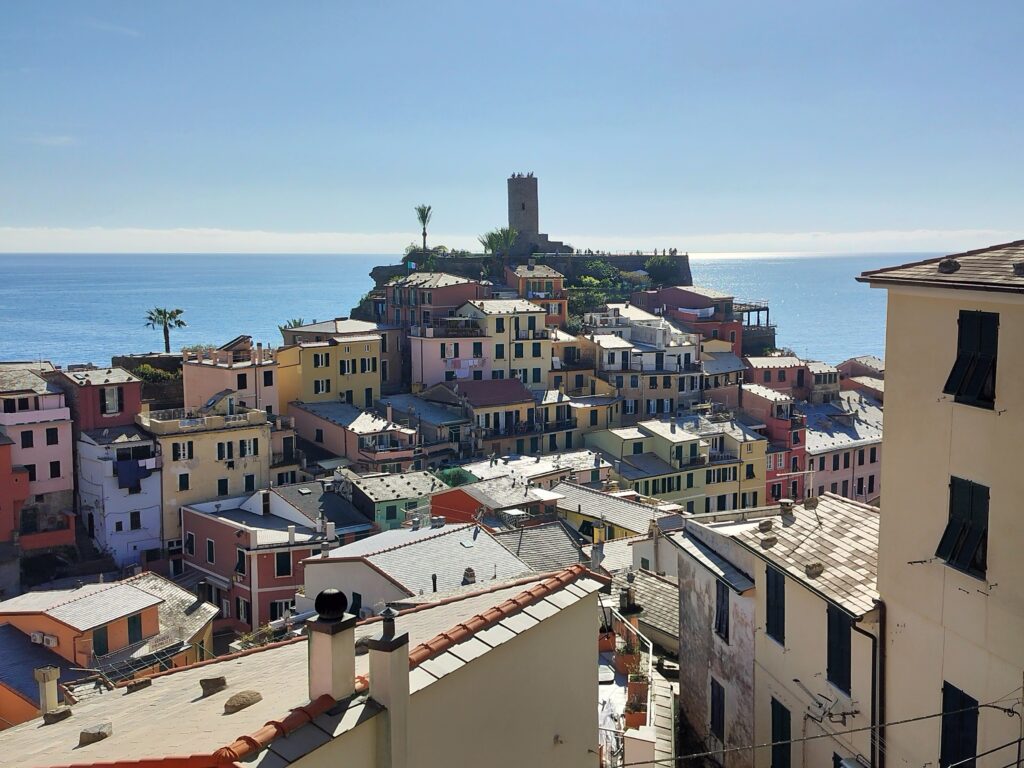
- Doria Castle in Vernazza, dating back to the 11th century and built overlooking the sea. Holders of the Cinque Terre Card can visit the watchtower free of charge. For those without the card… I’d avoid spending €4 to see next to nothing.
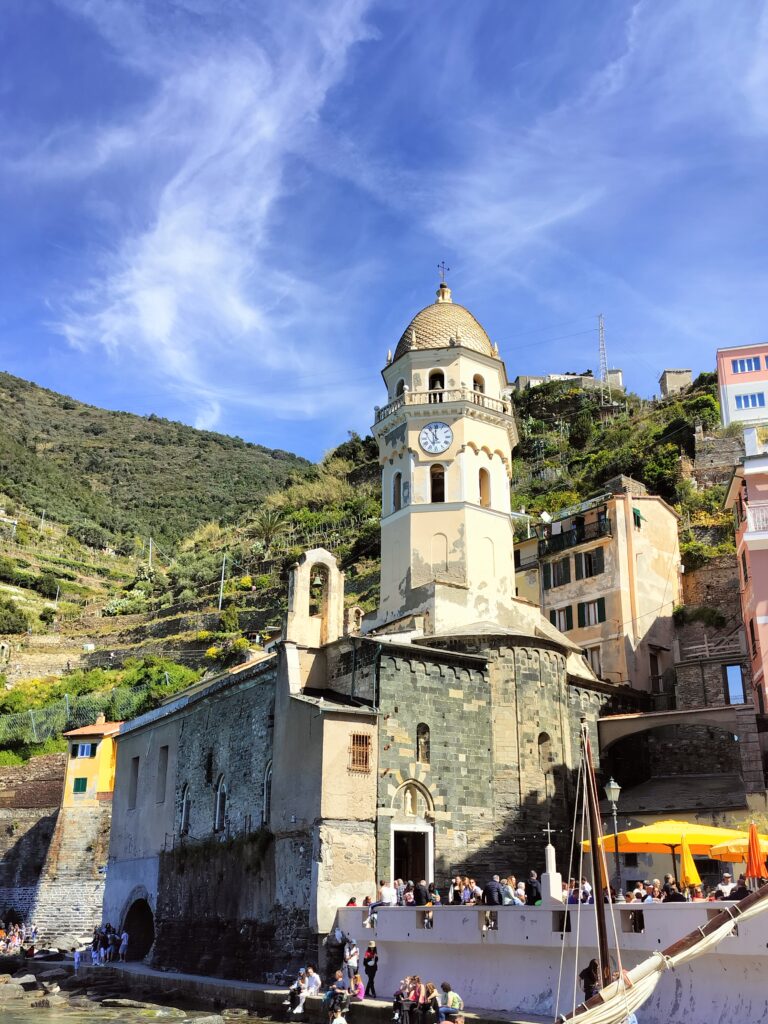
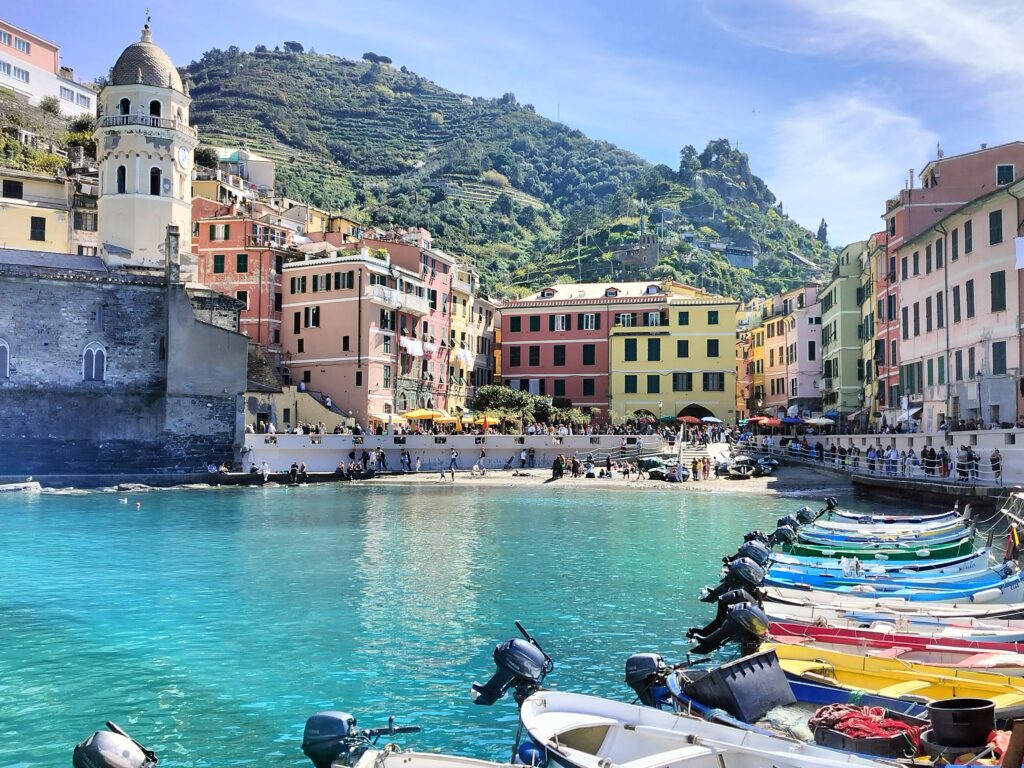
- Church of St Margaret of Antioch, dating back to the 13th century and built on the rocks of the small bay. The church consists of two distinct parts, one more modern and one ancient. The interior is very interesting due to the stone cladding on the walls and columns. The church overlooks the beach directly, from where you can enjoy a beautiful view of the village.
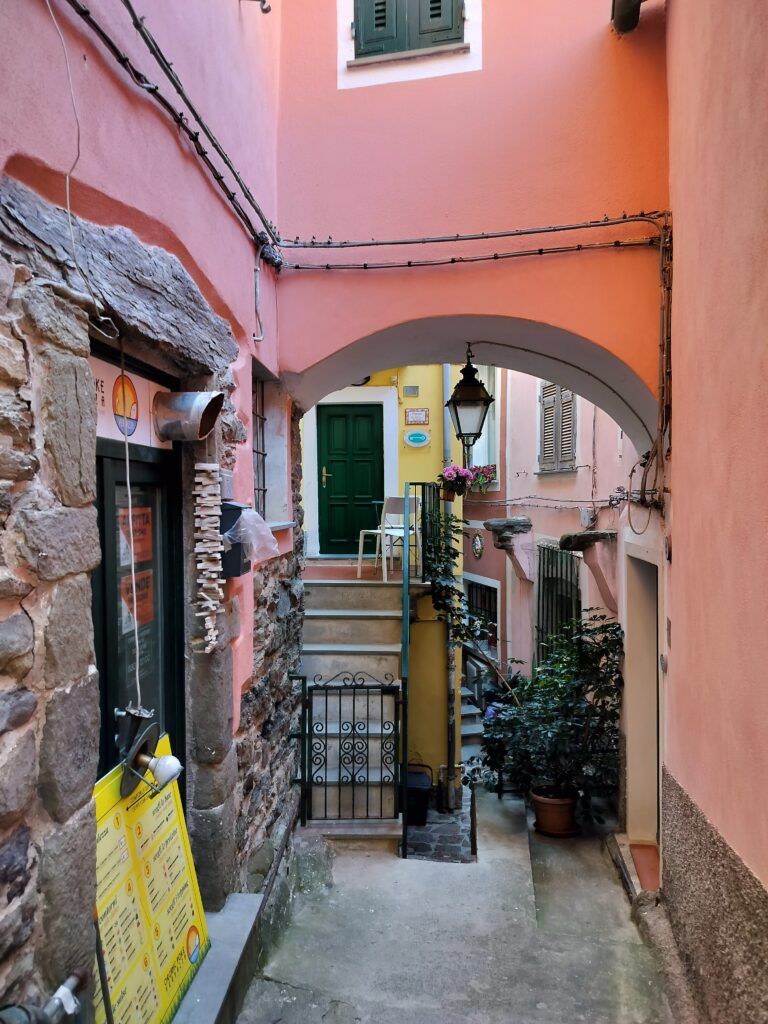
- Church of St Francis, dating back to the 17th century and dedicated to the care of the sick. In the 19th century, it also served as a hospital. The climb up to the church takes you past some of the village’s most picturesque vantage points.
Corniglia
It’s around lunchtime when we arrive in Corniglia. As mentioned, Corniglia is the only village in the Cinque Terre without direct access to the sea. Once you arrive at the station, there are two ways to get to the centre. The first is to walk up the Scalinata Lardarina, a flight of just under 400 steps, which is fortunately not very steep; the second is to use the free shuttle bus that runs between the centre and the station, departing every 20 minutes. It’s worth noting that the shuttle has limited seating, so you might not be able to board straight away; you may have to queue and wait for the next one. Given that the staircase isn’t too strenuous, I suggest you decide based on the queue.
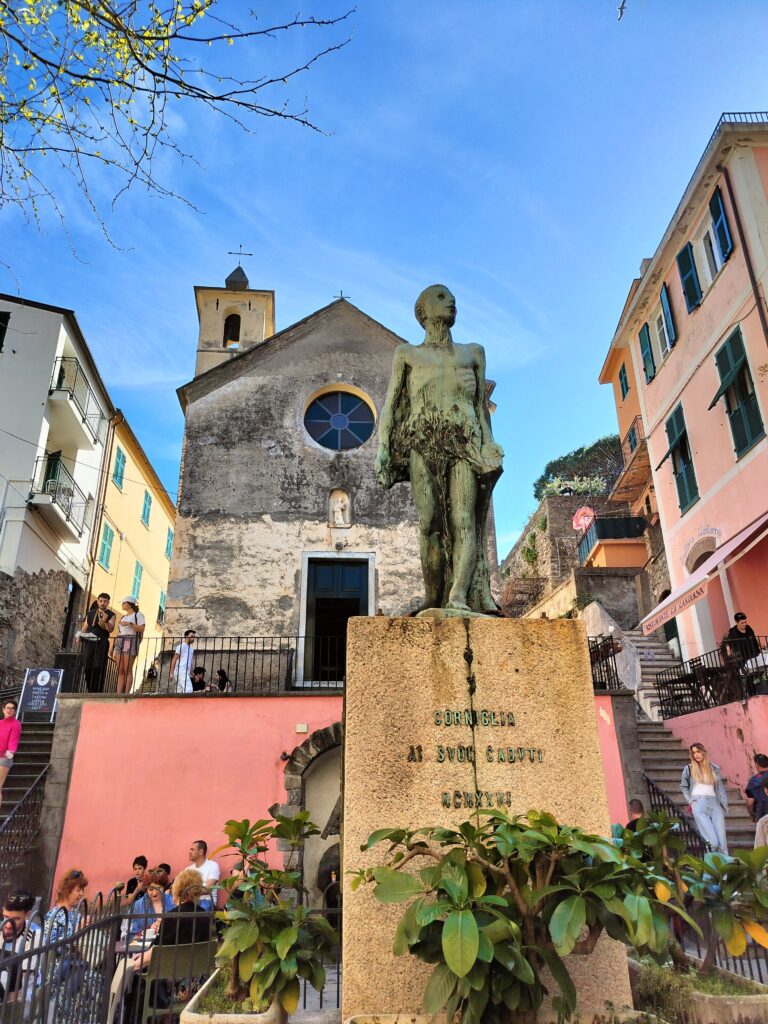
We chose the first option. Once at the top, it’s just a short walk to the heart of the village, which stretches along Via Fieschi (the village’s main street) and is home to several attractions:
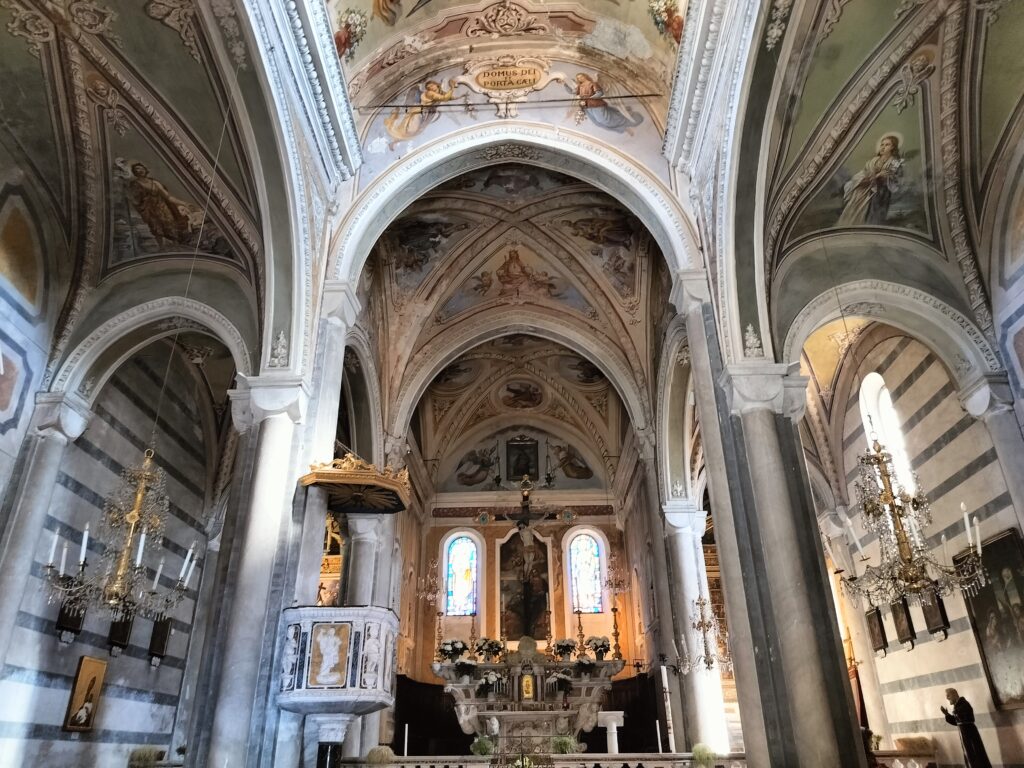
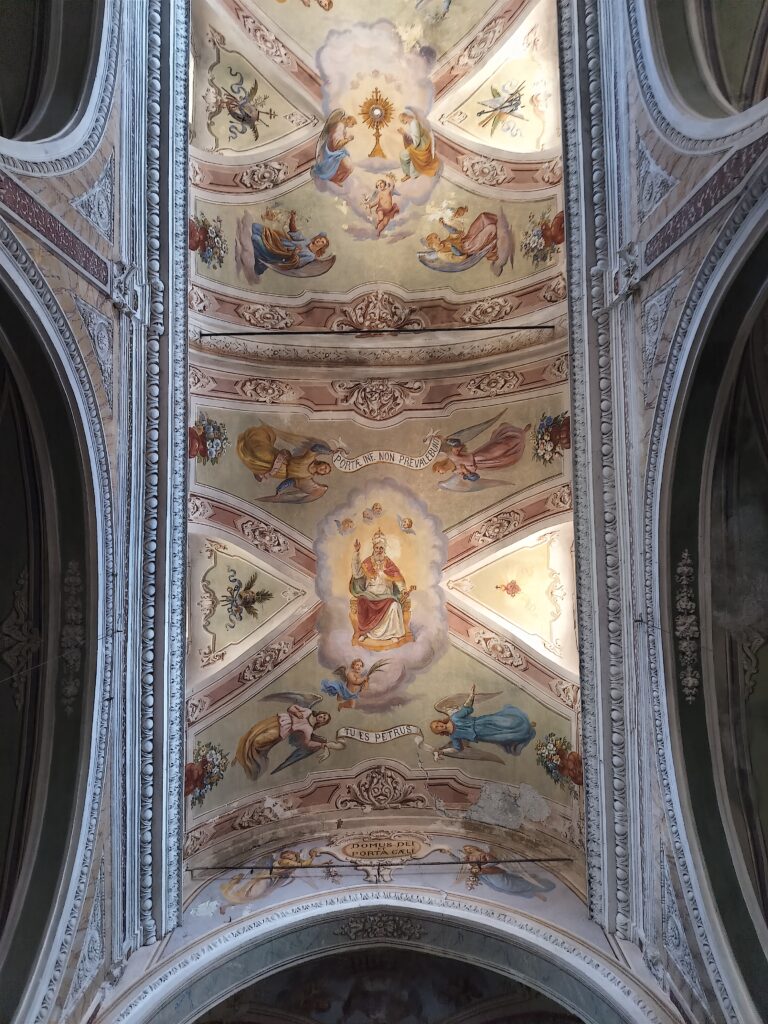
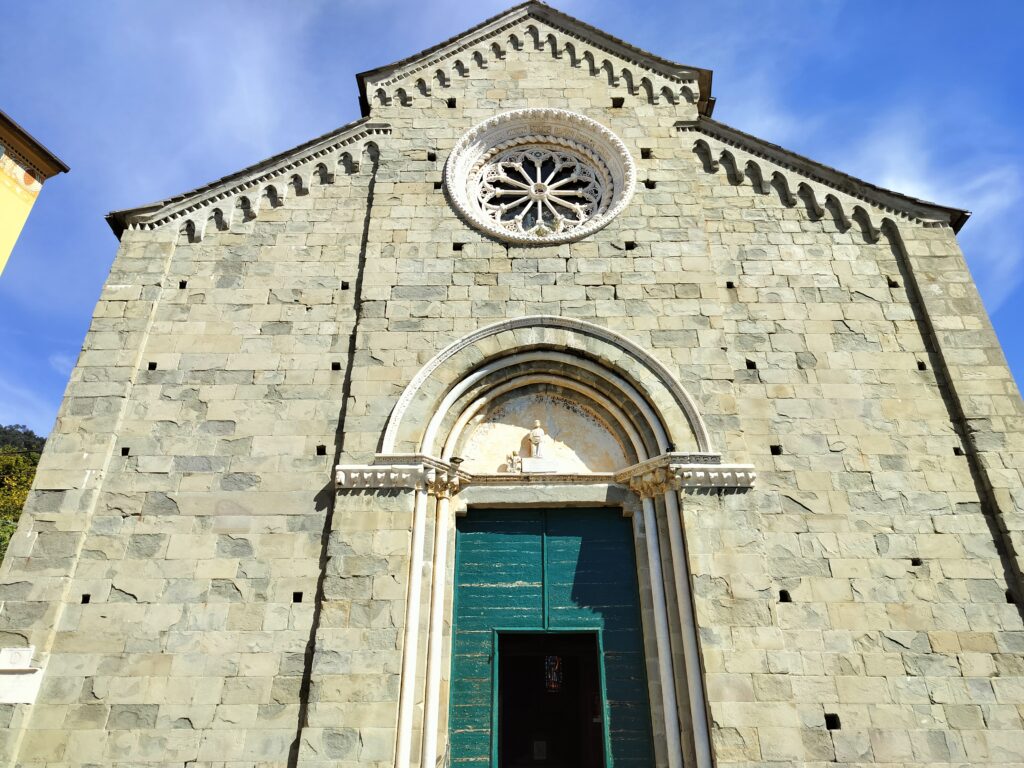
- The Church of St Peter, dating from the 13th century. The interior of the church is extremely charming and houses, amongst other things, a statue of St Peter and four wooden statues, each dedicated to one of the evangelists.
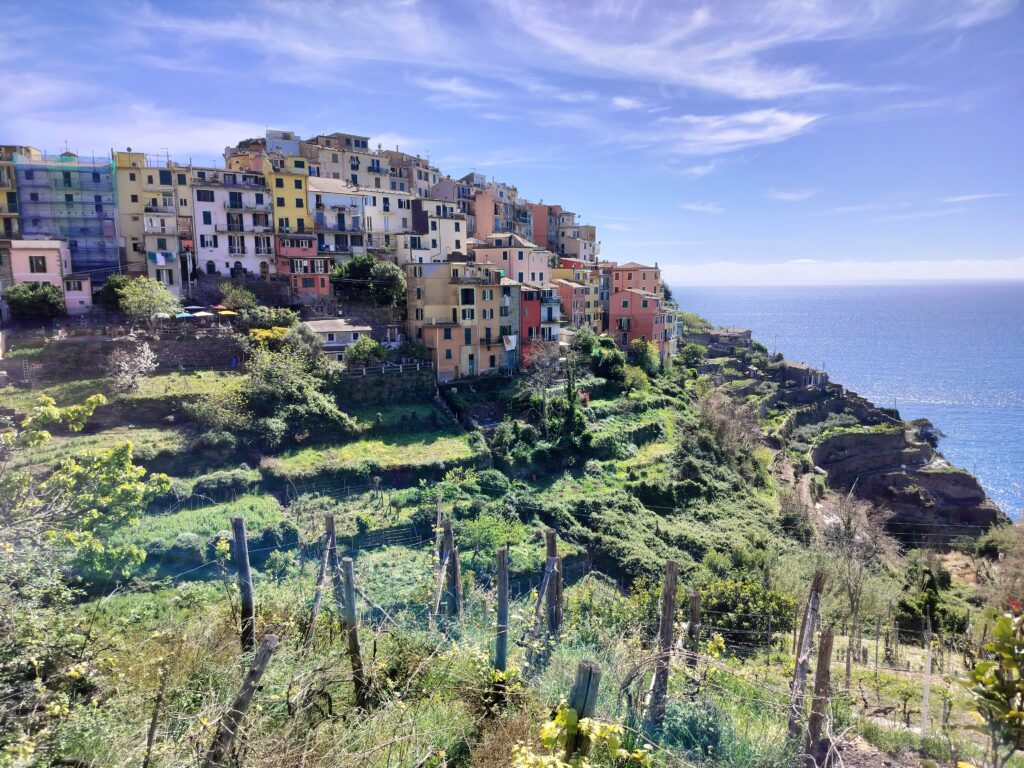
- The Terrace, a small square offering what is probably the most striking panoramic view of the village.
- Oratory of the Disciplinati di Santa Caterina, dating back to the 18th century. It is a very simple building, which is well worth a visit inside, not least for the paintings it houses.
Not far from Corniglia lies Guvano beach, which some consider to be the most beautiful beach in the Cinque Terre.
Manarola
We’re spending the last part of the day in the village of Manarola, which, of all of them, I liked best overall. Among the main attractions you can see whilst strolling through the narrow streets are:
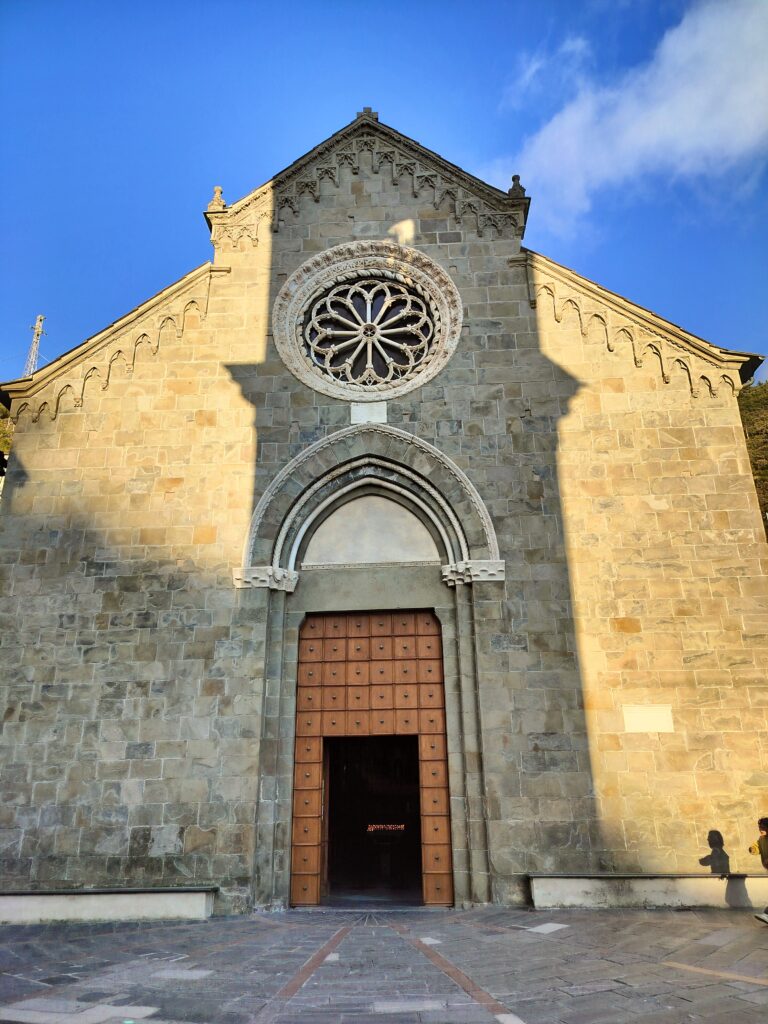
- The Church of St Lawrence, dating back to the 14th century and originally dedicated to the Virgin Mary. The church comprises three naves and houses, amongst other things, a triptych depicting the Madonna and Child, attributed to the Master of the Cinque Terre. The rose window, on the other hand, is the work of Matteo and Pietro da Campilio.
- Via Discovolo, the village’s main street.
- Il Porticciolo, the village’s main square. Between Il Porticciolo and Via Discovolo lies the Marina di Manarola.
- Punta Bonfiglio, offering the most picturesque view of Manarola.
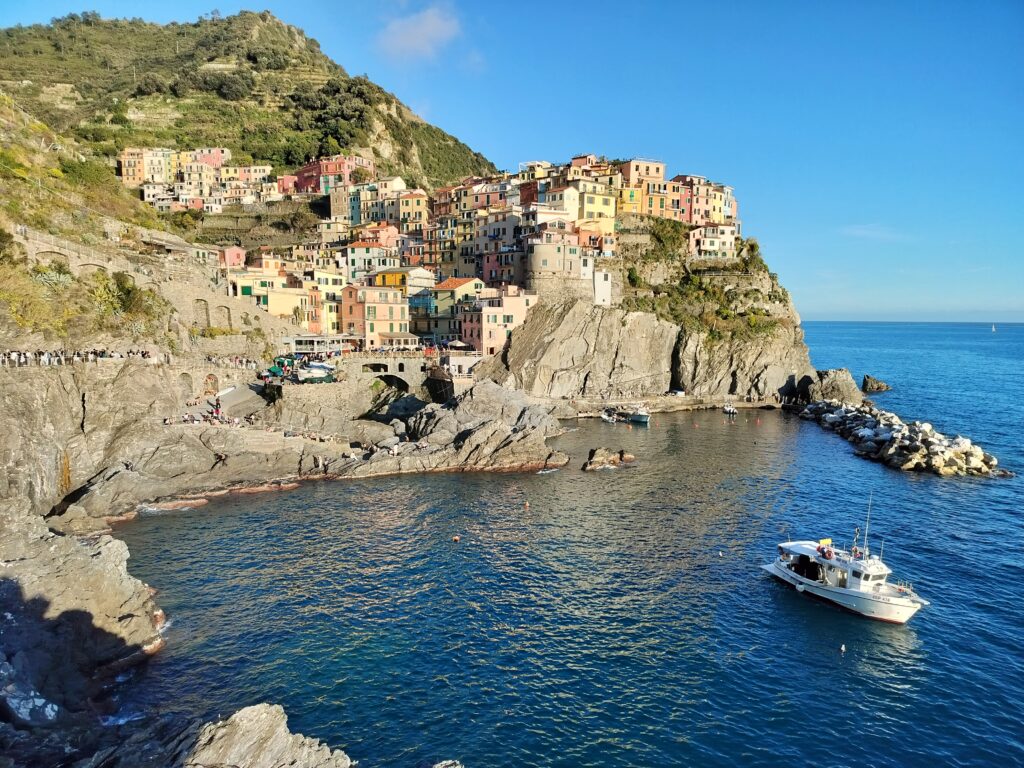
At the end of the day, we head back to La Spezia, arriving in time for dinner.
Day 3: Riomaggiore
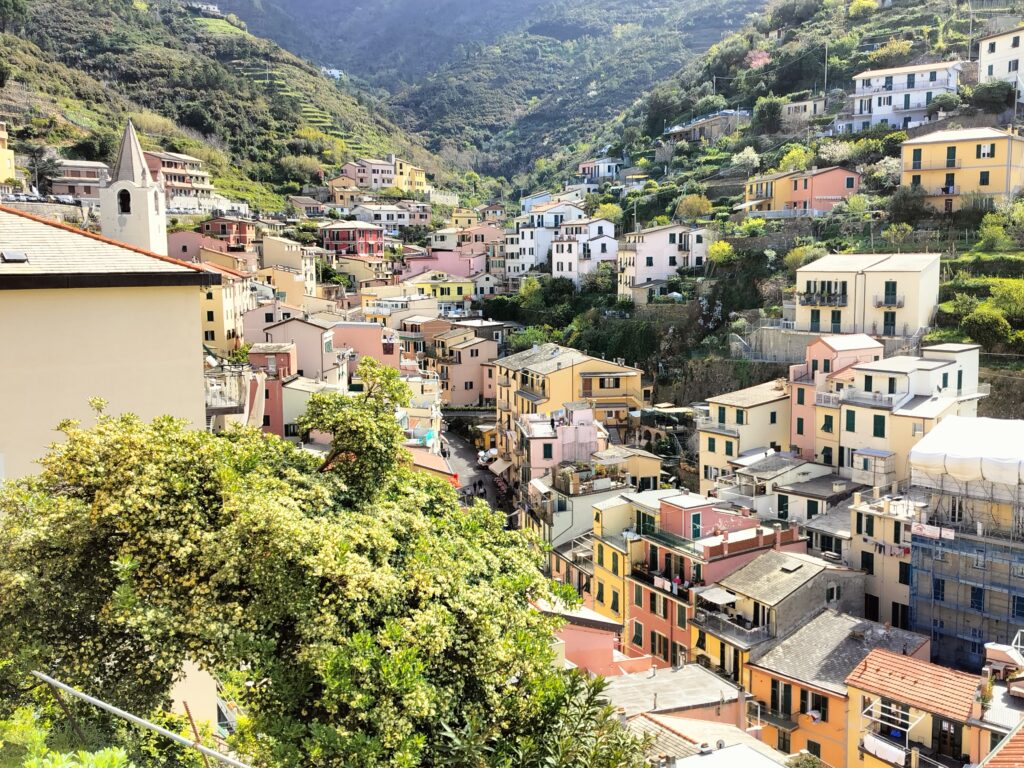
We spend our last half-day visiting Riomaggiore, probably the village with the most attractions, or at least the one we spent the most time exploring. Starting from the station, we find:
- The Oratory of the Disciplinati (or of St Mary of the Assumption), dating from the 16th century, houses a triptych on the altar depicting the Madonna and Child at the centre, with Saints Francis and John on either side, as well as a wooden statue of the Virgin and Child.
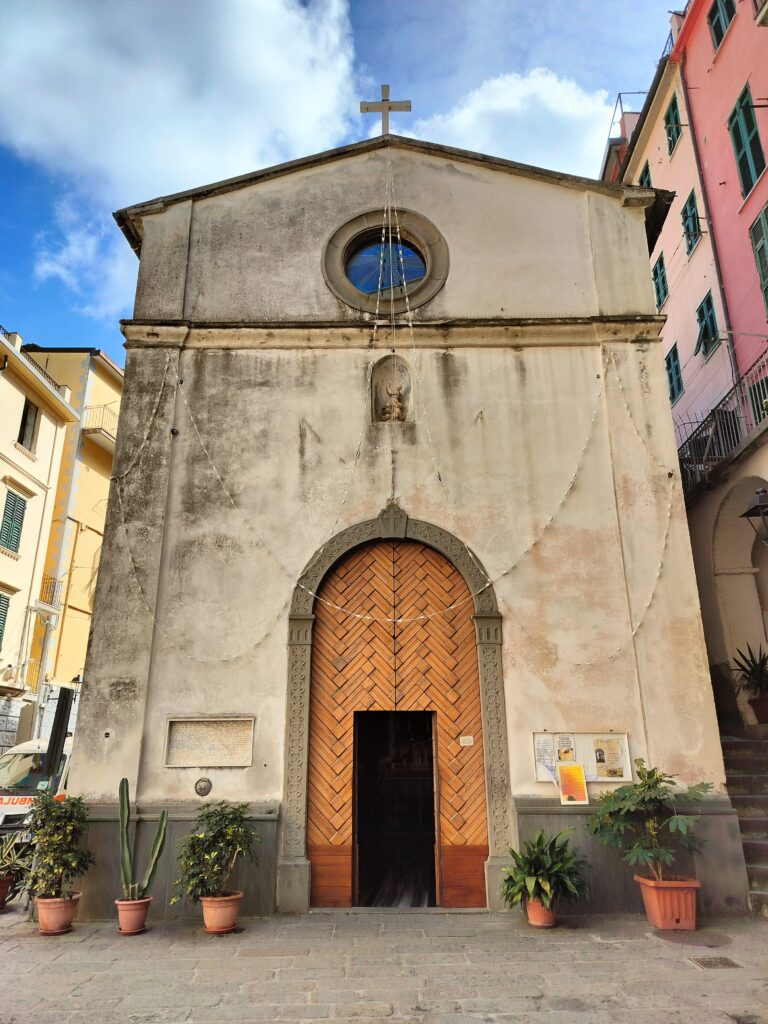
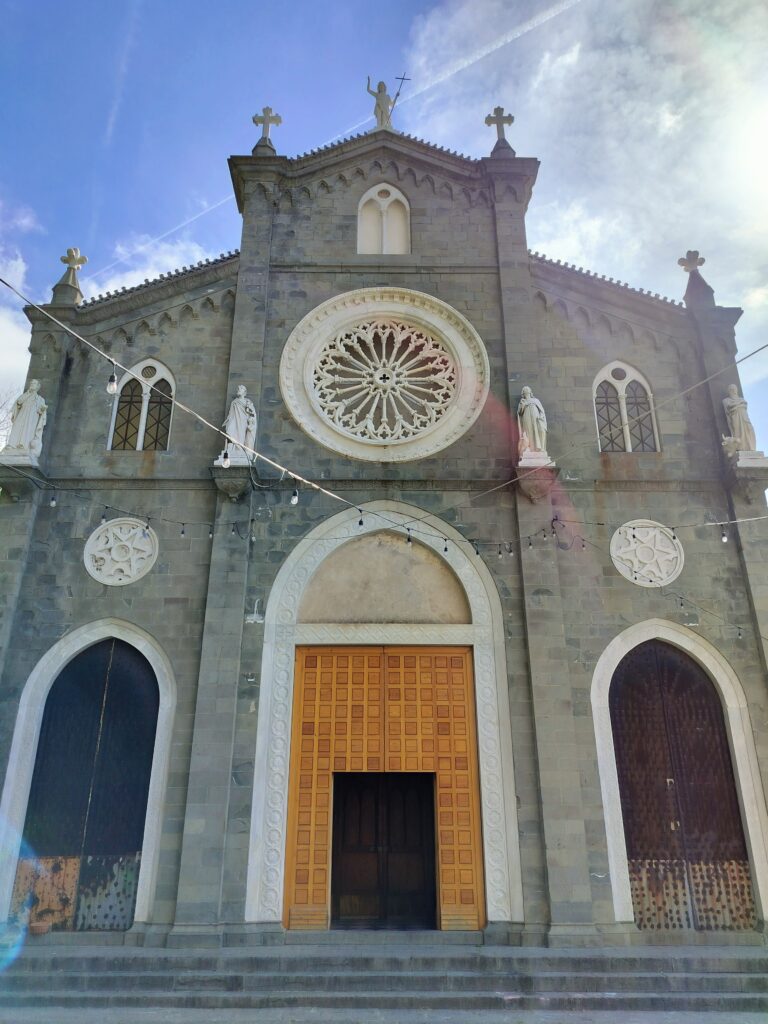
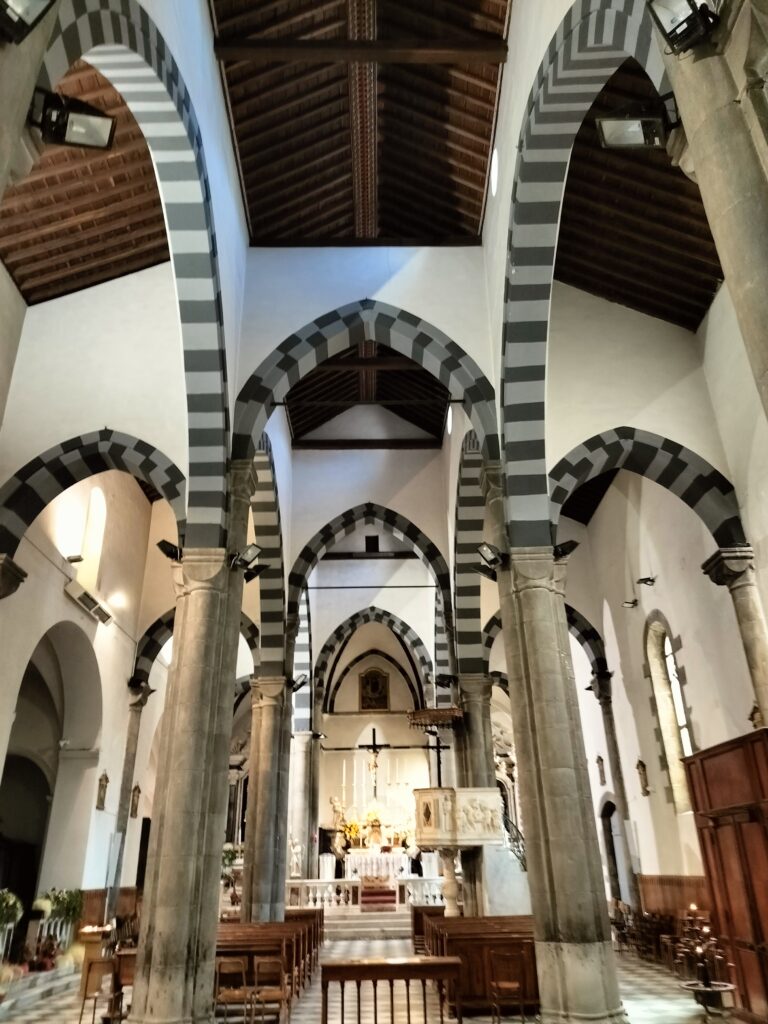
- Church of St John the Baptist, dating back to the mid-14th century. The church has three naves and houses, amongst other things, a triptych attributed to the Master of the Cinque Terre.
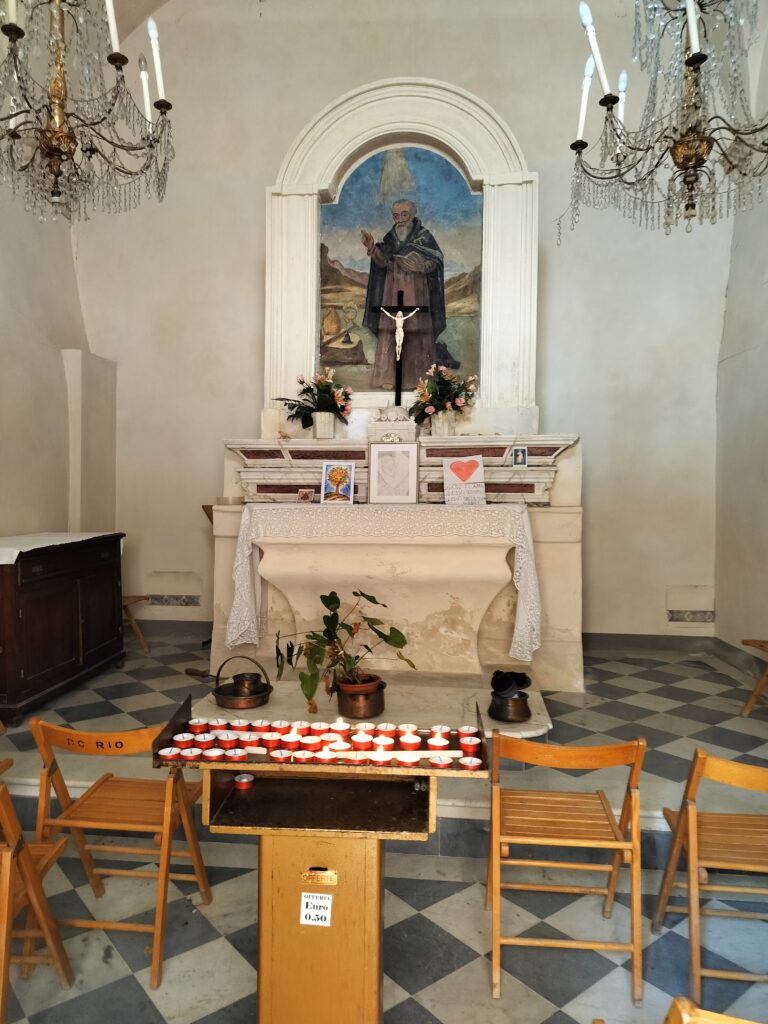
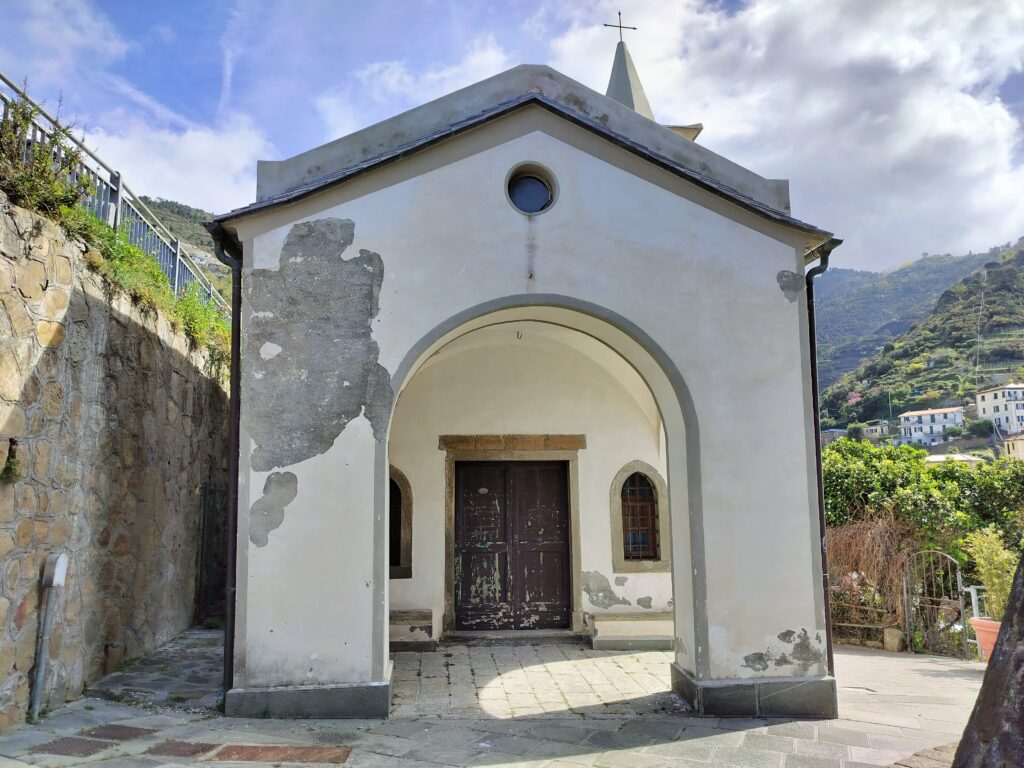
- Oratory of Saints Rocco and Sebastian, dating back to the late 16th century and built as a token of gratitude for the end of the plague that had killed almost half the population a few decades earlier.
- Riomaggiore Castle, dating back to the mid-13th century. You can climb the castle tower for €2 (a visit to the tower is not included in the Cinque Terre Card).
- Oratory of St Anthony the Great, considered the oldest place of worship in the village and situated in the oldest part of Riomaggiore.
- The Porticciolo, from which the steps leading to Riomaggiore’s main viewpoint begin.
- Riomaggiore Beach, a small beach easily accessible from the Porticciolo.
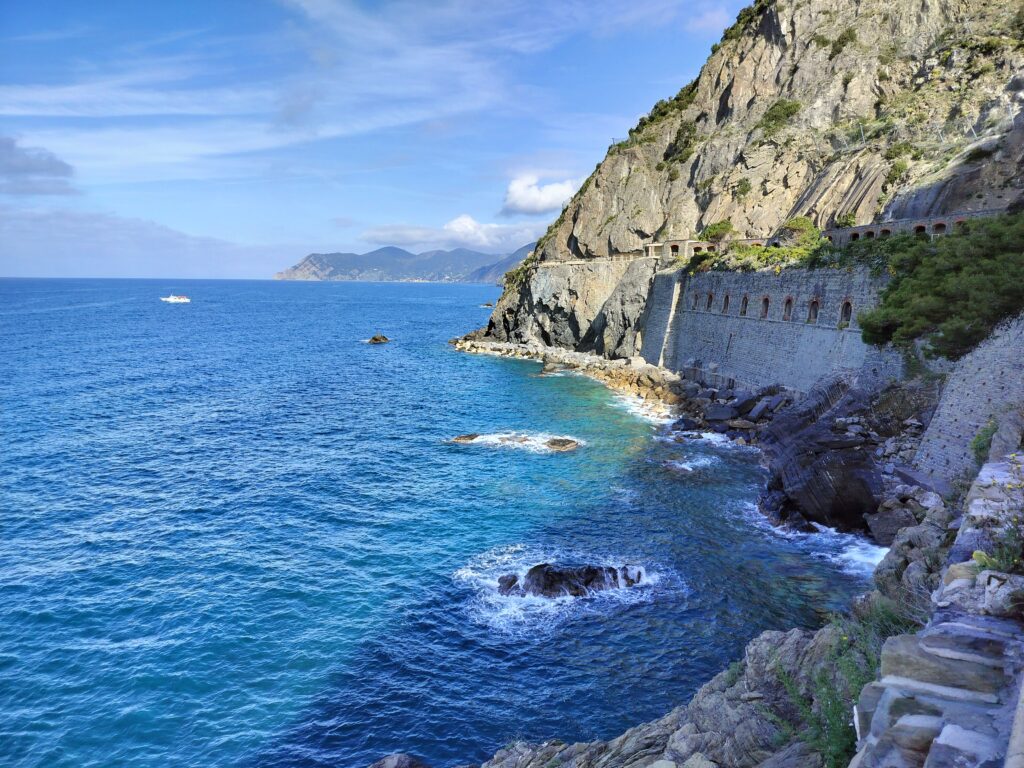
From Riomaggiore, we also walked the Via dell’Amore, a trail included in the Cinque Terre Card. Without the card, walking the Via dell’Amore costs €15, which, quite frankly, seems like nothing short of daylight robbery to me. The trail, which in my opinion isn’t all that impressive, can be walked in about twenty minutes, as it is mostly flat. You need to book in advance for the walk. Once you reach Manarola, you have to take the train back to Riomaggiore, as the path is one-way only.
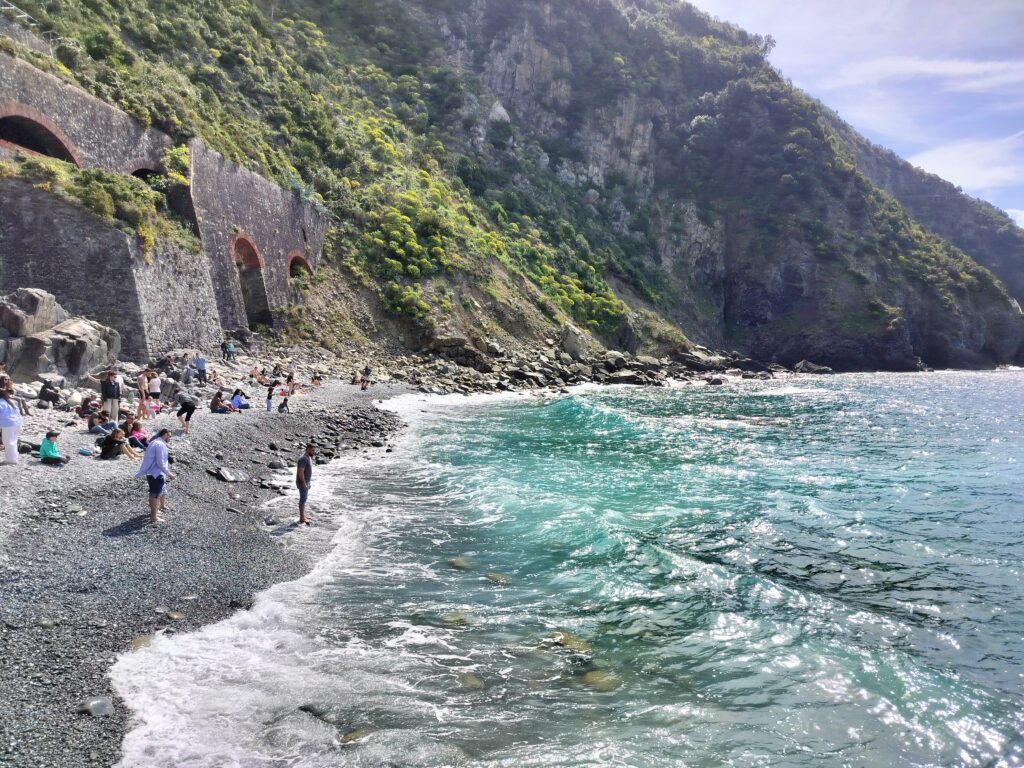
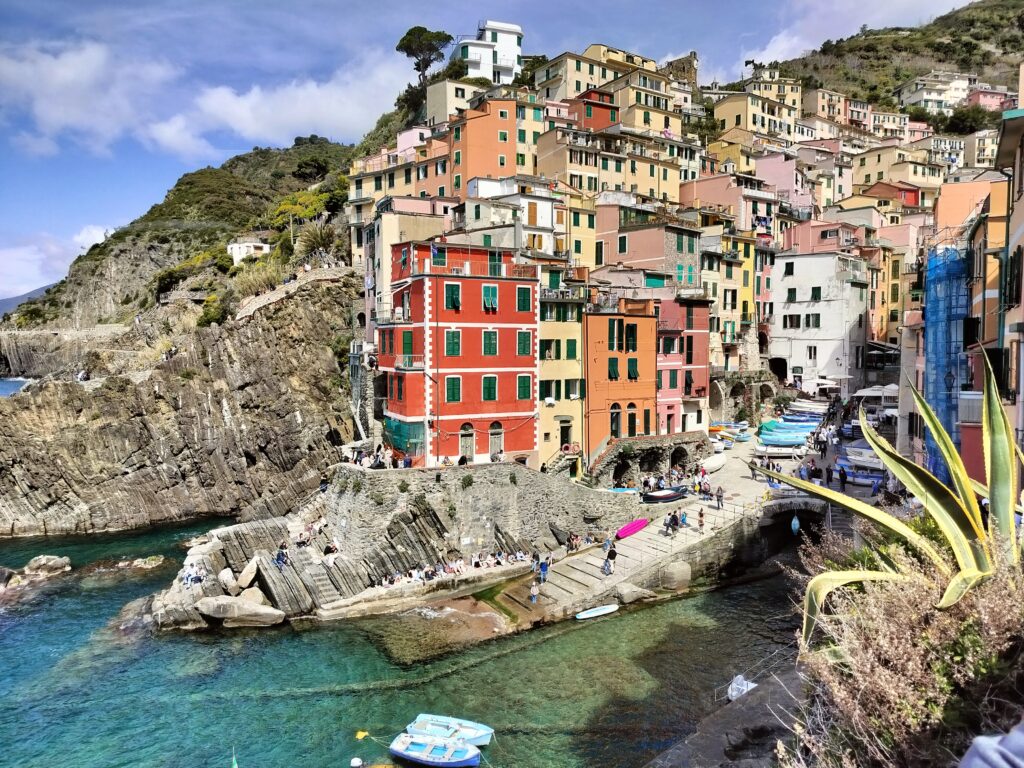
At the end of our visit to Riomaggiore, which includes lunch, we head straight back to La Spezia to begin our journey home to our charming little house in the province of Padua.
Conclusions
If I have to give an honest opinion on the Cinque Terre, I would describe it as a place certainly worth a visit, but one I wouldn’t go back to a second time. My opinion is undoubtedly influenced by the fact that it was absolutely packed with people – something I’d expected given the time of year I chose to visit, but only to a certain extent. The villages are certainly very beautiful, but in Italy there are places that, in my opinion, are more worthwhile, and which can be reached for much less. The Cinque Terre Card is overpriced on peak days, but it is even more outrageous to charge €10 for a 3-minute train ride or €15 for the Via dell’Amore, although I realise that preserving the beauty of the landscape and art does not come free of charge (and I understand that perfectly). Even in terms of organisation, there is definitely room for improvement.
That said, all the villages are still very beautiful; none deserves to be missed. The best panoramic views, in my opinion, are those from Manarola and Vernazza.
Staying in La Spezia was a good idea, I think, partly to keep costs down, and the timing was spot on too, although it would have been better to pack everything into two days to save money on the Cinque Terre Card (but coming from Padua, we had no other choice). For those who manage to squeeze the visit into two full days, I suggest dedicating one day to Monterosso and Riomaggiore, which require a bit more time, and the second to Vernazza, Corniglia and Manarola.