

“Vorrei con te da solo sempre viaggiare
Scoprire quello che intorno c’è da scoprire
Per raccontarti e poi farmi raccontare
Il senso di un rabbuiarsi o del tuo gioire.
Vorrei tornare nei posti dove son stato
Spiegarti di quanto tutto sia poi diverso
E per farmi da te spiegare cosa è cambiato
E quale sapore nuovo abbia l’Universo”
Vorrei, F. Guccini
Table of Contents
- Introduction
- Common itinerary
- Itinerary in pills
- Detailed itinerary
- Day 1: Arrival in Cebu
- Day 2: Transfer to Malapascua and Langob beach
- Day 3: Excursion to Kalanggaman Island
- Day 4: Transfer to Coron
- Days 5 and 6: Coron – Super Ultimate tour e Island hopping tour
- Day 7: Transfer to El Nido + Lio beach
- Days 8 and 9: El Nido – tour C + D e tour A + B
- Day 10: Nacpan beach and transfer to Puerto Princesa
- Days 11-13: Balabac
- Day 14: Transfer to Puerto Princesa
- Day 15: Transfer to Siargao
- Days 16 and 17: Siargao
- Day 18: Manila and back
- Conclusions
Introduction
No, you haven’t landed on a different website – don’t worry! The opening lines of this travel diary, which I’ve borrowed directly from one of my favourite singer-songwriters, are a dedication to my wife, who shares my passion and is one of the people who most encouraged me to share my experiences with you. I’m doing so in this case in particular because the Philippines was the destination we chose for our honeymoon.
The Philippines was my/our first travel destination in Asia. It is a country comprising around 7,000 islands, situated just above the Equator, so the first part of the planning involved identifying the most interesting ones, as we couldn’t, for obvious reasons, visit them all. Generally speaking, the best time to visit the Philippines is during our winter, particularly in February and March, when statistically the climate is drier and rainfall is less abundant. However, as the country is particularly varied in terms of weather conditions, this does not apply to all the islands. Our trip took place in the second half of April 2024.
Common itinerary
The most popular itinerary usually includes the islands of Cebu, Bohol, Boracay and the northern part of Palawan (often cited in various rankings as the most beautiful island in the world), namely El Nido and Coron.
Most itineraries start in Cebu, mainly due to the presence of an international airport (CEB), second in size only to Manila (MNL), which makes this island easily accessible. The island is a popular destination for tourists, particularly the southern part, notably the areas of Oslob, known mainly for whale shark diving, and Moalboal, where you can dive amongst vast schools of sardines and from where you can easily reach the Kawasan Falls, waterfalls distinguished by the intense blue colour of the water. In Bohol, the most famous attractions are the excursions to the Chocolate Hills, rock formations that resemble mountains of chocolate, and the tarsier sanctuary, home to these tiny mammals found in only a few countries worldwide. The Panglao area is also very popular, boasting white sandy beaches (Alona Beach being the best known) and a lively nightlife. It is fairly easy to reach Siquior from Bohol by ferry, which is one of the reasons why many decide to extend their itinerary to include this island, home to beaches, waterfalls and landscapes that are generally much appreciated. Boracay is also very popular, being famous above all for its beaches of fine white sand (it is no coincidence that the best-known is called White Beach), which also offer excellent views of the sunsets, and is easily accessible by plane via local airlines.
Well, at this point I can confess that I’ve written all this rambling just to say that, in the end, almost none of the islands briefly described above were part of our itinerary. We chose to avoid diving with whale sharks for ‘ethical’ reasons, as, according to practically all the accounts I’ve gathered from those who’ve done it, it seems the ecosystem isn’t treated with much respect or care (apparently the whale sharks are even fed to attract them). In the southern part of Cebu, the influx of tourists often makes a visit to Kawasan Falls less than enjoyable; the same applies to Panglao and Boracay, which, it seems, are gradually losing their charm and becoming poorly preserved destinations. And there is certainly no shortage of picture-postcard beaches in the rest of the country! Finally, as for the Chocolate Hills and the tarsier sanctuary, we wondered whether it was really worth dedicating any of the little time we had to these two attractions, and the answer was no.
Itinerary in pills
⭐ Fun scale: 9/10
🏛️ Not to miss: Onuk Island, Super Ultimate Tour and sunset at Las Cabanas beach
⏱️ Total time: 19 days
👣 Mood: Relax at the beach: 45%, nature and adventure: 50%; City and culture: 5%
💰 Total trip: ~2500€/pp (including international flights); Kalanggaman Island: 2500 PHP/pp (~40€). Other details below and in specific articles.
💡 Keep in mind: Balabac tour to be booked in large advance. Other excursions to be booked one day before.
🎟️ Tip: If possible, opt for private tours in Coron and El Nido.
The islands we selected following careful research, which I list in chronological order of visit, were Malapascua, Palawan (Coron, El Nido and Balabac) and Siargao, the latter considered by some to be the most beautiful island in Asia. The decision to place Siargao at the end of the itinerary was dictated by climatic factors, as the best season to visit it, unlike most islands (see introductory paragraph), begins in May, which should have reduced the likelihood of rain. The full itinerary is shown in the table below:
| Day | Itinerary | Notes | Night |
|---|---|---|---|
| 1 | f,light arrival in Cebu in late evening | Flight VCE-CEB, connections in FCO, ABU e MNL | Cebu City |
| 2 | transfer to Malapascua, Langob beach | – | Malapascua |
| 3 | Malapascua, Kalanggaman Island | – | Malapascua |
| 4 | Transfer to Cebu/Coron | Afternoon flight CEB-USU | Coron Town |
| 5 | Coron, Super Ultimate tour | – | Coron Town |
| 6 | Coron, Island hopping | – | Coron Town |
| 7 | transfer to El Nido + Lio beach | Morning flight USU-ENI | Corong Corong |
| 8 | El Nido, tour C + D | – | Corong Corong |
| 9 | El Nido, tour A + B | – | Corong Corong |
| 10 | El Nido, Nacpan beach + transfer to Puerto Princesa | – | Puerto Princesa |
| 11 | Balabac | – | Sicsican Island |
| 12 | Balabac | – | Sicsican Island |
| 13 | Balabac | – | Sicsican Island |
| 14 | Transfer Balabac – Puerto Princesa | – | Puerto Princesa |
| 15 | transfer to Siargao | Flight PPS-IAO (connection in CEB) | General Luna |
| 16 | Siargao, Island hopping | – | General Luna |
| 17 | Siargao, Land tour | – | General Luna |
| 18 | Transfer MNL, Manila | Morning flight IAO-MNL + evening flight MNL-VCE | Plane |
| 19 | Back to Italy | Arrival in VCE in the morning | – |
Note on travel documents: To visit the Philippines, you will need a passport valid for at least six months. No visa is required, but you must complete a free online form before departure. Once the process is complete, you will be issued with a QR code to show if required. Full details can be found on the Viaggiare Sicuri website.
Detailed itinerary
Day 1: Arrival in Cebu
Our arrival in the Philippines wasn’t exactly the best. We landed in Manila at around 10 pm local time after a long journey and, having collected our luggage, headed to the domestic terminal to catch our final connecting flight. However, once there, we discovered that this flight, scheduled for around midnight, had been cancelled (I hadn’t received any notification by email or phone), and that we’d been put on another flight leaving at 3.45 am! At that point, given how exhausted we were, and especially the look on my wife’s face—which already seemed to be threatening divorce—I pulled out all the stops with my Italian problem-solving skills, with which I managed to convince the airline to squeeze us onto another flight that was about to depart, one we were theoretically too late to board. I must say that the staff’s kindness was priceless! After landing in Cebu, we then took a taxi to the hotel to enjoy a well-deserved rest.
Day 2: Transfer to Malapascua and Langob beach
Malapascua is a tiny island located north of Cebu, and is the favourite Philippine destination for divers. Among the most highly rated dives is the one with thresher sharks, which are rarely seen so easily anywhere else on Earth. We didn’t do this dive, partly due to time constraints (we were only there for a full day, really), and partly because neither my wife nor I had ever dived before, and let’s just say that starting straight away with sharks – even though this species is virtually harmless to humans – didn’t exactly seem like the best choice to us. The main reason we chose to go to Malapascua, however, is that this is the island from which excursions depart for Kalanggaman, one of the many gems of the Philippines. For the sake of completeness, I should mention that Kalanggaman can also be reached from Palompon, an option which, in our case, was less practical to fit into our itinerary. The island is quite authentic; the locals live alongside the very few tourists present, there are no cars, simplicity reigns supreme, and the chickens are kept on a lead.
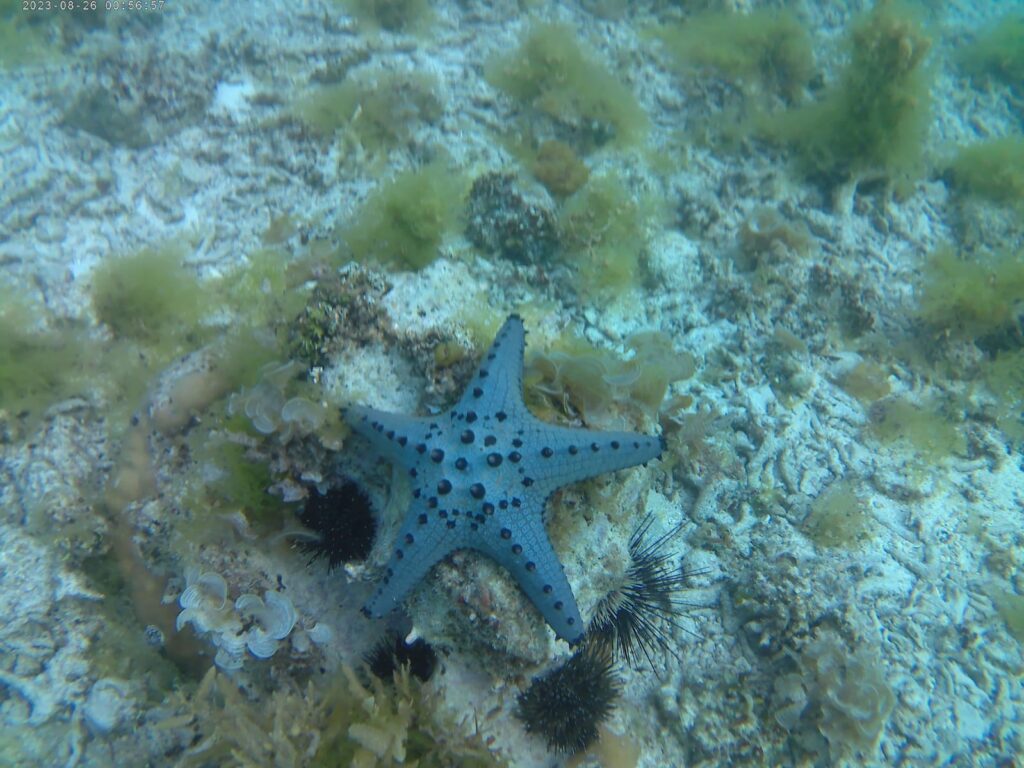
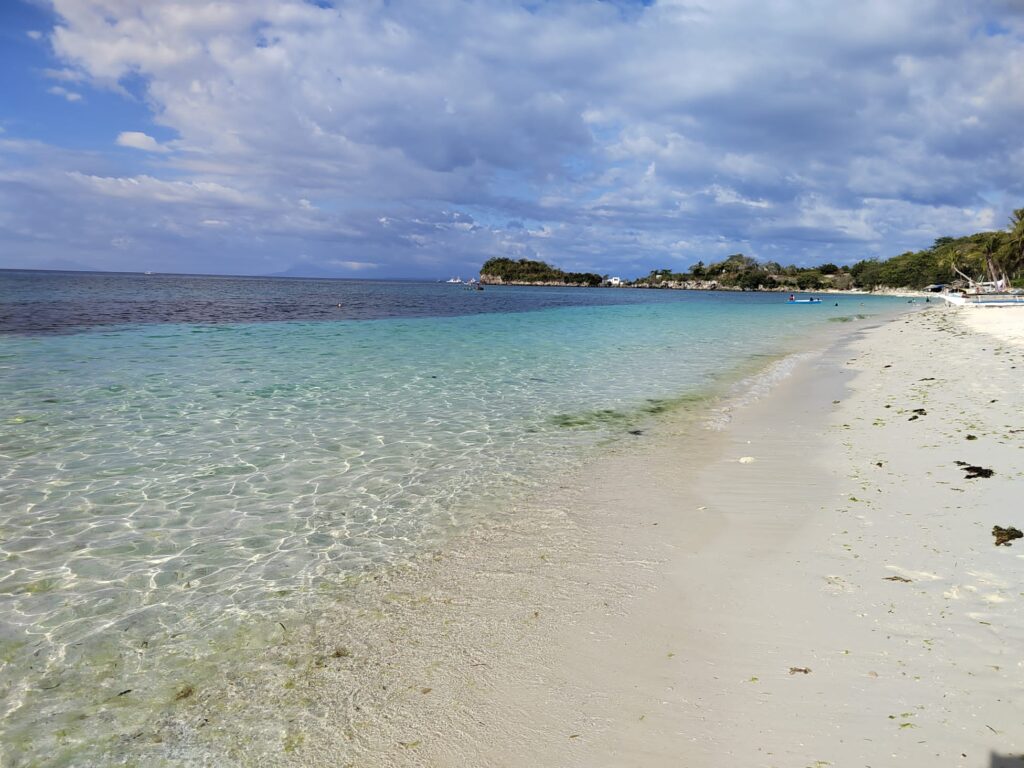
Our transfer to Malapascua began at our hotel in Cebu, with a member of the hotel staff literally stepping into the middle of the road to hail a taxi, which then took us to the area near Cebu North Terminal, from where buses and minivans depart for Maya Harbour. Finally, from the harbour, the ferries set sail for the island. Upon arriving at Cebu North Terminal, we came across a rather unsavoury-looking character, who got us into his dilapidated van, shared with other people, for the modest sum of 500 PHP per person (around €7). After a very uncomfortable journey of about four hours, we arrive at Maya Harbour, fill in the required paperwork at the tourist office, have lunch on a plate of plain rice picked up from a local stall for the modest sum of 10 PHP (equivalent to about €0.15) and set sail for Malapascua, where we arrive in about 45 minutes. The boat drops us off at Logon Beach, from where we walk to the hotel in about 10 minutes with our suitcases in tow, under a blazing sun and a humidity level reminiscent of the good old days in Costa Rica. With the help of the hotel’s extremely friendly staff, we book the trip to Kalanggaman for the following day and get a lift (from two lads on motorbikes, strictly without helmets) to Langob Beach, considered by everyone to be the most beautiful beach in Malapascua. The beach is beautiful and deserted, the water clear and teeming with starfish, but nothing compared to what awaits us in the days to come. After our first swim in the Philippines, we return to the hotel and have dinner at a beachside restaurant recommended by the hotel staff.
Day 3: Excursion to Kalanggaman Island
Our only full day in Malapascua is devoted to the trip to Kalanggaman, one of the most eagerly awaited highlights of the trip and the main, if not the sole, reason why we chose to include Malapascua in our itinerary. The total cost of the trip is 2,500 PHP (around €40) per person, including taxes and lunch. We are picked up by a rather elderly man who walks us to the harbour; there are about ten other people on the boat besides us.
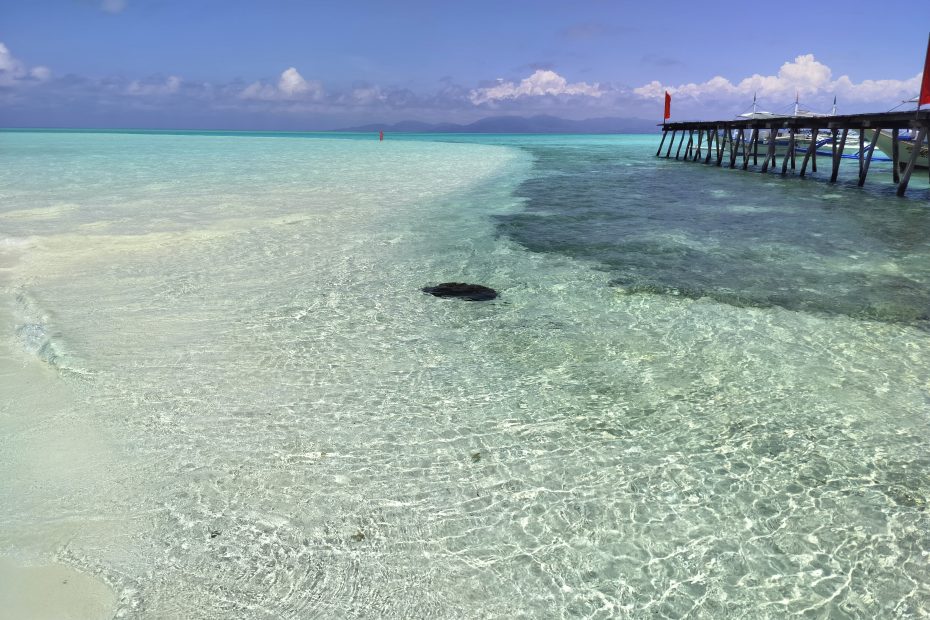
The crossing takes a couple of hours; the weather is a bit unsettled, but it allows us to see everything in daylight. Unfortunately, the tide is high, which means we cannot see the long sandbar that is characteristic of the island. Nevertheless, what meets our eyes is already worth the trip.
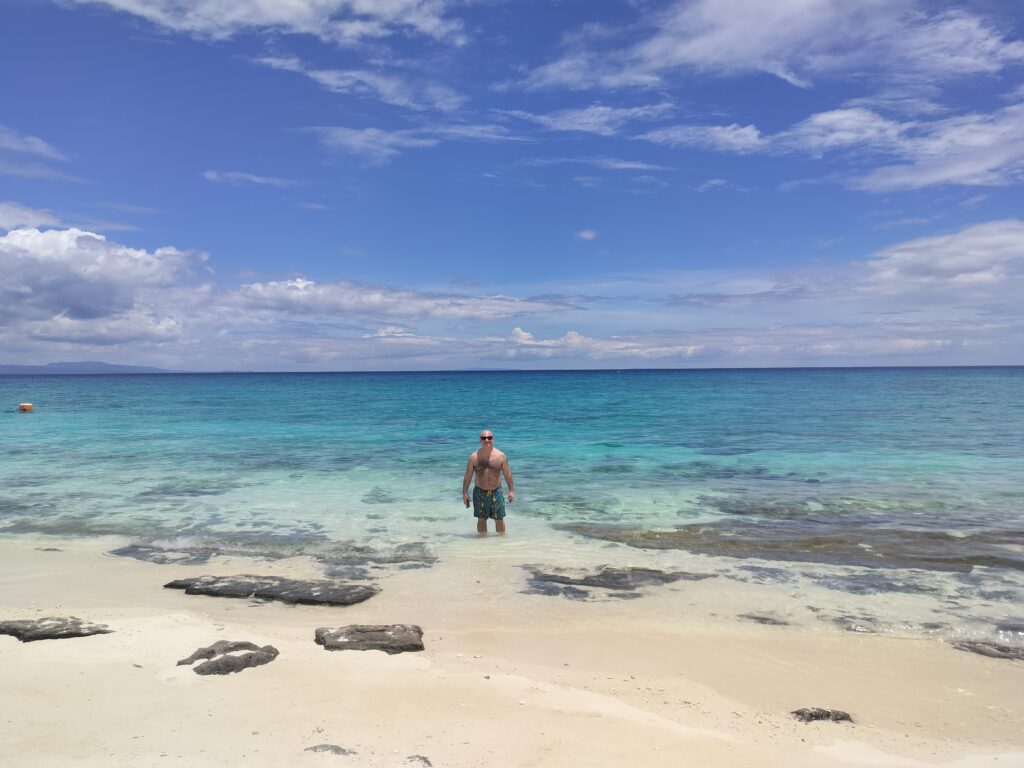
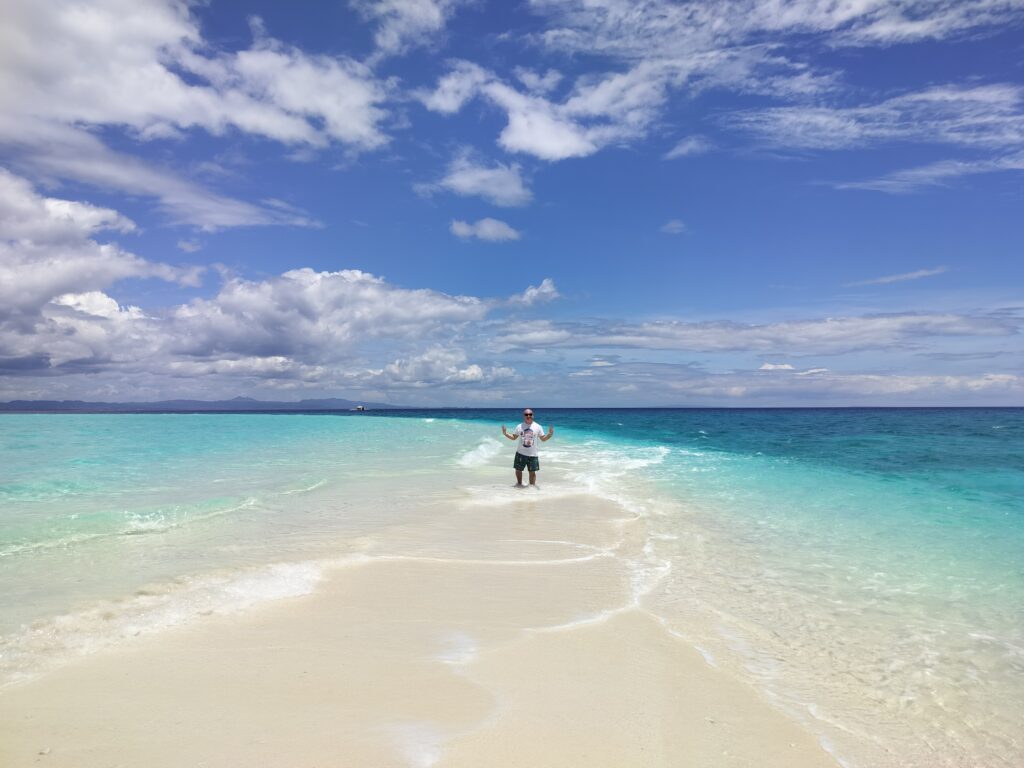
The excursion lasts the whole day, so there’s plenty of time to enjoy the island and have a relaxing swim; the luckiest visitors even manage to spot a few stingrays whilst snorkelling. Lunch consists of rice, meat and fish (fresh as can be), just like practically all the lunches served on the various excursions we went on during the trip.
Once the excursion is over, we return to the hotel and, with the help of the staff, arrange our taxi to Cebu Airport for the following day from Maya Harbour, for the modest total of 3,500 PHP (around €60, for a 4-hour journey), which we share with four other people we met during the Kalanggaman excursion.
It is worth noting that our flight was scheduled at around 2 pm, but the first boat to Maya Port leaves Logon Beach at 7 am, and you should allow for a total journey time of around 5–6 hours to reach the airport, including the boat and car journeys. Bear this in mind before booking a flight departing from Cebu if you are arriving directly from Malapascua. We arrived at the airport around 12 noon.
Day 4: Transfer to Coron
We wake up early in Malapascua and set off for Logon Beach, accompanied this time by hotel staff who load our luggage onto a cart. After the usual paperwork at the tourist office, we head to Maya Harbour, where our taxi driver is waiting for us.
Our flight leaves on time and the view from above is spectacular. After about an hour and a half, we land at Busuanga (USU), the main airport for those travelling to Coron, and take a van which, in another half an hour, takes us to Coron town, where we’d booked accommodation to be within easy reach of the excursions. As we had limited time, we spent the afternoon exploring Coron town and organising, through the hotel, the excursions for the following days. If we’d had more time, we would have liked to visit the Maquinit hot springs, which offer panoramic views, or hike up Mount Tapyas, from where you can enjoy the view of Coron Bay.
Days 5 and 6: Coron – Super Ultimate tour e Island hopping tour
There are essentially two day trips you can organise whilst staying in Coron:
- The Super Ultimate Tour, which takes you to Twin Lagoon and Kayangan Lake, amongst other places. There are several tours that visit Twin Lagoon, but the Super Ultimate Tour is the most comprehensive.
- Island hopping, which usually takes you to three islands, including Malcapuya Island and Bulog Dos.
As for the Super Ultimate tour, there were a total of eight stops, which was only possible thanks to a misunderstanding with the agency. Normally, in fact, there are a maximum of six stops, to be chosen from among those we made, namely:
- Twin Lagoon
- Kayangan Lake
- Barracuda lake
- Siete Pecados
- CYC beach
- Banol beach
- Coral Gardens
- Skeleton Wreck
Personally, if I had to leave something out, I’d skip the last two on the list.
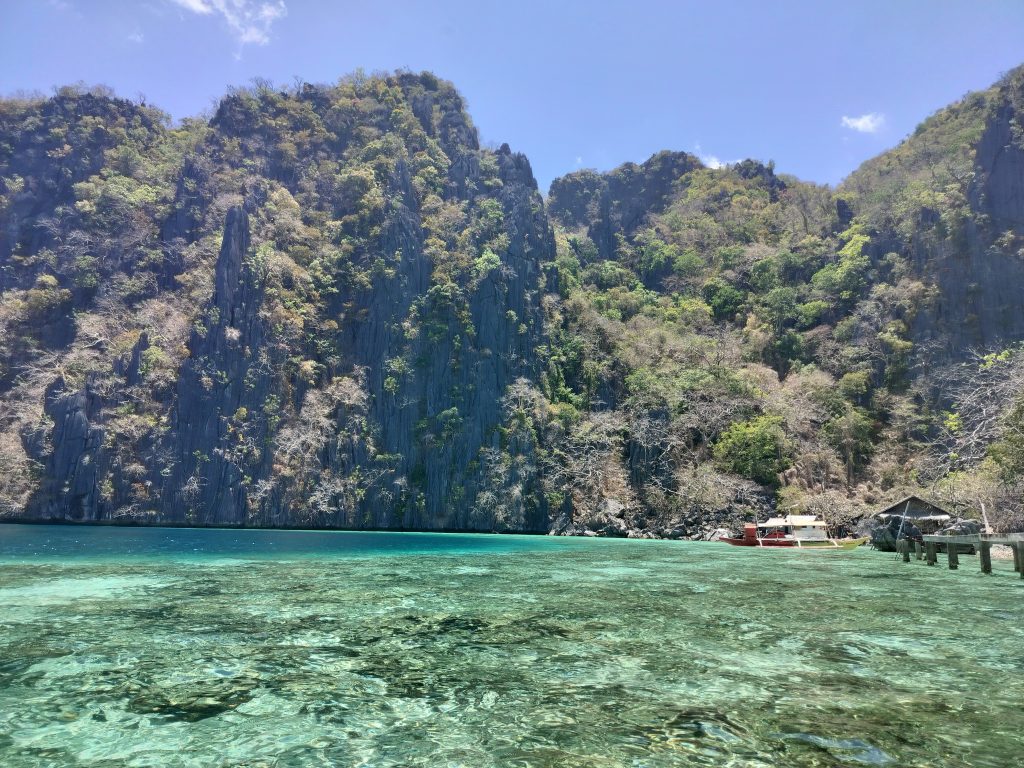


As for island hopping, there are usually three stops: two of these are always at Malcapuya Island and Bulog Dos, whilst the third is a choice between Banana Island and Ditaytayan Island. Personally, of the two, I preferred the latter. As we had booked a private tour, we were actually able to visit four islands instead of three.

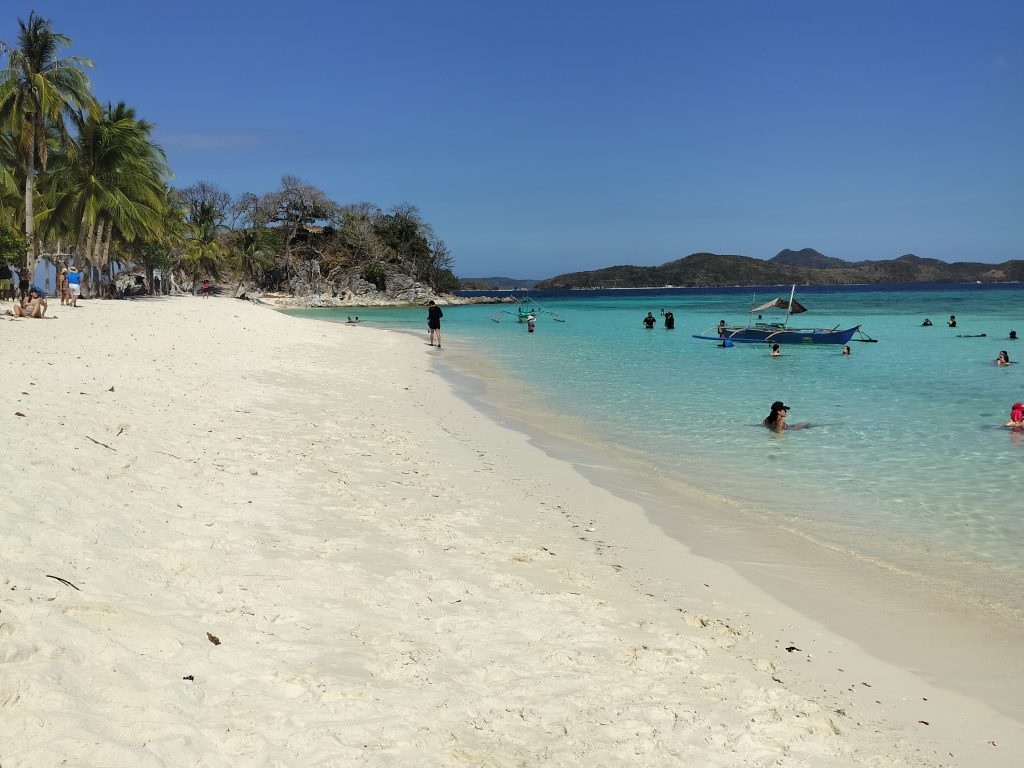

A detailed account of these two days, along with some additional useful information, can be found in my article on Coron, to which I refer you.
Day 7: Transfer to El Nido + Lio beach
To get from Coron to El Nido, there are essentially three options:
- The ferry, which departs daily around midday and takes around 4 hours for the crossing (the journey can also be made in the opposite direction).
- The Expedition, a multi-day tour covering some of the most beautiful islands between El Nido and Coron.
- A domestic flight, which takes around 40 minutes.
We would have gladly chosen the second option if we’d had more time, but given our tight schedule, we opted for the third.
Having arrived at our destination in the early morning, we decided to spend the day at Lio Beach, one of the beaches you can visit without taking a boat tour, and finish off with the wonderful sunset at Las Cabanas beach, which remains to this day the most beautiful sunset I have ever witnessed.

Days 8 and 9: El Nido – tour C + D e tour A + B
There are four day trips available from El Nido, which, with a bit of imagination, are called A, B, C and D. Tour A is the most popular, but generally speaking, you’ll see beautiful sights on each of the four. Each tour covers five different destinations, and there are also tours that combine attractions from different tours (always five destinations in total). We decided to do the combined C+D tour on the first day and the A+B tour on the second.
The stops on the C+D tour were as follows:
- Small Lagoon
- Helicopter Island
- Pansandigan Cove
- Hidden beach
- Matinloc Island


The stops on the A + B tour were as follows:
- Big Lagoon
- Entalula beach
- Shimizu Island
- Secret Lagoon
- Seven Commando beach
We also made a quick stop at Payong Payong Beach, a destination normally included in Tour A. We’d had the option of swapping Secret Lagoon for Snake Island, but the majority of our fellow travellers opted for Secret Lagoon (we were in the minority). With hindsight, we all agreed it would have been better to visit Snake Island.

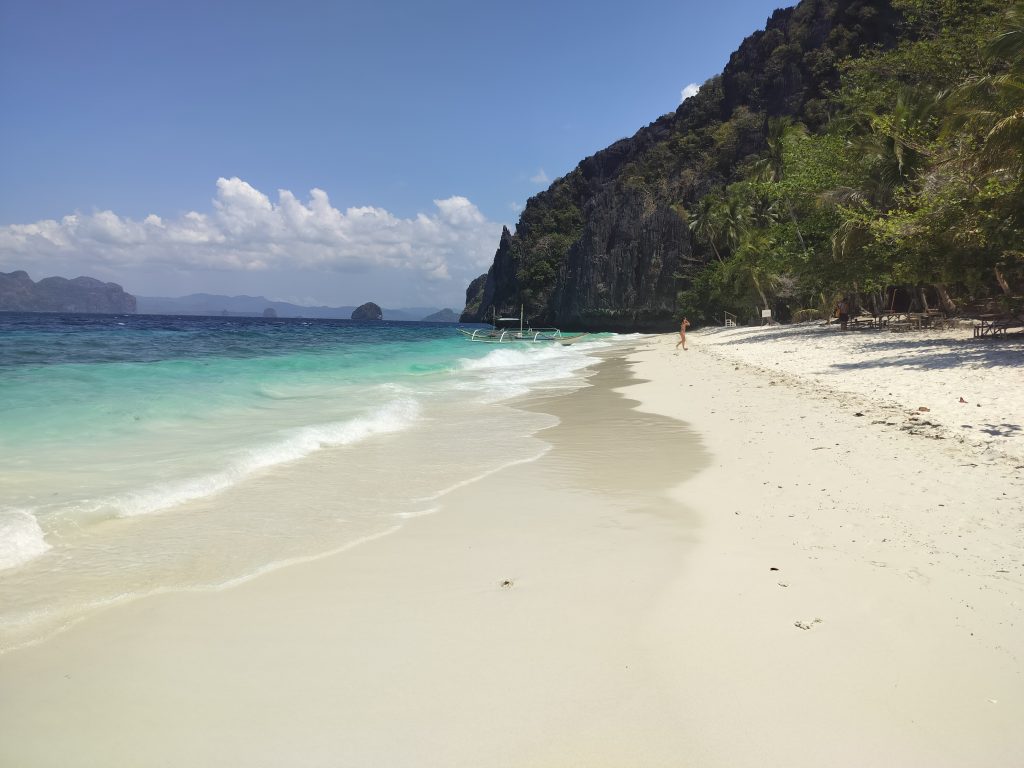

A detailed account of each day is provided in my dedicated article on El Nido.
Day 10: Nacpan beach and transfer to Puerto Princesa
Nacpan Beach is another of El Nido’s beaches that can be visited without taking a boat trip. It takes about 50 minutes (one way) to get there by tuk-tuk from El Nido town or from Corong Corong (where we were staying). This beach is generally considered to be the most beautiful in El Nido.
Back at the hotel, we set off straight away for Puerto Princesa, which we reached in about 5 hours by shared minibus, organised through our hotel, arriving at our destination in the evening.
Days 11-13: Balabac
Balabac was the most beautiful and unforgettable part of the trip. It is a rather remote archipelago, largely untouched (at least for now) by mass tourism, situated at the southernmost tip of Palawan. To reach the Balabac islands, you need to book through a local agency, which will arrange everything you need. Tours start and end in Puerto Princesa, with pick-up and drop-off included in the price. Bear in mind that accommodation is very basic and that getting to your destination takes quite a long time.
Tours are generally either 4 days/3 nights or 3 days/2 nights; we chose the more comprehensive option. The main attraction is undoubtedly Onuk Island, which is, to date, the seaside spot that has moved me the most, rivalled only by the lagoon of Aitutaki in the Cook Islands. Among the other must-see destinations, I would definitely mention Starfish Sandbar, Mansalangan Sandbar, Patawan Island and Manta Sandbar.
You can find all the detailed information on organising the tour in my specific article on Balabac.


Day 14: Transfer to Puerto Princesa
The fourth day of the Balabac package is actually devoted solely to the transfer to Puerto Princesa, where we arrive in the afternoon. As there isn’t much to see, we take the opportunity to pick up a few souvenirs to take home and relax with a mango smoothie. We spend the night at the same B&B as on the way there, where they had kindly stored our larger suitcases for us.
Day 15: Transfer to Siargao
We couldn’t find any direct flights from Puerto Princesa to Siargao, so we had to opt for a flight with a stopover in Cebu (CEB). It was a rather risky stopover, lasting only about an hour and a half, during which we also had to collect and re-check our luggage, so even a slight delay could have meant missing our connecting flight to Siargao. Consequently, you can imagine our delight when we found out that the flight from Puerto Princesa (PPS) to Cebu was an hour late! With a bit of fiddling about, which I won’t go into detail about, we nevertheless managed to reach our destination as planned.
After landing in Siargao (IAO), we travelled by van (a transfer organised through our B&B) to the General Luna area, where we were staying. It was already evening, so the only thing we could do was enjoy the sunset from General Luna beach.

Days 16 and 17: Siargao
Siargao is a destination particularly popular with surfers, especially the Cloud 9 area in the south-east of the island. However, as we aren’t surfers, we spent our two full days there on two day trips, namely:
- Island hopping around the islands south of General Luna, namely Naked Island, Daku Island and Guyam Island.
- Land Tour, a package that includes Sugba Lagoon, Secret Beach, Palm Tree Viewpoint, Maasin River and Magpupunko Pools.
You can find a detailed account of each day in my article on Siargao.


Day 18: Manila and back
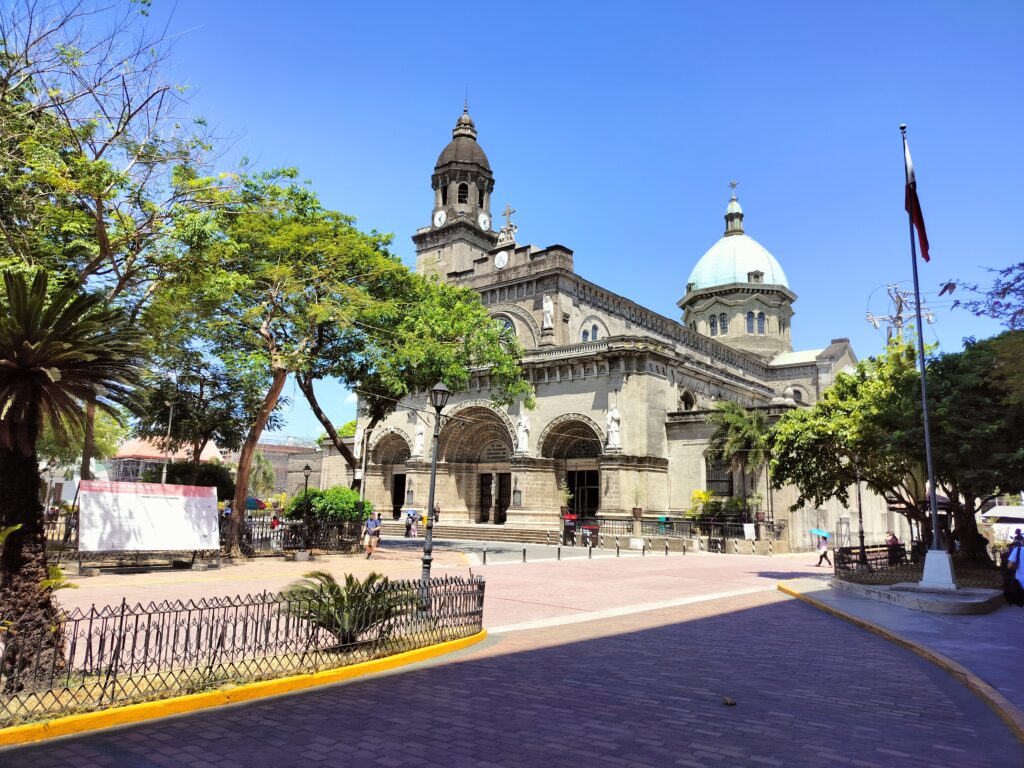
Our return international flight is scheduled for the evening from Manila (MNL), where we arrive on a domestic flight in the morning. As we therefore have a bit of time to spare, we decide to make the most of it by visiting the city, focusing on what many consider to be its best part: the Intramuros area. We didn’t have particularly high expectations, and I must say we were right not to, but at least we can say we’ve seen something of the capital.
After leaving our luggage at the airport, we head to the neighbourhood in a taxi booked via an app recommended by locals, who also warn us to be wary of taxi drivers who approach us outside the airport offering a ride (booking via the app actually costs a quarter of what they charge). The sun is shining beautifully, so beautifully in fact that it’s sweltering, which means we can’t go for long walks. We finally head back to the airport, again in a taxi booked via the same app mentioned above, and reluctantly set off for Italy, arriving at our destination the following day.
Conclusions
If we were to rank the places we visited in order of preference, both my wife and I agree (and not just because, as in all happy couples, my wife is always right!) on the following ‘ranking’:
- Balabac. Truly paradise on earth, a world away from mass tourism, with beaches that are even more stunning than those on a postcard. If Palawan is considered the most beautiful island in the world by various rankings, I found the reason why there. Onuk Island, in particular, is one of the most beautiful creations of the Almighty. However, it is not a destination for everyone, as it requires a good ability to adapt to the extremely basic accommodation and the long journey, which is nonetheless amply rewarded.
- Coron. The Twin Lagoon, Kayangan Lake and all the beaches are masterpieces of nature, each spot more beautiful than the last.
- Siargao, which I prefer to El Nido and Malapascua because it is a place somewhat different from the others and more diverse, which I would describe as suited to a select clientele.
- El Nido. A magnificent place, but in some ways it struck us as a poor imitation, albeit a beautiful one, of Coron. It does, however, win the gold medal as always for its sunsets.
- Malapascua. Kalanggaman is a gem, but there are many equally worthwhile places in the Philippines. First place for authenticity.
- Manila. Objectively, there’s nothing unmissable; it should only be included in the itinerary in the event of a long layover (as was the case for us), but it’s not worth spending any more time there.
One thing that certainly strikes you is the simplicity of the people, who live in conditions of general poverty but with great dignity (for example, no one ever asked us for money, nor did we encounter any attempts to rip us off). We always found people to be very helpful and kind, and we never felt in any danger whatsoever.
Overall, it’s a fairly low-cost trip; we dined in ordinary restaurants for as little as €5 per person, stayed in accommodation averaging €20 per person (but only because we treated ourselves reasonably well; otherwise, it would have cost even less), and the value for money on the excursions is certainly excellent. We flew from Venice and had little flexibility with our dates, which affected the ticket price, but if you were to fly from Rome, for example, you could find return flights for around €500 during the period we chose.
From an artistic and cultural point of view, it’s not an unmissable destination, but nature truly offers incredible and unique sights.
If we’d had more time, we would certainly have included the Expedition between Coron and El Nido (3D2N) and/or added Camiguin, an island which, of all those we didn’t visit, seemed the most interesting to me and wouldn’t have required a significant number of days to explore. With hindsight, given the same amount of time, I would probably swap one of these two packages for Malapascua, which we visited essentially to reach Kalanggaman, an island which, however beautiful, didn’t seem to have that certain something compared to what we’d seen elsewhere in the Philippines.
Related articles:
